
Related Products
What Is an AGV? Types, Uses, Benefits, and How It Works
Learn what AGVs are, where automated guided vehicles are used, their main types, advantages and disadvantages, how they work, and system components.
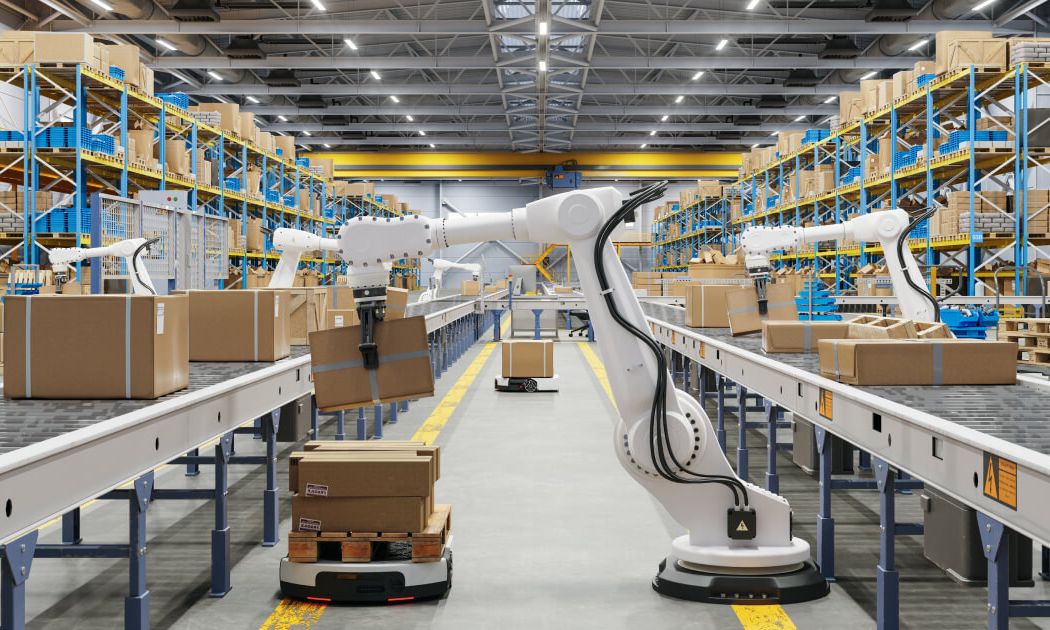
System scope. Navigation methods. Safety logic. Forklift replacement fit.
AGV stands for Automated Guided Vehicle. It is an industrial vehicle that operates without a human driver and automatically transports materials along predefined routes or according to system instructions within warehouses, factories, distribution centers, and other controlled environments.
Depending on the vehicle design and load-handling method, AGVs can transport pallets, totes, racks, carts, components, work-in-process materials, and finished goods. They can also perform lifting, towing, forking, carrying, and automatic loading and unloading tasks.
AGVs typically use navigation technology, vehicle controllers, safety sensors, and fleet management software to complete transportation tasks. A single AGV can handle fixed point-to-point movements, while multiple AGVs can operate as a coordinated fleet under the control of a central management system.
Unlike manually operated forklifts or material handling vehicles, an AGV can automatically travel to a pickup location, collect a load, transport it, and deliver it to a specified destination, automating material movement within a facility.
AGV Applications
AGVs are primarily used for internal material transportation in warehouses, manufacturing plants, distribution centers, and other facilities. Although load types, transportation routes, and loading methods vary by project, most AGV applications fall into three categories: warehouse transportation, production logistics, and specialized material handling.
AGVs in Warehouses
In a warehouse, AGVs can connect receiving, staging, storage, picking, packing, and shipping areas.
After goods arrive at the receiving area, a ground-handling forklift AGV can move pallets to a staging or storage area. When an order enters the outbound process, an AGV can transport the required goods to picking, packing, or shipping.
In warehouses equipped with conveyor systems, roller AGVs can automatically transfer pallets or totes between conveyors and other workstations.
AGVs are also widely used in goods-to-person picking. Storage AGVs can bring racks, pallets, or totes directly to a fixed workstation, allowing employees to complete picking and replenishment without repeatedly walking through a large warehouse. This approach is commonly used in e-commerce warehouses, retail distribution centers, parts warehouses, and third-party logistics facilities.
AGVs in Manufacturing and Production Lines
In manufacturing environments, AGVs can transport raw materials, components, and returnable containers from a warehouse or material supermarket to production and assembly stations. On the return trip, they can collect empty totes, pallets, and other reusable containers.
In multi-stage production processes, AGVs can also connect different machines, workstations, and buffer areas. Work-in-process materials can be moved from one operation to the next, while completed products can be transferred to inspection, packaging, or finished-goods storage areas.
For machine loading and unloading, AGVs can deliver materials to CNC machines, robotic workstations, or other production equipment. They can then work with robotic arms, conveyors, or specialized fixtures to complete loading and unloading tasks.
Some composite mobile robots combine a mobile base with a robotic arm, allowing the same system to transport, pick, and place materials between different machines.
In automotive, appliance, and large assembly plants, towing AGVs can pull several carts along a fixed route, supplying components to multiple workstations and collecting empty containers on the return trip.
AGVs for Specialized Material Handling
Some industries need to transport large, heavy, or irregularly shaped loads, such as molds, steel coils, vehicle bodies, large mechanical assemblies, and aerospace components.
These tasks usually require heavy-duty AGVs or customized transport platforms. The vehicle platform, drive system, load-bearing structure, and safety configuration must be designed around the weight, dimensions, center of gravity, handling method, and available travel space.
Types of AGVs
AGVs are generally classified according to how they carry and transfer loads. The most important difference between AGV types is how each vehicle picks up, supports, and unloads materials.
A lifting AGV travels underneath a rack, cart, or mobile shelving unit and raises the load using an integrated lifting mechanism. These vehicles typically have a low profile and are suitable for transporting mobile racks and material carts.
A unit load AGV carries materials directly on top of the vehicle. It can be equipped with a fixed platform, rollers, belts, or chain conveyors to support pallets, totes, or other load units.
A tugger AGV transports materials by towing carts, trailers, or material-handling trolleys. A single vehicle can pull multiple load units, making it suitable for batch transportation and repetitive delivery along fixed routes.
A forklift AGV combines a conventional forklift structure with automated navigation and control technology. It can pick up, transport, stack, and retrieve pallets from racks. Depending on the application, forklift AGVs may include automated pallet trucks, stackers, counterbalanced forklifts, and reach trucks.
A heavy-duty AGV is designed to transport oversized or high-weight loads. Some projects use a single vehicle, while others use multiple coordinated vehicles to move one large load.
Advantages and Disadvantages of AGVs
AGVs can increase the level of automation in internal logistics, but they are not suitable for every material handling task. Before adopting an AGV system, it is important to understand both its advantages and its limitations.
Advantages of AGVs
One of the most direct advantages of AGVs is their ability to reduce repetitive manual transportation. For frequent, long-distance, or multi-shift tasks, AGVs can move materials according to a system-generated schedule, reducing the need for employees to repeatedly push carts or operate forklifts.
AGVs also provide more consistent transportation. Vehicles follow defined pickup points, drop-off points, and task priorities, so their performance is less affected by differences in operator experience, fatigue, or shift changes. In production environments, this consistency can help reduce material shortages, delivery errors, and waiting between processes.
AGVs can continuously detect people and obstacles within their operating area and slow down or stop according to predefined safety rules. Properly planned AGV routes can also reduce the risks associated with forklifts and pedestrians sharing the same space.
Fleet management software can record vehicle locations, task status, operating time, battery levels, and fault information, making material movement easier to track. Operations teams can use this data to evaluate task waiting times, vehicle utilization, and traffic congestion.
Once the initial system has been deployed, a facility may also be able to add more vehicles or expand the operating area as transportation requirements increase.
Disadvantages of AGVs
The initial cost of an AGV project can be relatively high. In addition to the vehicles, the project may require fleet management software, charging equipment, wireless network infrastructure, workstation modifications, safety systems, and system integration. For facilities with only a few transportation tasks or limited daily operating hours, the return on investment may take longer.
AGVs also place certain requirements on the operating environment. Uneven floors, steep slopes, narrow aisles, inconsistent pallet placement, or complex pedestrian traffic can affect vehicle movement and the reliability of automatic load transfers.
System integration may become more complex when AGVs need to communicate with warehouse management systems, production software, or other automated equipment. If information is not synchronized correctly, an AGV may arrive before a load is ready or find that the destination workstation cannot accept the delivery.
Traffic congestion is another consideration in multi-vehicle systems. Adding more AGVs does not necessarily increase throughput at the same rate. If intersections, waiting areas, and load-transfer stations are not properly planned, vehicles may block or wait for one another, reducing overall system performance.
Overall, the suitability of an AGV system depends largely on task frequency, route stability, load standardization, and site conditions.
How Do AGVs Work?
A complete AGV transportation cycle usually begins when an upper-level system, production machine, or workstation generates a material request.
For example, when a production line needs a batch of components, a warehouse management system, manufacturing execution system, or operator creates a transportation task. The fleet management system receives the task and selects an appropriate AGV based on vehicle location, battery level, load status, and task priority.
After receiving the task, the AGV follows the assigned route to the pickup point. Once it reaches the correct position, the vehicle collects the load using forks, a lifting mechanism, rollers, or another load-handling device. It then confirms that the load has been received correctly before beginning transportation.
During travel, the AGV uses its navigation system to continuously determine its position while detecting nearby people, vehicles, and obstacles. If the route ahead is blocked, the vehicle slows down or stops according to its safety settings.
When the AGV reaches its destination, it unloads the material and reports the task result to the fleet management system. The upper-level system can then update inventory records, workstation status, or production progress.
After completing the task, the AGV can accept another transportation request. If its battery falls below a defined level, it travels to a charging station before returning to operation or standby mode.
Components of an AGV System
An AGV does not operate entirely on its own. A complete AGV system usually consists of the vehicles and their load-handling equipment, navigation and safety systems, fleet management software, and system interfaces.
Vehicles and Load-Handling Equipment
An AGV typically includes the vehicle body, drive system, battery, controller, and sensors. A load-handling mechanism mounted on the top or front of the vehicle is responsible for picking up, supporting, and unloading materials.
Common mechanisms include forks, lifting devices, rollers, chains, belts, towing assemblies, and customized fixtures. The appropriate configuration depends on whether the load is a pallet, tote, rack, cart, or specialized item.
Pickup and drop-off stations are also part of the AGV system. Even when a vehicle can reach the correct position accurately, automatic load transfer may fail if pallets are misaligned, workstation heights are inconsistent, or positioning structures are poorly designed.
Navigation, Safety, and Communication Systems
The navigation system allows an AGV to determine its position, travel direction, and route. Common navigation methods include magnetic tape, magnetic spots, QR codes, laser reflectors, vision navigation, and SLAM navigation.
The safety system detects people, vehicles, and other obstacles and slows or stops the AGV when necessary. Common safety equipment includes safety laser scanners, distance sensors, safety bumpers, emergency-stop buttons, warning lights, and audible alarms.
AGVs also require a wireless network to exchange tasks and operating data with the fleet management system. Inadequate network coverage or unstable roaming can cause vehicles to disconnect, delay tasks, or prevent status information from being synchronized.
Fleet Management Software and System Interfaces
When multiple AGVs operate at the same time, fleet management software coordinates task allocation, route planning, intersection control, battery levels, and vehicle status.
The AGV system can also connect with warehouse management systems, warehouse control systems, manufacturing execution systems, and other automated equipment. Once integrated, transportation tasks can be generated automatically based on orders, inventory levels, production schedules, or equipment signals rather than being assigned manually one at a time.
How Can Coolyne Help You Deploy AGVs in a Warehouse or on a Production Line?
Coolyne evaluates load types, weight, transportation distance, task frequency, pickup and drop-off locations, and facility layout to identify the material handling processes that are suitable for AGV automation and select the appropriate vehicle type.
We also plan fleet size, travel routes, load-transfer stations, and charging areas, and integrate the AGV system with existing warehouse software, production systems, and automated equipment to support automatic task assignment and coordinated fleet operation.
Before implementation, Coolyne can provide a free project feasibility analysis and ROI assessment to help determine whether the proposed AGV solution is suitable for your operation.
Contact Coolyne to discuss your material handling requirements and receive an AGV solution tailored to your warehouse or production line.
Next Review
Move from article research to a scoped feasibility review.
Use the related products and solution paths below, then send your workflow and layout for a quick engineering review.
Related Solutions
Engineering Review