
Related Products
Automated Guided Vehicle Advantages and Disadvantages: Is an AGV Right for Your Business?
Explore the main advantages and disadvantages of automated guided vehicles, including safety, cost, flexibility, integration, maintenance, and ROI.
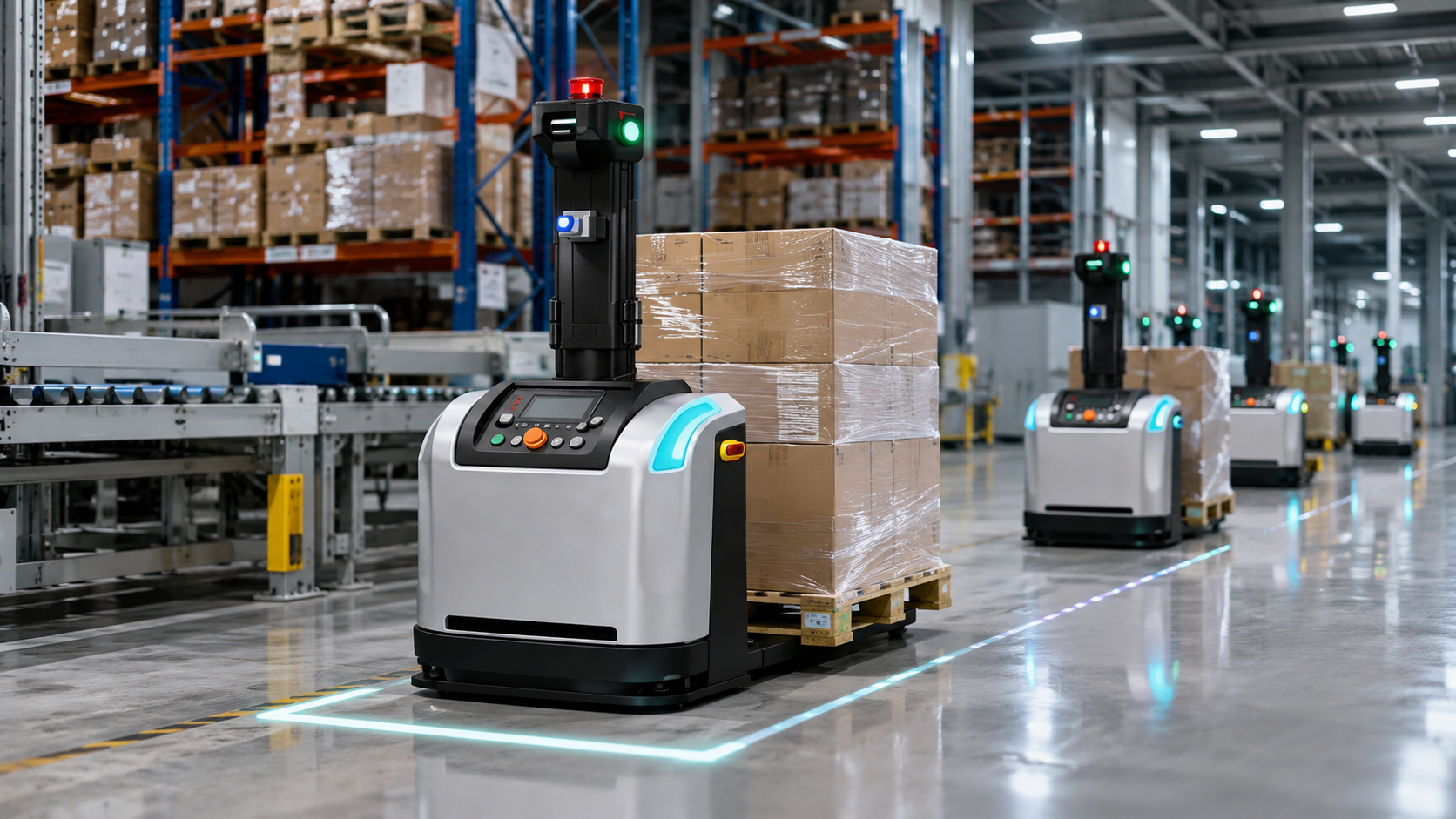
Explore the main advantages and disadvantages of automated guided vehicles, including safety, cost, flexibility, inte...
Automated guided vehicles, or AGVs, automate repetitive material movement in factories, warehouses, and distribution centers. They transport pallets, containers, components, and finished goods without a driver.
Automated Guided Vehicle Advantages and Disadvantages at a Glance
| Advantages of AGVs | Disadvantages of AGVs |
|---|---|
| Consistent material flow | High initial investment |
| Reduced dependence on forklift drivers | Complex system integration |
| Improved workplace safety | Less flexibility in dynamic environments |
| Accurate load handling | Technical maintenance requirements |
| Better material traceability | Charging reduces vehicle availability |
| Multi-shift operation | Blocked routes may stop vehicles |
| Scalable fleet capacity | Facility modifications may be needed |
| More flexible than conveyors | Poor planning may lead to a low ROI |
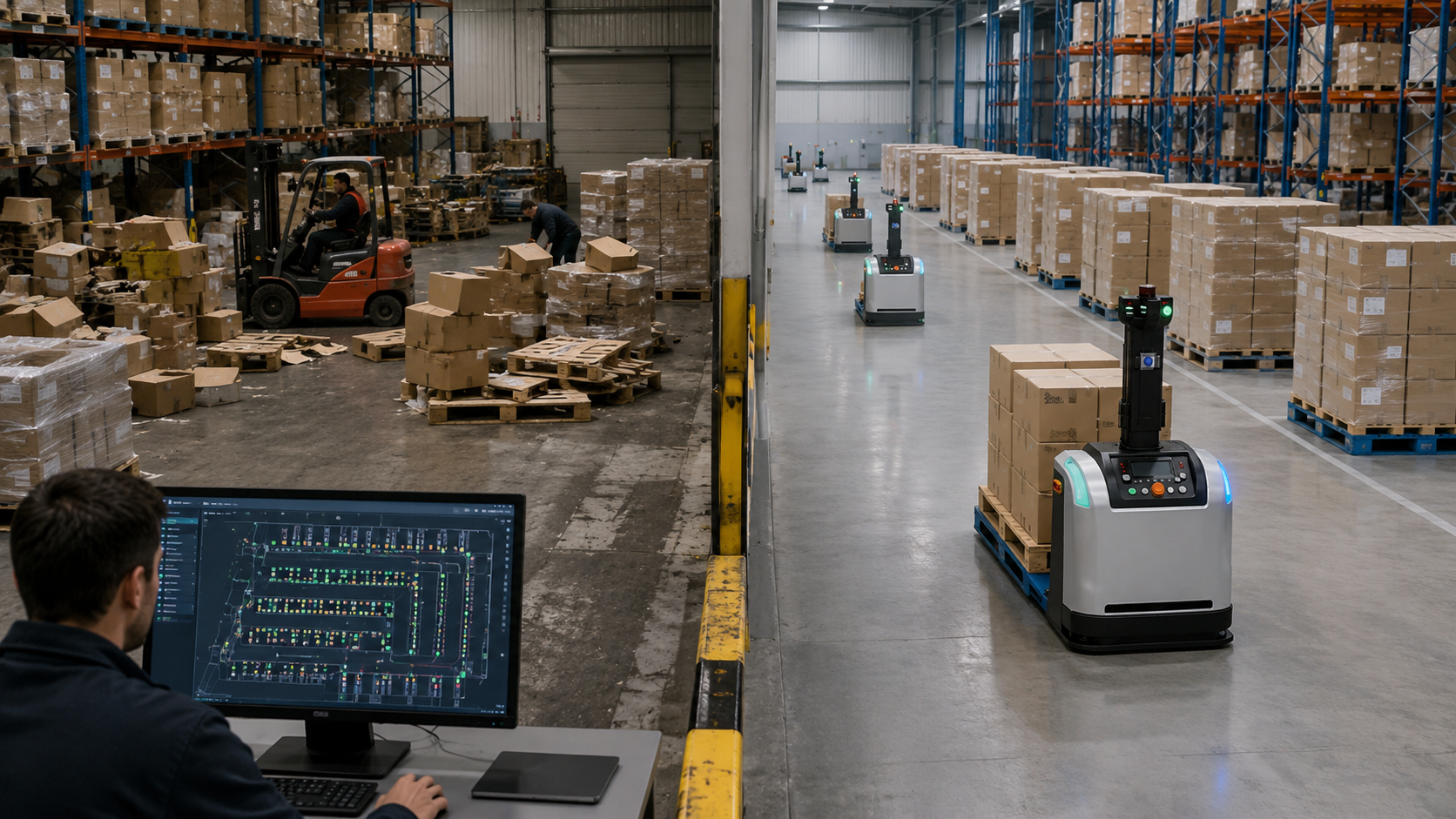
Advantages of Automated Guided Vehicles
1. Consistent Material Flow
AGVs follow programmed rules and repeat transport tasks with predictable cycle times. The efficiency of manually operated forklifts can vary because of shift changes, operator fatigue, aisle congestion, and differences in driving behavior.
AGVs do not necessarily need to travel faster than manually operated forklifts to improve efficiency. Their value often comes from reducing waiting time and minimizing the operational fluctuations caused by reliance on manual labor. More importantly, stable transportation provides a reliable foundation for the entire production or warehouse logistics workflow.
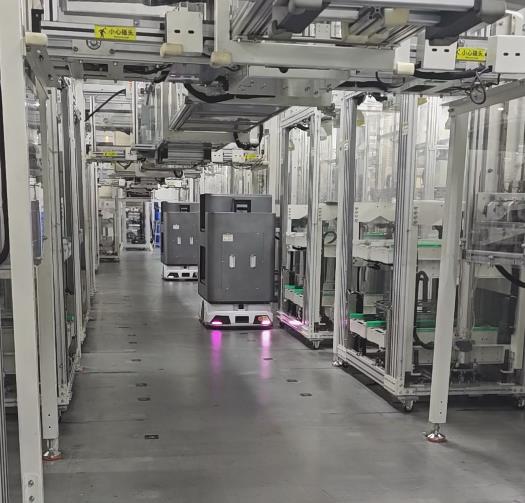
2. Reduced Dependence on Manual Labor
AGVs can automate repetitive tasks normally performed by forklift drivers, tugger operators, or material handlers. Employees can then focus on production support, quality control, exception handling, maintenance, or process improvement.
With proper fleet planning, charging strategies, and maintenance support, AGVs can support continuous, 24-hour operation. This allows companies to maintain consistent material flow across multiple shifts, reduce production interruptions, and improve overall operating efficiency.
3. Improved Workplace Safety
Modern AGVs are typically equipped with safety scanners, obstacle detection sensors, emergency-stop devices, warning lights, alarms, and controlled speed zones. These features allow a vehicle to slow down or stop when a person or object enters its protected area.
Unlike manually operated forklifts, AGVs travel along controlled routes, maintain preset speeds, and can automatically stop when obstacles are detected. AGVs are not subject to risks caused by driver fatigue, distraction, or variations in operating behavior, which helps improve workplace safety.
4. Higher Accuracy and Less Damage
AGVs complete pickup, transport, and unloading according to programmed coordinates and system commands. This can improve pallet positioning, conveyor transfers, rack alignment, production line deliveries, and inventory movement records.
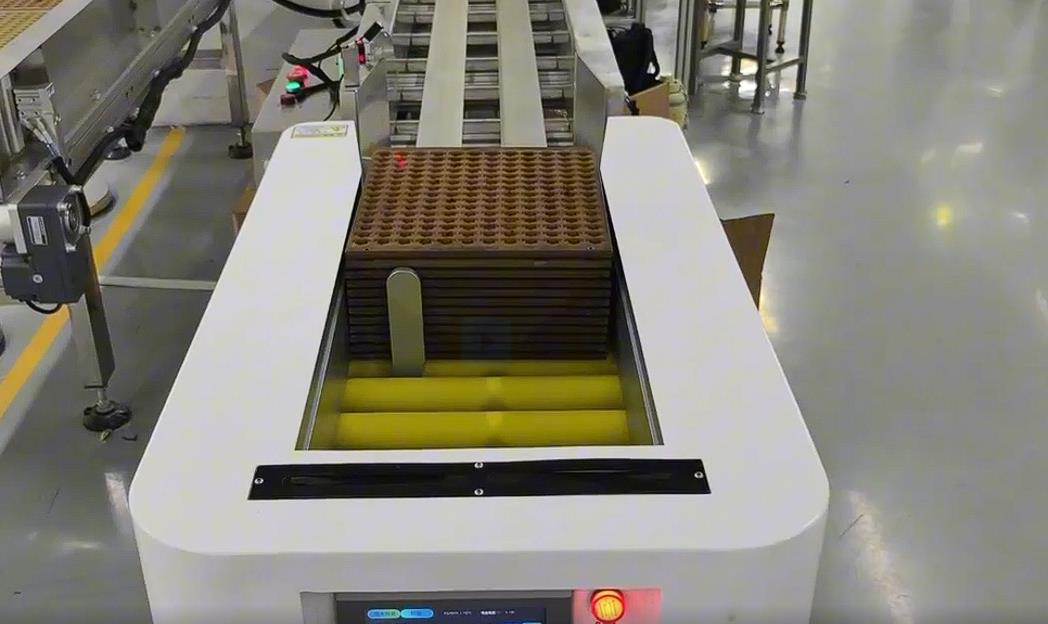
Controlled speed, turning, stopping distance, and load positioning can also reduce damage to pallets, racks, machines, and finished goods.
5. Multi-Shift Operation and Better Traceability
With proper fleet sizing and charging plans, AGVs can support extended operating hours and multi-shift production. Fleet management software can record vehicle locations, task status, delivery times, battery levels, waiting times, congestion, and faults. When integrated with WMS, WCS, MES, ERP, or production systems, AGVs improve process visibility and material traceability.
6. Scalable and More Flexible Than Conveyors
Companies can begin with a small AGV fleet and add vehicles as demand grows. Routes can also be adjusted through software, mapping, or navigation settings.
Disadvantages of Automated Guided Vehicles
1. High Initial Investment
An AGV project may include vehicles, fleet management software, charging stations, navigation infrastructure, network upgrades, safety equipment, workstation modifications, system integration, testing, training, and spare parts.
The cost of deploying AGVs extends beyond the price of the vehicles themselves. It also includes costs for system software, network upgrades, facility modifications, and other supporting requirements.
2. Limited Flexibility in Dynamic Environments
AGVs work best when routes, pickup points, delivery points, and loads are stable. They may be less effective when aisles are frequently blocked, layouts change often, loads are inconsistent, or tasks cannot be standardized.
3. Integration Can Be Complex
AGVs may need to communicate with conveyors, automatic doors, elevators, production machines, racks, robotic cells, and pallet-handling equipment. They may also need to connect with WMS, WCS, MES, ERP, and production scheduling systems.
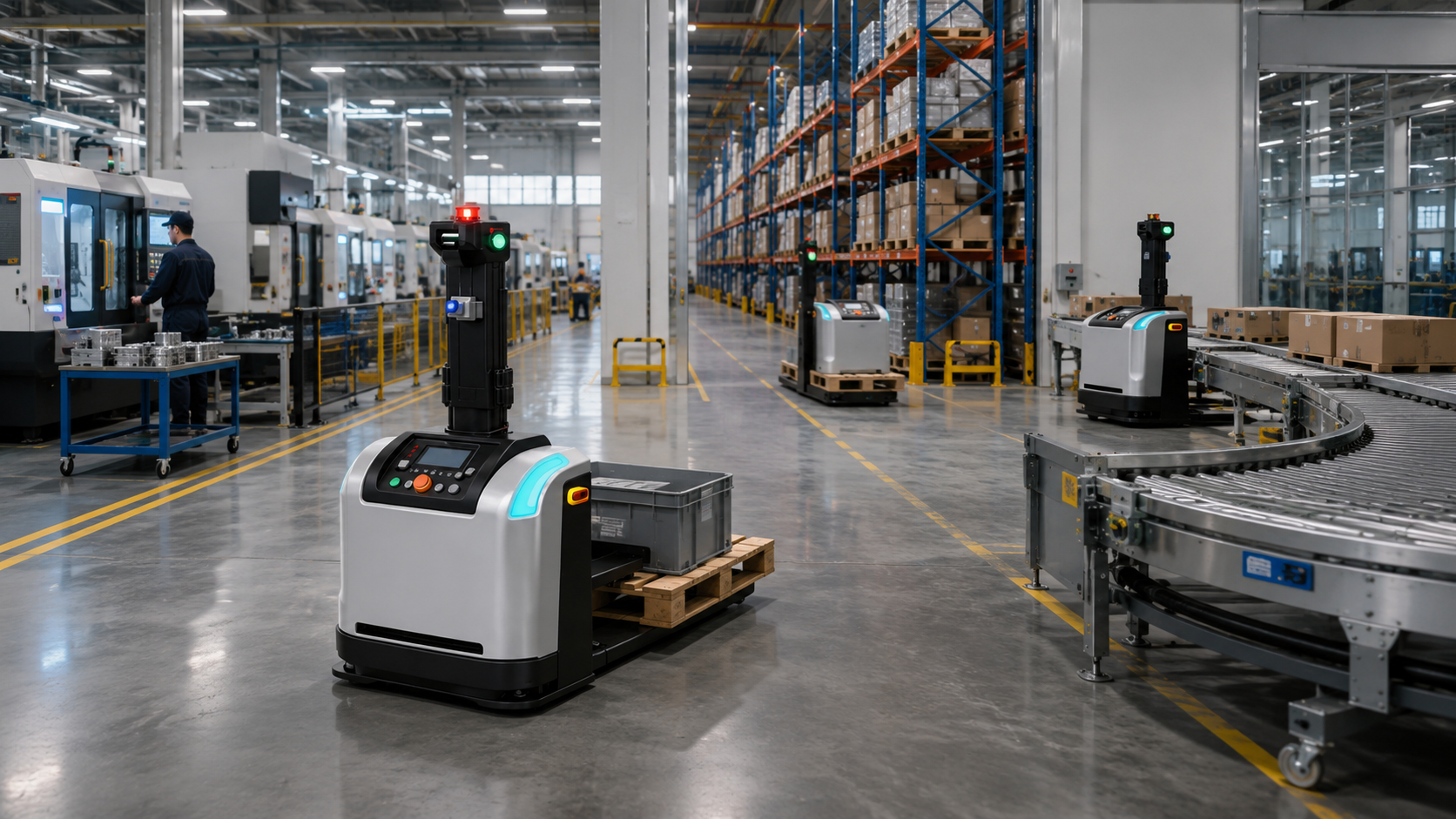
4. Facility, Charging, and Maintenance Requirements
Uneven floors, narrow aisles, steep slopes, poor-quality pallets, dust, moisture, extreme temperatures, weak wireless coverage, and congested intersections can all affect AGV performance. AGV maintenance also involves sensors, navigation systems, batteries, industrial networks, fleet management software, PLC communications, and system diagnostics. Companies need dedicated maintenance personnel to perform regular inspections and maintenance.
In Summary
The advantages and disadvantages of automated guided vehicles vary by application. AGVs can create significant value by improving material-flow consistency, reducing dependence on manual handling, enhancing workplace safety, and increasing process visibility. At the same time, companies must account for the initial investment, system integration, facility conditions, charging plans, and maintenance requirements.
AGVs are particularly well suited to operations with repetitive transport tasks, stable routes, standardized loads, and multiple shifts. In these environments, long-term improvements in efficiency, reliability, and labor utilization can outweigh the upfront cost and implementation complexity. A project feasibility study and ROI analysis can help determine whether an AGV system is the right investment for your factory or warehouse. Contact us to discuss your material-handling needs and receive a customized automation proposal.
Next Review
Move from article research to a scoped feasibility review.
Use the related products and solution paths below, then send your workflow and layout for a quick engineering review.
Related Solutions
Engineering Review