
Related Products
AGV Forklift Price in 2026: Cost Factors, Budget Range, and Buying Checklist
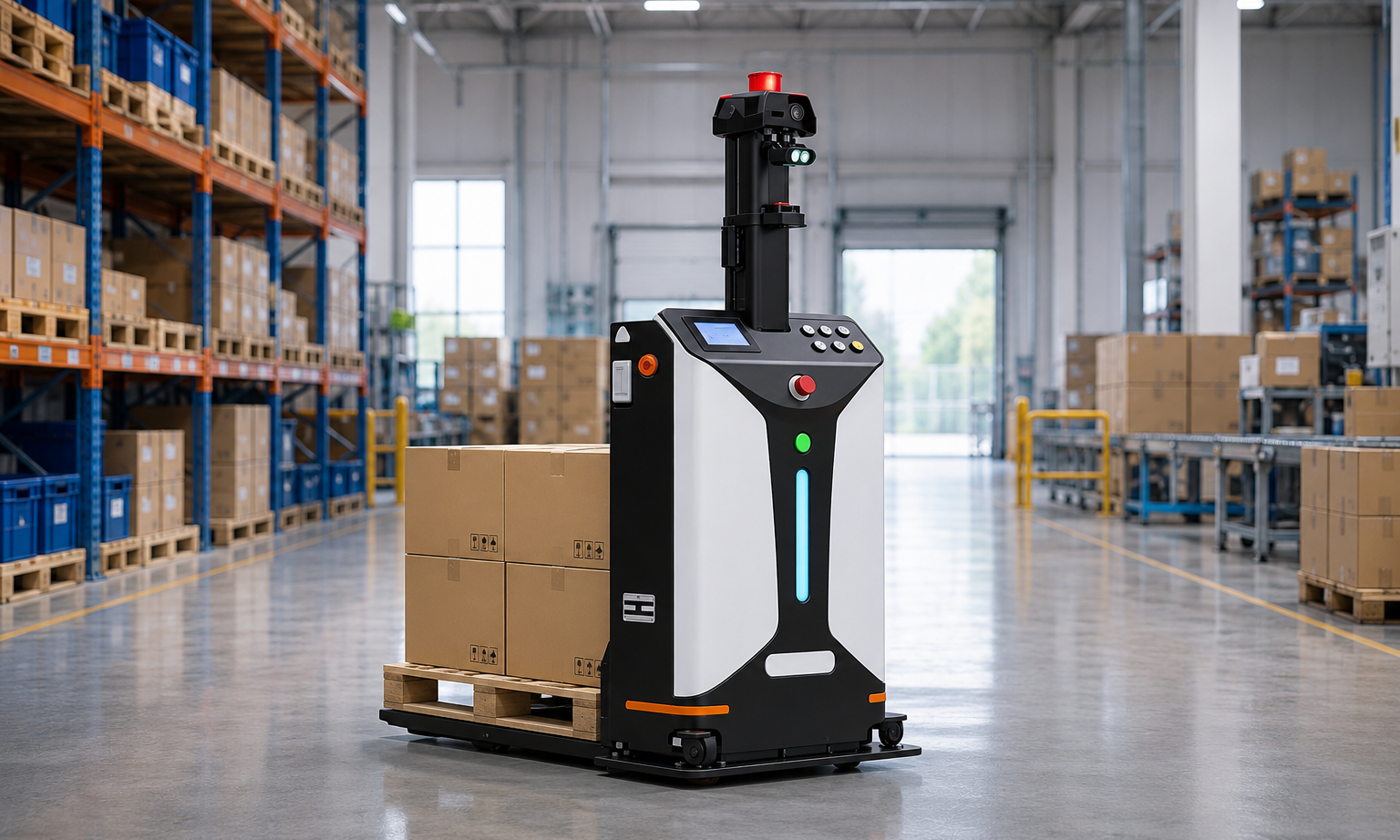
Learn what affects AGV forklift price in 2026, typical hardware price ranges, hidden project costs, ROI factors, and how to compare autonomous forklift quotes.
Learn what affects AGV forklift price in 2026, typical hardware price ranges, hidden project costs, ROI factors, and...
Most AGV forklift prices are higher than manual forklift prices because buyers are not only paying for a truck. They are paying for autonomous navigation, safety sensing, pallet handling logic, battery and charging design, control software, commissioning, and support.
As a practical 2026 planning range, public market references often put simple pallet-moving or stacker-style AGV forklifts around $45,000 to $80,000 per vehicle, while reach truck, counterbalance, and narrow-aisle autonomous forklifts can move into the $95,000 to $230,000+ range depending on lift height, payload, navigation package, and project scope.
The important point is that a low vehicle price does not automatically mean a low project cost. A quote can look cheaper because it excludes software, site mapping, integration, safety validation, training, or after-sales support. Buyers should compare the total operating system, not only the vehicle number.
Quick Answer: How Much Does an AGV Forklift Cost?
A basic AGV forklift or autonomous pallet stacker commonly starts in the tens of thousands of dollars. More capable autonomous forklift systems with higher lift height, heavier payload, stronger navigation, or more complex site integration can cost much more.
For early budgeting, buyers can use these broad hardware-only ranges:
- Pallet mover or basic stacker AGV: about $45,000 to $80,000.
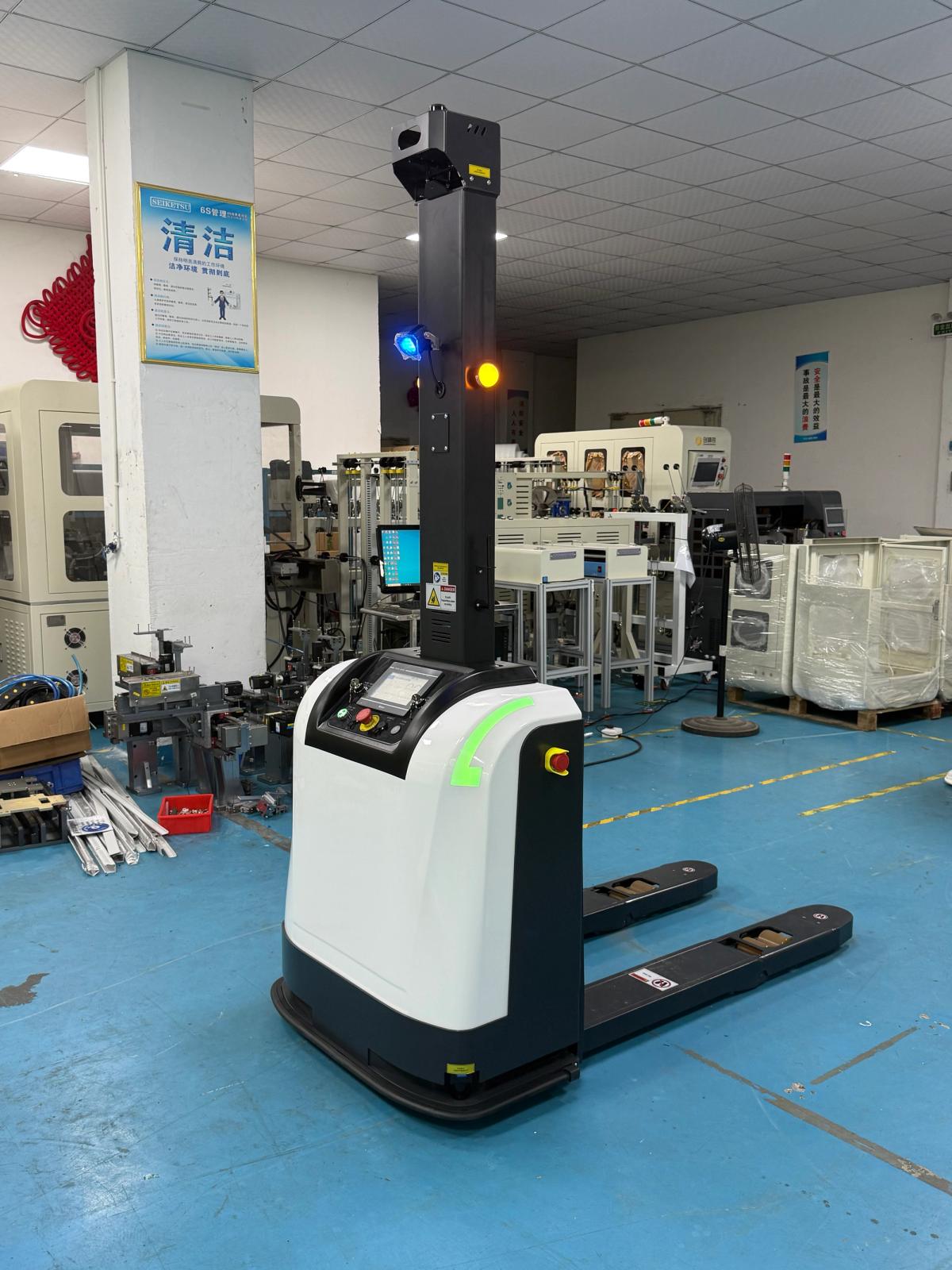
- Counterbalance or straddle AGV forklift: about $80,000 to $120,000.
- Reach truck AGV: about $95,000 to $180,000.
- VNA or high-rack specialty AGV forklift: about $150,000 to $230,000+.
These ranges should be treated as planning references, not fixed pricing. A real quote depends on load, route, aisle, pallet condition, safety rules, software interface, deployment geography, and support scope.
Why AGV Forklift Price Is Not Just the Vehicle Price
A manual forklift can often be purchased as a standalone machine. An AGV forklift is closer to an automation project. The vehicle matters, but the value comes from whether the whole transport loop runs safely and reliably without constant manual driving.
A full AGV forklift project budget usually includes vehicle hardware, navigation configuration, safety validation, fleet or task control software, battery and charging design, mapping, commissioning, training, spare parts, and maintenance support.
If the AGV forklift needs to communicate with conveyors, doors, elevators, WMS, WCS, MES, or ERP systems, the integration scope can become a major part of the total cost.
This is why two quotes for the same "AGV forklift" label can be very different. One quote may include only the vehicle. Another may include the vehicle, navigation, safety logic, software, commissioning, integration, training, and support.
Main Factors That Affect AGV Forklift Price
1. Forklift type and handling task
A low-lift pallet mover is usually less expensive than a reach truck or narrow-aisle AGV forklift. The more the vehicle must lift, stack, align, or work in tight aisles, the more demanding the mechanical and control requirements become.
A simple floor-to-floor transfer task may only need stable pallet pickup and drop-off. A high-rack storage task needs mast control, positioning accuracy, rack alignment, load stability, and stronger exception handling.
2. Payload, lift height, and pallet condition
Payload and lift height are direct cost drivers. A 1.5-ton floor transport task is not the same as a high-lift task with heavier pallets and strict rack accuracy.
Pallet condition also matters. If pallets are damaged, inconsistent, overhanging, or placed at variable positions, the AGV forklift may need stronger pallet detection, better sensors, and more commissioning time.
3. Navigation and safety package
Navigation technology affects both vehicle price and deployment cost. Magnetic guidance, QR-code guidance, laser navigation, reflector-based positioning, vision-based navigation, and hybrid methods do not have the same hardware and setup requirements.
Safety is not an optional decoration. A working AGV forklift needs scanners, safety logic, speed control, stop zones, warning devices, and validated behavior around people, forklifts, racks, and intersections.
4. Battery and charging strategy
A single-shift operation may work with scheduled charging. A multi-shift warehouse or production site may need opportunity charging, larger batteries, automatic charging stations, or route planning that protects uptime.
Charging strategy can change the number of vehicles needed. A cheaper vehicle with poor uptime may cost more than a better-designed system that uses fewer vehicles more consistently.
5. Software, integration, and fleet control
A single AGV forklift responding to simple call points is less complex than a fleet that must coordinate with conveyors, doors, elevators, warehouse software, production schedules, or traffic rules.
Buyers should ask whether fleet software, task dispatching, monitoring, reporting, WMS or WCS interfaces, and future vehicle expansion are included in the price.
Costs Buyers Often Miss
Many AGV forklift budgets miss the cost of making the site automation-ready. This can include floor condition checks, pallet standardization, route marking or reflector installation, Wi-Fi review, handoff point design, and safety zone planning.
Commissioning is another common gap. The vehicle must be mapped, routes must be tuned, pickup and drop-off positions must be validated, exceptions must be tested, and operators must learn how to handle stops, alarms, blocked routes, and manual recovery.
Support costs matter after launch. Spare parts, software updates, preventive maintenance, remote support, on-site service, and operator retraining may not look important in the first quote, but they affect the system's long-term value.
How to Compare AGV Forklift Quotes
Do not compare AGV forklift quotes only by the final price. Compare what each quote includes, what each quote excludes, and what assumptions each supplier used.
Before choosing a supplier, ask these questions:
- Is the quote vehicle-only or project-inclusive?
- What payload, lift height, pallet type, and aisle width are assumed?
- Which navigation method and safety package are included?
- Are mapping, commissioning, training, and acceptance testing included?
- Are fleet control software and system interfaces included?
- What support, warranty, spare parts, and maintenance terms are included?
- What is explicitly excluded from the price?
A higher quote may be better if it includes the work needed to make the system run. A lower quote may be risky if it shifts integration, site preparation, or support back to the buyer.
ROI: When Does an AGV Forklift Pay Back?
AGV forklift ROI depends on labor replacement, shift pattern, travel distance, uptime, damage reduction, safety improvement, and throughput stability. The same vehicle can have a strong ROI in a three-shift repetitive route and a weak ROI in a low-frequency route with many exceptions.
A simple ROI check starts with these variables:
- How many forklift driving hours can be reduced each day?
- How many shifts does the route run?
- How many manual handoffs, waits, or empty trips can be removed?
- How much damage, congestion, or safety risk can be reduced?
- What support and maintenance cost should be included each year?
The best AGV forklift projects usually have repetitive transport loops, clear pickup and drop-off points, stable pallets, enough daily volume, and a site team ready to standardize the process.
When the Cheapest AGV Forklift Is Not the Best Choice
The cheapest AGV forklift is not always the lowest-cost choice. If the vehicle cannot reliably detect pallets, handle the aisle, communicate with the right systems, or recover from common exceptions, the site may lose more money in downtime than it saved in the purchase price.
A good quote should make the operating assumptions clear. It should explain what the vehicle can handle, what site conditions must be controlled, what software is included, how acceptance will be tested, and what support is available after launch.
Buying Checklist Before Requesting a Final Quote
Before asking for a final AGV forklift price, prepare the following information:
- Load type, pallet size, maximum weight, and load stability.
- Pickup and drop-off points, route distance, and daily transport frequency.
- Aisle width, turning space, floor condition, ramps, doors, and intersections.
- Required lift height, rack type, conveyor height, or station geometry.
- Shift pattern, uptime target, charging preference, and available charging area.
- Required interfaces with WMS, WCS, MES, ERP, conveyors, doors, or elevators.
- Safety requirements, mixed traffic conditions, and manual recovery rules.
With this information, suppliers can quote the real application instead of quoting a generic truck. That is the fastest way to avoid misleading price comparisons.
Conclusion
AGV forklift price should be evaluated as a system cost, not only a vehicle cost. The right question is not "What is the cheapest autonomous forklift?" The better question is "Which AGV forklift package can move this site's loads safely, reliably, and with a clear payback path?"
For buyers comparing quotes, the best next step is to define the load, route, lift height, aisle condition, software interface, and support requirements before asking suppliers for final pricing. That makes the quote more accurate and makes the comparison more useful.
Next Review
Move from article research to a scoped feasibility review.
Use the related products and solution paths below, then send your workflow and layout for a quick engineering review.
Related Solutions
Engineering Review