
Related Products
Automated Guided Vehicle Diagram: Components and How It Works
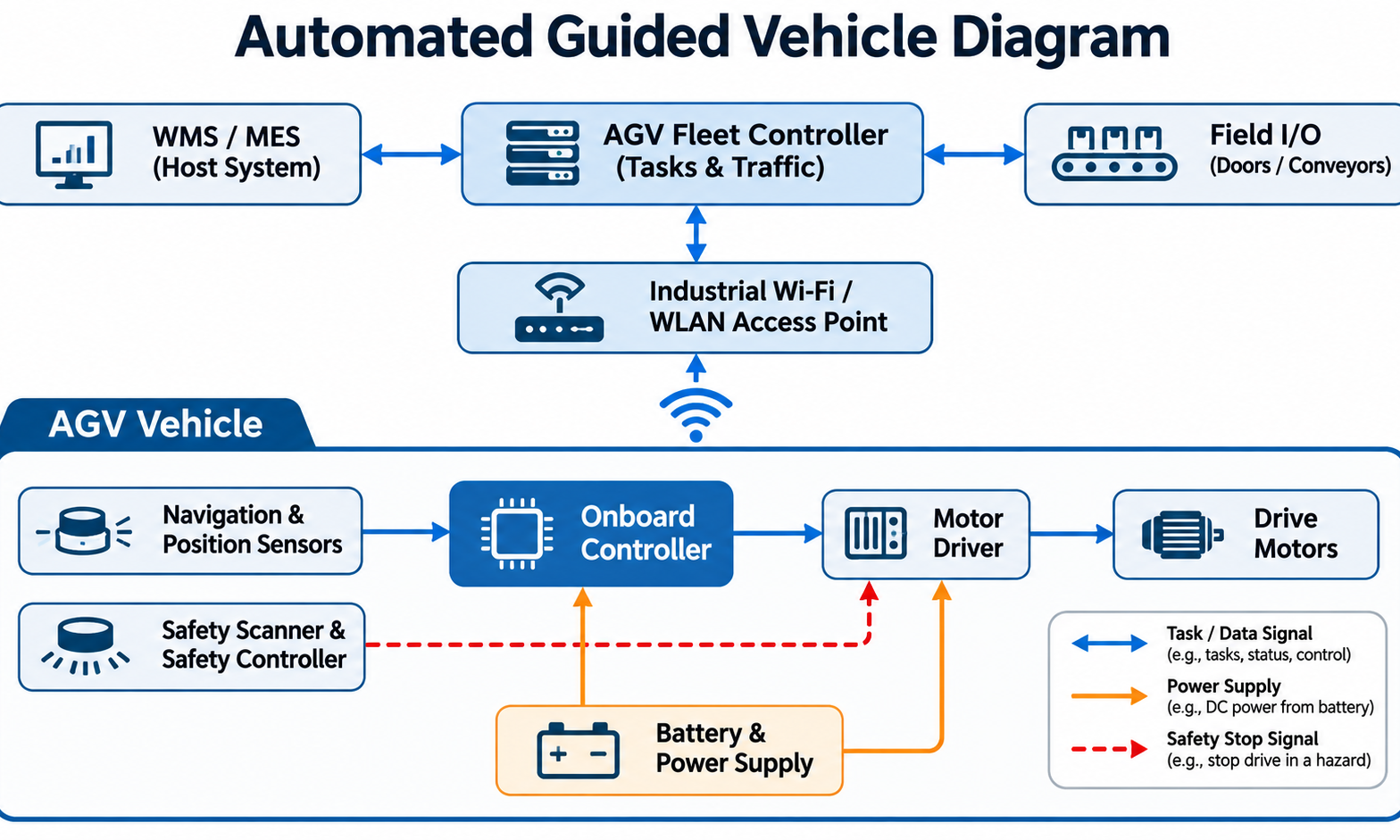
An AGV block diagram shows the main components of an automated guided vehicle system and how they connect.
Main Components of an AGV Block Diagram · How Does an AGV System Work? · AGV System Design and Integration
AGVs move goods automatically through the combined work of controllers, navigation sensors, drive motors, and other components. An automated guided vehicle diagram shows how these parts are connected and how the vehicle receives instructions and carries out tasks.
What Is an AGV Block Diagram?
An AGV block diagram shows the main components of an automated guided vehicle system and how they connect.
A typical diagram includes a warehouse management system, an AGV fleet controller, wireless communication, and the vehicle’s onboard control system.
It shows how transport tasks reach an AGV, how the vehicle controls its motors and determines its position, and how it reports its operating status back to the fleet controller.
Main Components of an AGV Block Diagram
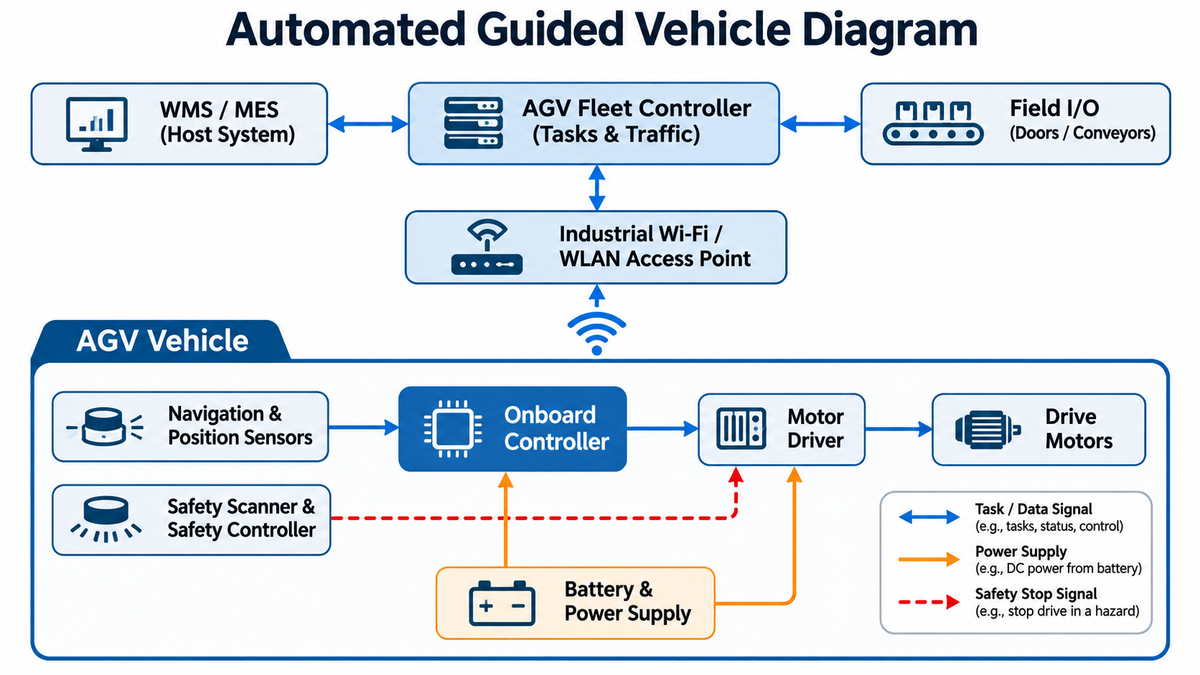
The diagram shows the main parts of an AGV system, from the host software to the controls inside the vehicle.
1. Host System
The host system is usually a warehouse management system (WMS) or manufacturing execution system (MES).
For example, when a warehouse needs to move a batch of pallets to a production line, the WMS or MES can create a transport task and send it to the AGV fleet controller.
2. AGV Fleet Controller
The fleet controller decides which AGV will handle a task and which route it should take.
When several AGVs operate in the same warehouse, it also coordinates traffic based on vehicle locations and operating status, helping prevent conflicts at intersections or in narrow aisles.
3. Wireless Communication and Field I/O
AGVs typically communicate with the fleet controller over industrial Wi-Fi. They receive transport instructions and report their locations, task progress, and fault information.
When an AGV works with a conveyor, automatic door, or other equipment, it also exchanges signals through field interfaces. For example, when an AGV reaches a conveyor, both systems confirm they are ready before starting the load transfer.
4. Onboard Control System
The onboard control system manages the AGV itself. Its main components include:
- Onboard controller: Receives task and navigation information and controls vehicle movement.
- Navigation sensors: Detect the vehicle’s position and heading to keep it on the designated route.
- Motor drivers and drive motors: Control travel speed, steering, and movement.
- Battery and power system: Supply electricity to the motors, controller, and sensors.
- Safety control system: Uses safety scanners, emergency-stop devices, and other equipment to detect hazards and bring the vehicle to a safe stop when necessary.
How Does an AGV System Work?
Consider a pallet transport task in a warehouse.
When a pallet needs to be delivered to a production line, the WMS creates a transport task. The AGV fleet controller selects a suitable vehicle and sends the pickup location and destination over the wireless network.
After receiving the task, the onboard controller uses position data from the navigation sensors to control the motors and follow the designated route.
As the AGV travels, its sensors continuously report position and motion data. The controller uses this feedback to adjust speed and direction. If the safety system detects a hazard, the vehicle slows down or stops according to its safety control logic.
Once the AGV has transferred the load, it sends the task status back to the fleet controller and waits for its next assignment.
AGV System Design and Integration
If you’re planning to use AGVs in a warehouse or production line, tell us about your transport routes, load specifications, and the equipment the vehicles will need to work with.
Coolyne can use these details to help you choose the right AGV, fleet controller, and equipment integration approach. You can get in touch through the Coolyne website to discuss your requirements.
Next Review
Move from article research to a scoped feasibility review.
Use the related products and solution paths below, then send your workflow and layout for a quick engineering review.
Related Solutions
Engineering Review