
Related Products
Automated Sortation: What Is an Automated Sortation System?
In warehouses, distribution centers, and manufacturing facilities, goods often need to be routed to different locations based on orders, destinations,...
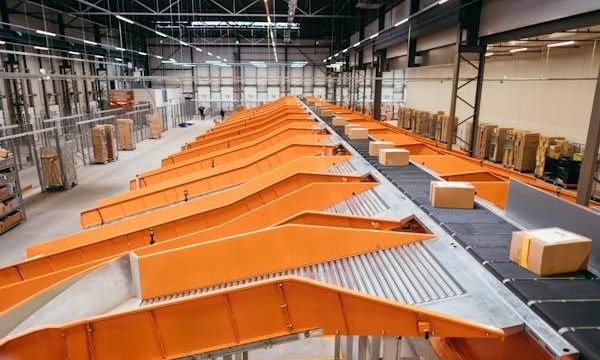
In warehouses, distribution centers, and manufacturing facilities, goods often need to be routed to different locatio...
In warehouses, distribution centers, and manufacturing facilities, goods often need to be routed to different locations based on orders, destinations, SKUs, production processes, or shipping routes. As order volumes, SKU counts, and logistics activity increase, relying solely on manual identification and sorting becomes increasingly difficult to sustain efficiently.
Automated sortation uses identification technologies, control systems, and automated handling equipment to determine where each item should go and automatically route it to the appropriate destination, workstation, or logistics area.
What Is an Automated Sortation System?
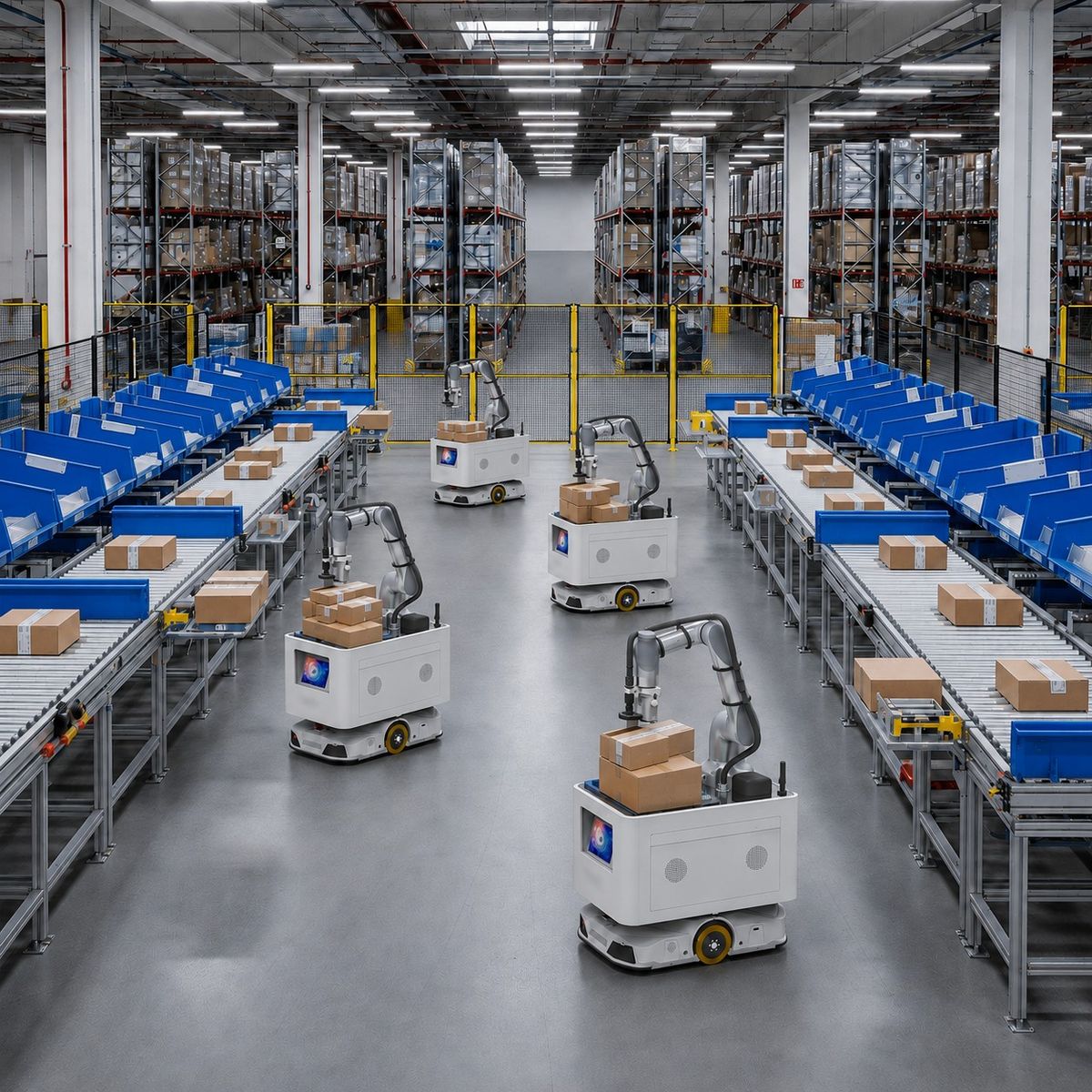
An automated sortation system is a logistics automation system that automatically identifies goods and routes them to different destinations according to predefined rules such as order information, SKU, destination, or other business criteria.
Sortation rules may be based on:
- Order or customer
- SKU
- Distribution zone
- Shipping route
- Product type
- Production process
- Destination storage location or workstation
For example, in an e-commerce distribution center, cartons from different orders may enter the same conveyor line after picking. A scanner reads the barcode on each carton, the control system determines its designated shipping lane, and the sortation equipment automatically diverts it to the correct route.
The same principle can be applied in manufacturing. Totes containing different components can be automatically routed to specific production lines, workstations, or buffer areas according to production orders.
A typical automated sortation system usually consists of:
Identification equipment + conveying or handling equipment + sortation mechanisms + control software + higher-level systems such as WMS, WCS, or MES
Together, these components identify the goods, determine their destination, and execute the physical sorting process.
How Does an Automated Sortation System Work?
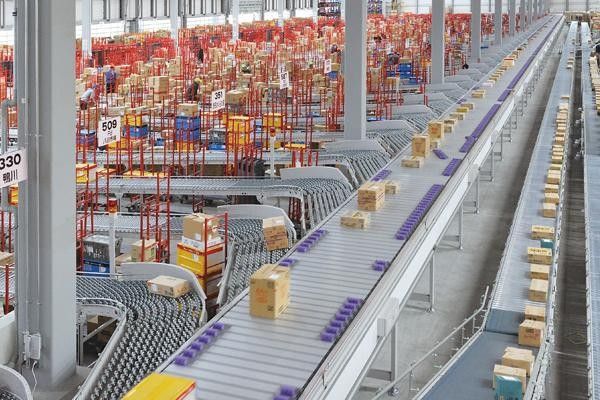
Although different sortation technologies use different mechanical designs, their basic operating process is generally similar.
1. Goods Enter the System
Cartons, parcels, totes, or components first enter the sortation area through conveyors, robotic systems, or manual loading.
In high-speed conveyor-based systems, goods may also be singulated and spaced to ensure a consistent flow into downstream equipment.
2. Goods Are Automatically Identified
The system collects product or load information using technologies such as:
- Barcodes
- QR codes
- RFID
- Machine vision
- Weight detection
- Dimension measurement
The identification data is then sent to the WMS, WCS, or another control system.
3. The Sortation Destination Is Determined
Based on order data and predefined rules, the control system determines which exit, workstation, or logistics area each item should be sent to.
For example, if a carton is assigned to Shipping Lane 05, the system designates Lane 05 as its destination.
This is the core of automated sortation: the system must not only identify the item, but also determine where it should be routed according to operational rules.
4. The Sortation Action Is Executed
When the item reaches the appropriate sortation point, the system uses the corresponding equipment to divert it.
Sortation mechanisms may include:
- Sliding shoes
- Pop-up wheels
- Cross belts
- Tilt trays
- Pushers
- Robotic arms
- Mobile robots
Although these technologies work differently, their objective is the same: to route identified goods accurately to the destination assigned by the system.
5. Task Status Is Updated
After the sortation task is completed, the equipment reports the result back to the control system. The WMS, WCS, or MES then updates the relevant order, inventory, or material status.
The overall process can be summarized as:
Goods enter → Automatic identification → Destination determination → Automated sortation → Arrival at destination → Status update
Types of Automated Sortation Systems
Warehouses vary significantly in product dimensions, weight, SKU count, and throughput requirements. As a result, automated sortation systems use several different technologies.
1. Cross-Belt Sorter
A cross-belt sorter consists of multiple independently controlled belt carriers.
Goods travel along the main loop, and when an item reaches its assigned destination, the corresponding belt moves sideways to discharge it into the designated chute.
Cross-belt sorters are commonly used for:
- E-commerce orders
- Parcels
- Apparel
- Small and medium-sized cartons
- High-throughput distribution centers
Their main advantages are high sorting speeds and the ability to support a large number of destinations.
2. Tilt-Tray Sorter
A tilt-tray sorter consists of a continuous series of trays.
Products travel on the trays until they reach their assigned destination, where the tray tilts to one side and discharges the item into the appropriate chute.
This type of system is commonly used for high-speed sorting of parcels, cartons, and products of varying sizes.
3. Sliding Shoe Sorter
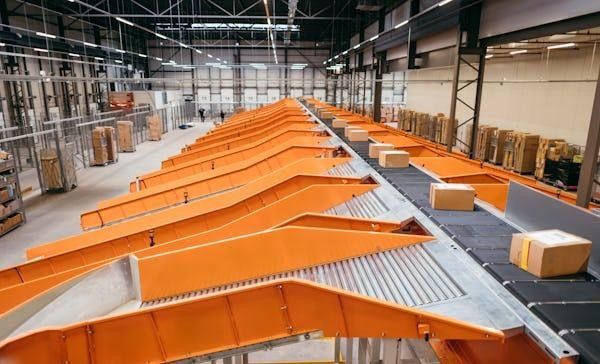
Sliding shoe sorters are typically integrated into conveyor lines.
When a carton reaches its assigned destination, shoes mounted on the conveyor move laterally and gently divert the load onto a branch conveyor.
This technology is particularly suitable for:
- Large cartons
- Heavier packaged goods
- Outbound distribution
- High-speed continuous conveying
4. Pop-Up Wheel / Wheel Sorter
A wheel sorter diverts cartons or totes from a main conveyor to different branch lines by changing the direction of its rollers or wheels.
Its compact design makes it suitable for medium- to high-speed sorting of cartons and totes, and it can often be integrated into existing conveyor systems.
5. Robotic Sortation
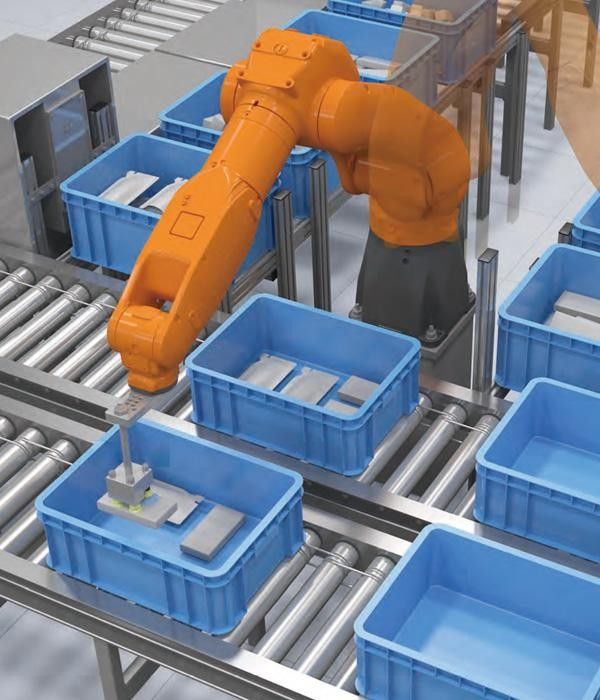
Robotic sortation uses robotic arms, machine vision, or mobile robots to route goods to different destinations based on identification data.
For example, a vision system can identify products on a conveyor, while a robotic arm sorts them into different totes according to SKU or order information.
In mobile robotic sortation, the system first identifies a tote or load and assigns it a destination based on the order, SKU, or other sortation rules. An AGV or AMR then transports it to the corresponding sortation destination.
In this context, the robot is not simply transporting goods. It is executing destination assignments based on sortation rules.
Robotic Sortation vs. Traditional Automated Sortation
Both robotic sortation and traditional automated sortation can improve efficiency and reduce manual work, but they are designed for different operational requirements.
The key difference is that traditional automated sortation typically uses fixed mechanical paths for high-speed, continuous diversion, while robotic sortation relies more heavily on software, vision, and programmable movement to adapt how goods are assigned to different destinations.
Traditional Automated Sortation Is Better Suited to High-Throughput Operations
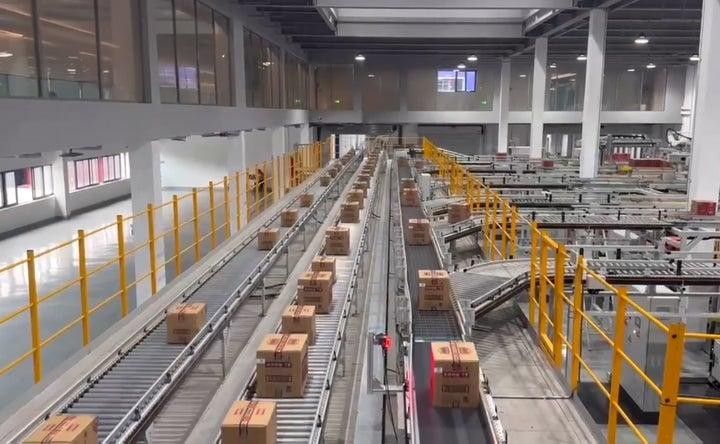
If a warehouse consistently handles large volumes of relatively standardized cartons or parcels and its sortation destinations and material-flow routes remain stable, technologies such as cross-belt, sliding shoe, and tilt-tray sorters can provide very high continuous throughput.
For this reason, these systems remain particularly well suited to large e-commerce, parcel, and distribution operations.
Robotic Sortation Is Better Suited to Frequently Changing Sortation Requirements
If SKUs, product specifications, order structures, or destination workstations change frequently, robotic systems can adapt by modifying task logic and destination configurations.
For example, the same mobile robot system can route different totes to packaging, assembly, buffer, or outbound areas according to changing orders, without requiring a dedicated fixed conveyor route for every new destination.
Neither approach is universally better. The right choice depends on product characteristics, sortation throughput, the number of destinations, and the frequency of operational changes.
Future-Proof Your Warehouse with Coolyne Robotic Sortation
The core of automated sortation is not simply moving goods. It is the ability to:
Identify goods → Determine the destination → Automatically execute the sortation task
Coolyne can integrate machine vision, robotic arms, AGVs/AMRs, control software, and conventional sortation equipment into this process, providing a suitable warehouse automation solution based on your actual sortation requirements.
For example:
- Vision systems identify different products or totes.
- WMS/WCS determines the sortation destination based on orders, SKUs, or production tasks.
- Robotic arms place products into the appropriate totes or sortation points.
- AGVs/AMRs transport totes or loads to the destinations assigned by the system.
- Control software records task completion and provides traceability throughout the sortation process.
For high-speed sorting of standardized cartons or parcels, conveyors and conventional high-speed sorters can be used. For areas with many SKUs, frequently changing destinations, or layouts that need greater flexibility, robots can handle more dynamic sortation tasks.
Both technologies can also be combined within the same project. For example, fixed sortation equipment can handle high-speed mainline flows, while robots manage complex loads, dynamic destinations, or sortation tasks between different operational areas.
Coolyne can evaluate your product characteristics, sortation rules, throughput requirements, number of destinations, and existing warehouse layout to determine whether conventional sortation, robotic sortation, or a hybrid solution is the best fit.
If you are evaluating an automated sortation project, contact Coolyne for a project feasibility analysis and ROI assessment.
Next Review
Move from article research to a scoped feasibility review.
Use the related products and solution paths below, then send your workflow and layout for a quick engineering review.
Related Solutions
Engineering Review