
Related Products
How to Automate a Factory Without Automating the Wrong Processes
Learn how to prioritize factory automation by improving material flows, reducing AGV waiting time, sizing fleets for peaks, and connecting AGVs with MES, WMS, and PLCs.
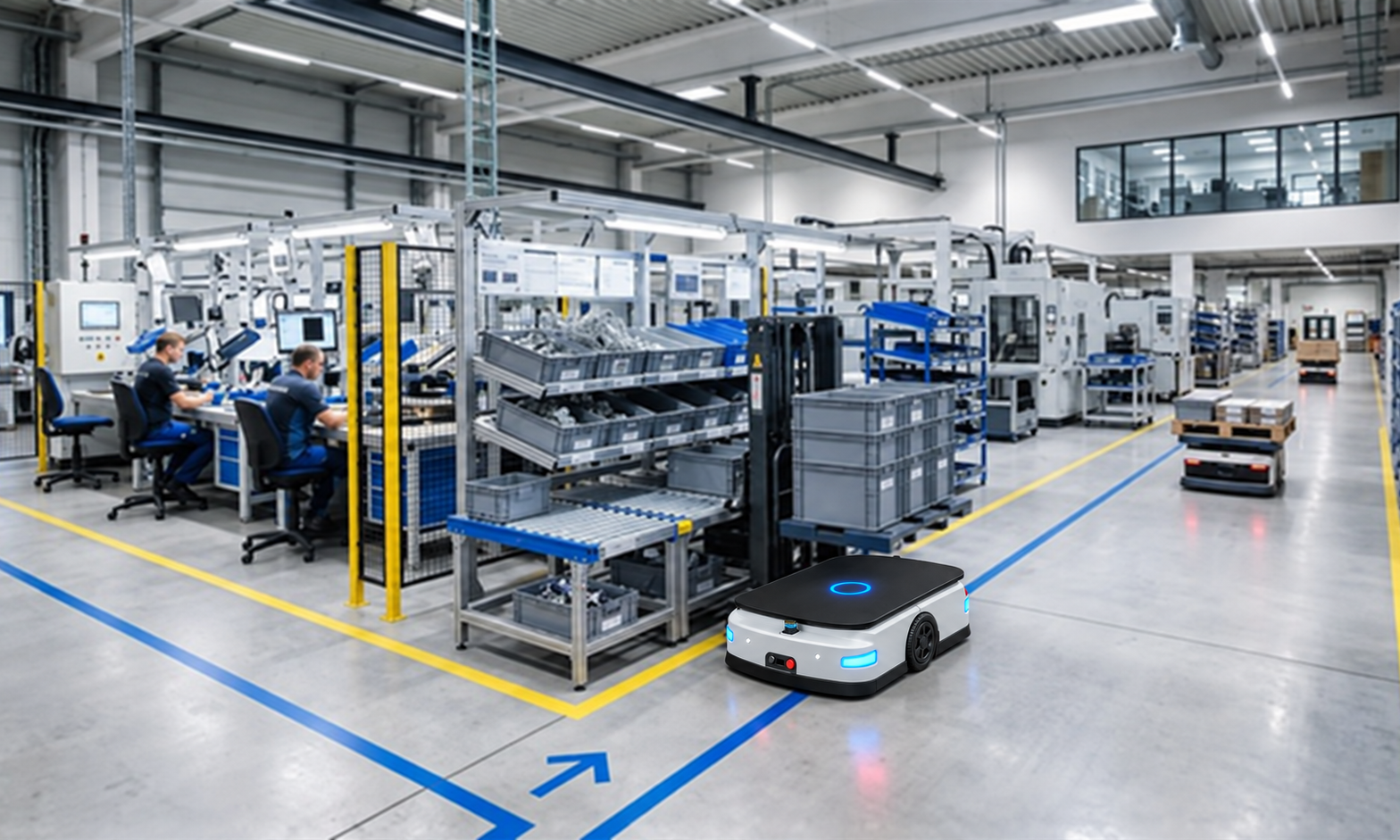
Learn how to prioritize factory automation by improving material flows, reducing AGV waiting time, sizing fleets for...
When a factory begins considering AGVs, the discussion often starts with the equipment: How many vehicles are needed? How fast should they travel? What payload is required? Which navigation method should be used?
These specifications matter, but they are usually not the first factors that determine whether the project will work well.
A manual forklift route may have been in use for years, accumulating temporary buffer areas, repeated transfers, manual confirmations, and waiting time along the way. If AGVs simply replicate that route, the method of transport changes, but the waiting and unnecessary movement remain.
The same applies to different transport tasks. Some occur hundreds of times per day and are well suited to automation. Others happen only a few times per week, with different loads, routes, and loading methods each time. Applying the same automation logic to both is unlikely to produce the same result.
When discussing how to automate a factory, the AGV itself is only one part of the system. Stations, carriers, production takt time, material readiness, and the existing logistics process all affect how the system performs. Depending on the load and handling method, this may involve conventional AGVs or products such as a Forklift AGV.
The Biggest Factory Automation Mistake: Automating an Inefficient Process
Suppose a factory currently uses manually operated forklifts to move raw materials from the warehouse to the production line.
The existing route is:
Warehouse → Temporary Buffer → Secondary Staging Area → Production Line
The first buffer may originally have been created for manual inventory checks. The WMS may now handle those confirmations, but the area remains part of the process.
The second staging area may have been added years ago because there was not enough space beside the production line. After the layout changed, it may no longer serve its original purpose.
Once people have followed the same logistics route for years, these steps can easily become accepted as part of normal operations. If an AGV project is designed directly around the existing process, the robots will still travel through both buffer areas.
Travel distance is not significantly reduced, every task still involves multiple load transfers, the buffers continue to occupy floor space, and the control system must manage two additional stations.
Before defining an AGV route, each logistics node can be reviewed individually. What purpose does this station still serve? Why does the material need to stop here? Is it simply a transfer point left over from an older manual process?
If the original four-stage route can be reduced to:
Warehouse → Production Line
the required fleet size, task cycle time, number of stations, and control logic will all change with it.
Not Every Material Movement Should Be Automated
The automation value of different logistics tasks can vary significantly within the same factory.
For example, a maintenance department may move large spare parts only a few times per week. The parts vary in size, some are moved on pallets while others require lifting equipment, and the destination depends on which machine is being repaired. Operators often need to decide on site how each item should be handled.
It is technically possible to automate this type of task, but supporting a small number of non-standard movements may require specialized carriers, additional stations, and more complex control logic.
Elsewhere in the same factory, an assembly line may require 300 identical cart deliveries every day:
Warehouse → Line-Side Station
The carts are standardized, the route is relatively fixed, and the transport volume is stable.
For this type of operation, it is much easier to calculate how many deliveries are required per hour, how long each task takes, how much capacity is needed during peak periods, and how labor requirements change after automation.
In actual projects, transport frequency, route stability, and carrier standardization are often more useful indicators than whether a task is technically possible to automate.
Low-frequency, unpredictable movements that depend heavily on on-site judgment can remain manual without preventing other high-frequency logistics routes from being automated.
Before Buying AGVs, Remove the Reasons They Would Have to Wait
AGV specifications usually list maximum speed, payload, navigation accuracy, and charging time. They do not show how much time the vehicle may spend waiting once it reaches the factory floor.
An AGV may arrive at a CNC workstation before the finished part has been released from the fixture. The vehicle has no choice but to wait.
Another AGV may reach a production line carrying a full material cart, only to find that the empty cart has not yet been removed.
Other delays may come from an automatic door that has not opened, a conveyor still processing the previous load, an occupied destination position, an empty pallet that has not been returned, or a PLC that has not yet issued permission for the transfer.
All of this time becomes part of the transport cycle.
If AGV capacity is calculated only as:
Travel Distance ÷ Vehicle Speed
the theoretical result will usually be more optimistic than actual operating capacity.
A more complete task cycle includes:
Travel to Pickup + Pickup Waiting + Loading/Lifting + Transport + Drop-Off Waiting + Unloading + Subsequent Empty Travel
The time the robot actually spends moving is only one part of the full cycle.
A Faster AGV Does Not Necessarily Make a Faster Factory
Suppose one complete transport cycle takes 12 minutes:
| Stage | Time |
|---|---|
| Travel | 6 minutes |
| Waiting at pickup | 2 minutes |
| Waiting at drop-off | 3 minutes |
| Load transfer | 1 minute |
| Total | 12 minutes |
If a faster AGV reduces travel time by 20%, the six minutes of travel fall to approximately 4.8 minutes.
The complete task cycle falls from 12 minutes to about 10.8 minutes.
If the vehicle remains unchanged but the pickup and drop-off stations are improved so that total waiting time falls from five minutes to one minute, the cycle drops from 12 minutes to about eight minutes.
Both changes improve performance, but their impact on the overall logistics cycle is very different.
The same issue appears in multi-robot systems. If AGVs regularly queue at a particular intersection, increasing individual vehicle speed will have limited effect. If a production line consistently releases empty carts several minutes late, adding more robots may simply create a longer queue.
The constraint within a complete task cycle may come from material preparation, transfer stations, WIP buffers, conveyors, route intersections, task release timing, or the cycle time of the production equipment itself.
Why 100% AGV Utilization Is Not the Goal
Suppose a factory operates 20 AGVs, with 19 of them continuously executing tasks during normal production.
Measured by average utilization, the fleet appears to be running very efficiently.
At 10:00 a.m., however, three production lines simultaneously issue urgent replenishment requests while one robot goes out of service.
The fleet now has almost no spare capacity, and new transport requests must enter a queue.
Another system may normally operate with only 16 or 17 of its 20 AGVs actively assigned to tasks. Its utilization looks lower, but when several additional transport requests arrive at once, vehicles are still available to respond immediately.
Fleet sizing has to account for both average and peak demand, while also allowing capacity for charging, maintenance, route congestion, equipment failures, and fluctuations in production volume.
If every vehicle is already operating close to full capacity during normal periods, any demand above the average will quickly become waiting time.
What Should Humans Still Handle After Material Transport Is Automated?
Non-standard situations continue to occur even after routine transport tasks have been automated.
A standardized material cart, for example, may become deformed after a collision. A lifting AGV may no longer be able to move underneath it correctly. The system can detect that pickup has failed, but someone will still need to inspect the carrier.
Production schedules can also change unexpectedly. A batch of materials originally planned for Line A may suddenly need to be redirected to Line C. If labels, carriers, or workstation conditions have also changed, simply changing the AGV destination may not be sufficient.
Damaged pallets, loose packaging, incorrectly positioned fixtures, machine maintenance, temporarily blocked routes, and sensor faults are all normal exceptions in an automated operation.
For this reason, project design needs to cover exception flows as well as normal flows.
For example:
What happens after an AGV fails to pick up a load twice?
The system could pause the task, retry it, assign another vehicle, or request operator intervention. The selected rule directly affects how quickly the automation system can recover during actual production.
The role of operators changes as well. As repetitive driving and cart-pushing tasks decrease, exception handling, carrier maintenance, system recovery, and confirmation of abnormal site conditions become more important.
The Real Sign of an Automated Factory Is Not How Many Robots It Has
Consider two hypothetical factories.
Factory A
The site operates 50 AGVs.
When a production line runs short of material, an operator informs the logistics department.
Logistics staff confirm inventory and manually create an AGV task.
If congestion occurs on a route, personnel on the factory floor coordinate the vehicles.
After transport is completed, some production and inventory information still has to be updated manually.
Factory B
The site operates only 10 AGVs.
The MES generates a replenishment request based on the production schedule and line-side inventory status.
The RCS receives the request, selects a vehicle, and creates the transport task automatically.
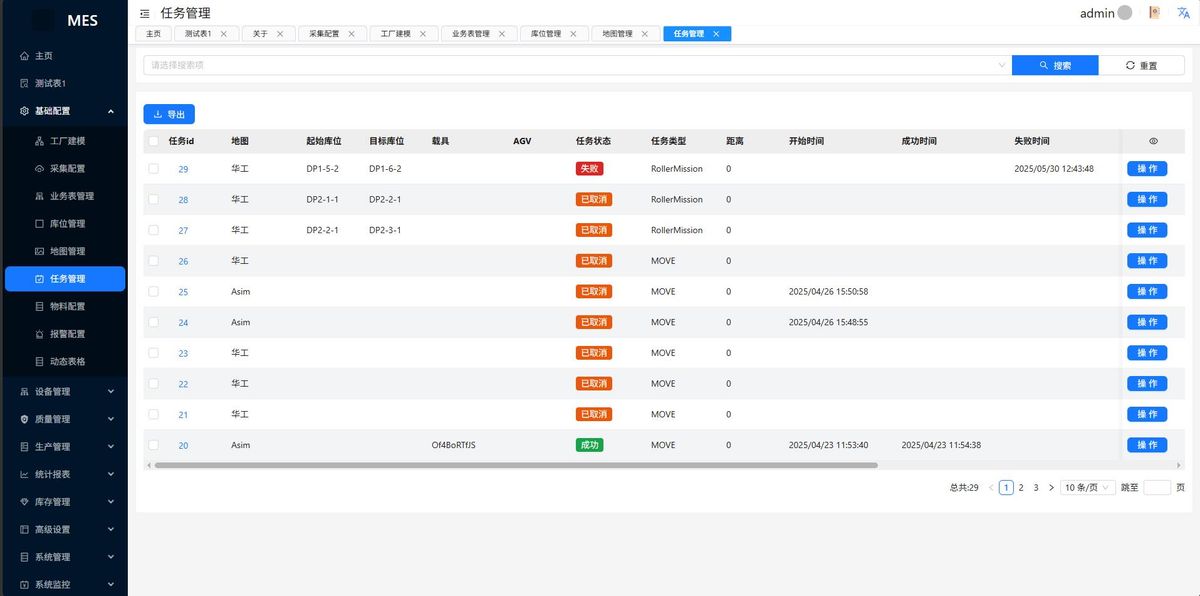
When the AGV arrives at the workstation, the PLC confirms the transfer status.
Once delivery is complete, the task result is returned to the MES/WMS and the related inventory status is updated.
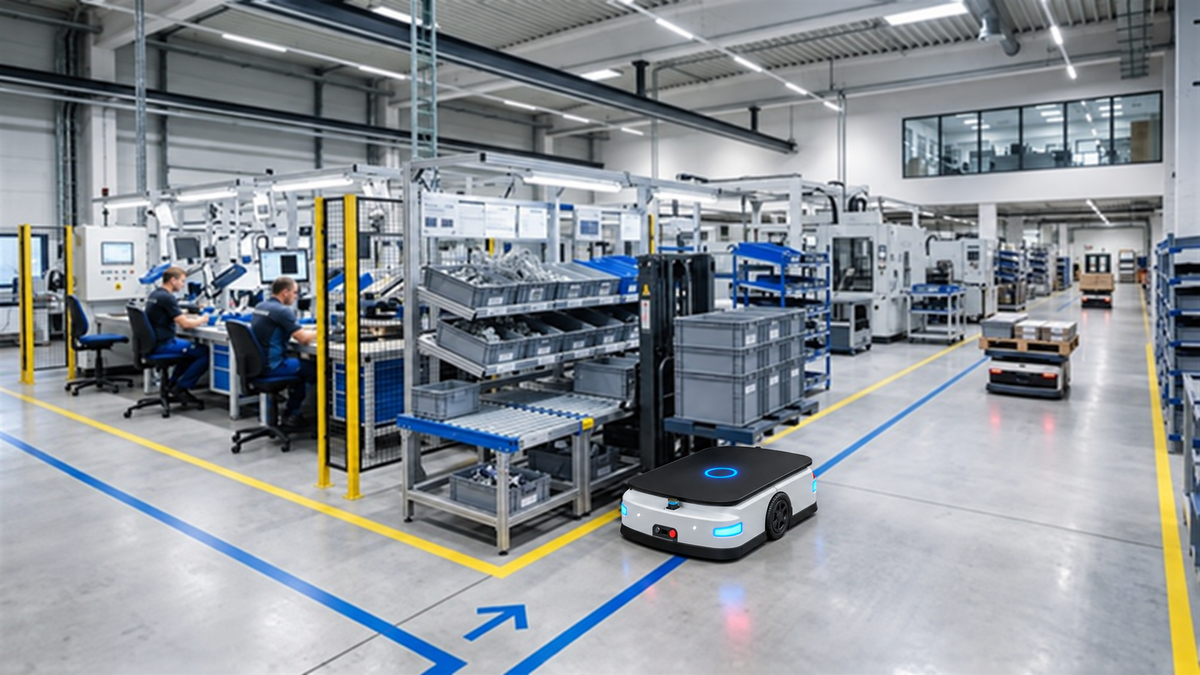
Both factories use AGVs, but the number of robots says little about how deeply those robots are integrated into production.
Factory A has automated vehicle movement, while task creation, coordination, and part of the information flow still depend on people.
Factory B operates fewer robots, but production demand, logistics tasks, physical execution, and status feedback are connected.
The difference becomes more apparent as the fleet expands. In a system that depends on manual task creation and coordination, increasing the fleet from 50 to 80 vehicles may also increase the amount of management work required. In an integrated system, expansion is more likely to involve adjustments to fleet capacity and scheduling rules rather than a corresponding increase in manual task management.
How Coolyne Evaluates Factory Processes for AGV Automation
Coolyne evaluates the frequency, routes, carriers, waiting time, and production impact of existing logistics tasks to determine the automation priority of different processes.
The assessment typically considers average and peak transport volumes, complete task cycle times, carrier standardization, the stability of pickup and drop-off points, and the frequency of urgent deliveries or production interruptions.
High-frequency, repetitive processes with stable routes may be ready to move directly into AGV system design. Processes with unnecessary transfers, station waiting, or incompatible carriers may need to be adjusted first. Low-frequency and unpredictable tasks that depend heavily on on-site judgment can remain manual.
These conditions determine an appropriate automation scope and AGV configuration without setting a robot quantity in advance based on a factory-wide unmanned automation target.
Next Review
Move from article research to a scoped feasibility review.
Use the related products and solution paths below, then send your workflow and layout for a quick engineering review.
Related Solutions
Engineering Review