
Related Products
Reverse Logistics: What It Is and Why It Matters to Your Business
Learn what reverse logistics is, how it works, and how warehouse automation can improve returns processing, inventory control, and value recovery.
Learn what reverse logistics is, how it works, and how warehouse automation can improve returns processing, inventory...
In a traditional supply chain, products generally move from manufacturers, warehouses, or distribution centers to distributors, retailers, and end customers. However, product delivery does not always mark the end of the logistics process. Customer returns, product repairs, packaging recovery, inventory recalls, equipment returns, and end-of-life product disposal can all cause goods to move back upstream through the supply chain.
This movement of products from customers, retail locations, or points of use back to warehouses, manufacturers, repair centers, or recycling facilities is known as reverse logistics.
As e-commerce return volumes increase, customer expectations for after-sales service rise, and businesses place greater emphasis on the circular economy and sustainable operations, reverse logistics is no longer simply part of customer service. It has become an important factor affecting customer satisfaction, inventory turnover, operating costs, and overall supply chain efficiency.
What Is Reverse Logistics?
Reverse logistics refers to the process of moving products, packaging, components, equipment, or materials from end users, retailers, or distributors back upstream through the supply chain for transportation, receiving, inspection, sorting, repair, resale, recycling, or disposal.
The goal of forward logistics is to deliver the right product to the right customer at the right time. Reverse logistics addresses a different question: once a product is returned, how can it be handled more quickly, at a lower cost, and in the most appropriate way?
For example, a consumer may request a return after purchasing a product from an e-commerce platform. Once the item arrives back at the warehouse, employees must determine whether it can be restocked directly, repackaged, repaired, refurbished, returned to the supplier, dismantled, recycled, or disposed of. This entire handling process is part of reverse logistics.
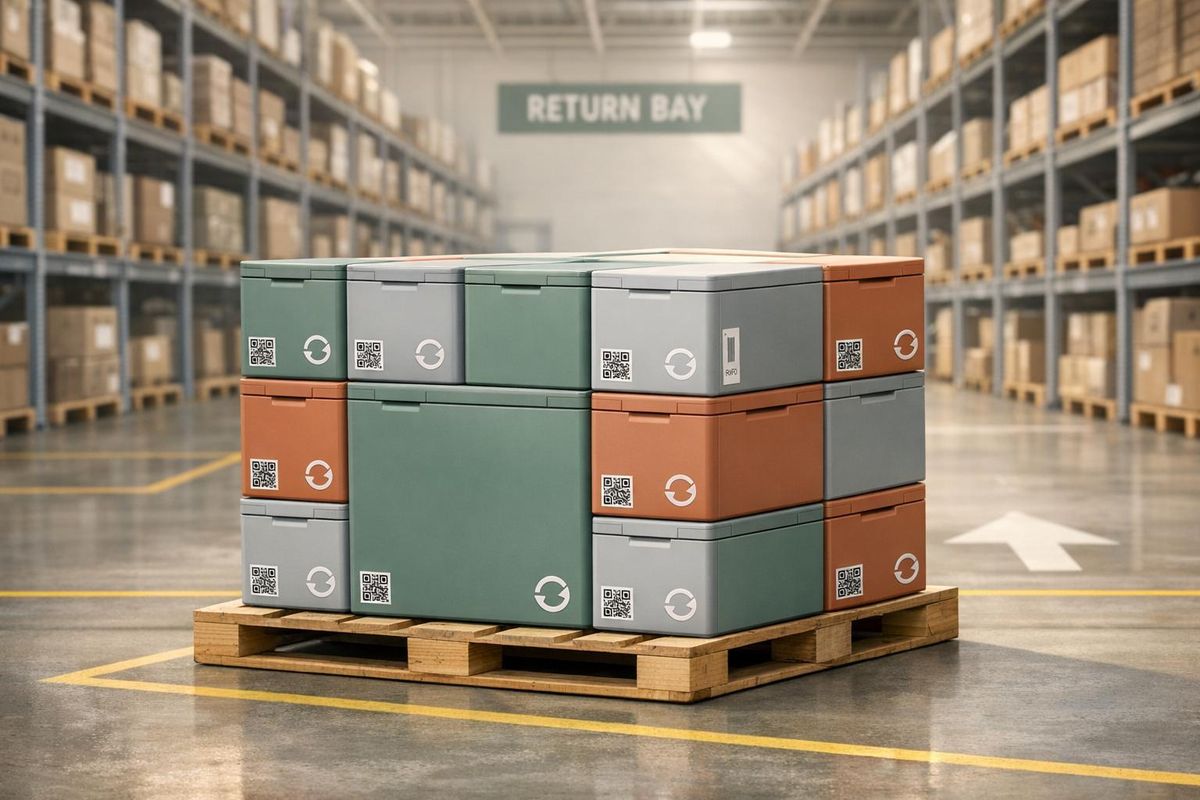
Reverse logistics involves more than return transportation. It may also include:
- Return authorization and customer communication
- Receiving and registering returned products
- Appearance, functionality, and quality inspections
- Product classification and residual-value assessment
- Repackaging, repair, or refurbishment
- Restocking and secondary sales
- Packaging, pallet, and component recovery
- Disposal and environmentally responsible processing
- Inventory, order, and financial-data updates
An efficient reverse logistics operation therefore requires close coordination among transportation, warehousing, order management, after-sales service, and information systems.
Types of Reverse Logistics
The types of reverse logistics involved vary depending on a company’s products, customer base, and business model.
Customer Returns
Customer returns are the most common type of reverse logistics in e-commerce, retail, and consumer goods.
Products may be returned because of an incorrect size, shipping damage, differences between the product and its description, quality problems, or a change in the customer’s purchasing decision.
Once the product returns to the warehouse, the company must quickly receive, inspect, and classify it. Based on its condition, the item may be restocked, repackaged, repaired, sold at a discount, or disposed of.
Product Repair and Refurbishment
For electronic devices, mechanical components, industrial equipment, and other high-value products, returned items are not necessarily discarded.
Companies can restore product value through inspection, cleaning, component replacement, functional testing, and repackaging. Repaired products may be returned to the original customer or sold again as refurbished products.
Product Recalls
When a product presents a quality, safety, or compliance issue, a company may need to recall it from distributors, retailers, or end customers.
A recall process usually requires accurate tracking of product batches, serial numbers, inventory locations, and customer information. A well-managed reverse logistics system helps companies locate and recover affected products quickly, reducing safety risks and potential damage to the brand.
Packaging and Material-Handling Asset Recovery
Pallets, reusable totes, racks, plastic containers, and returnable packaging often circulate repeatedly throughout the supply chain.
Companies must move these assets back from customers, stores, production lines, or distribution points to a warehouse, where they can be inspected, cleaned, repaired, and redistributed.
A reliable packaging recovery process can reduce the use of disposable packaging and lower long-term operating costs.
Returns of Excess and Slow-Moving Inventory
Distributors, retail stores, and regional warehouses may need to return slow-moving products, seasonal merchandise, or excess inventory to a central warehouse.
The company can then redistribute the inventory according to demand in different markets or handle it through promotional sales, supplier returns, component recovery, or recycling. This helps reduce excess inventory and unnecessary storage-space usage.
Rental Equipment and Reusable Asset Returns
For equipment rental companies, shared-asset operators, and industrial service providers, equipment must be returned to a designated warehouse or maintenance center after use.
The company needs to track each asset’s location, operating condition, maintenance history, and next available date to improve asset utilization.
Recycling and Disposal
Products that cannot be repaired or resold may still contain valuable materials or reusable components.
Companies can dismantle and sort these items for remanufacturing or material recovery. Components that cannot be reused must be disposed of safely in accordance with environmental regulations and industry requirements.
The Reverse Logistics Process
A complete reverse logistics process generally includes the return request, product transportation, warehouse receiving, inspection and classification, processing, and system updates.
Step 1: Submit a Return or Recovery Request
A customer, retailer, or distributor submits a return request and provides the order number, product information, reason for return, and current product condition.
The company reviews the request according to its return policy and then generates a return merchandise authorization number, shipping label, or pickup arrangement.
Step 2: Return the Product to the Appropriate Processing Location
Returned products may be transported to a regional warehouse, returns center, repair facility, manufacturing plant, or third-party logistics warehouse.
Companies should route each item to the most appropriate location based on the product type, reason for return, and required handling method. Sending every return to a single warehouse and transferring it again later can create unnecessary transportation and handling costs.
Step 3: Receive and Register the Product
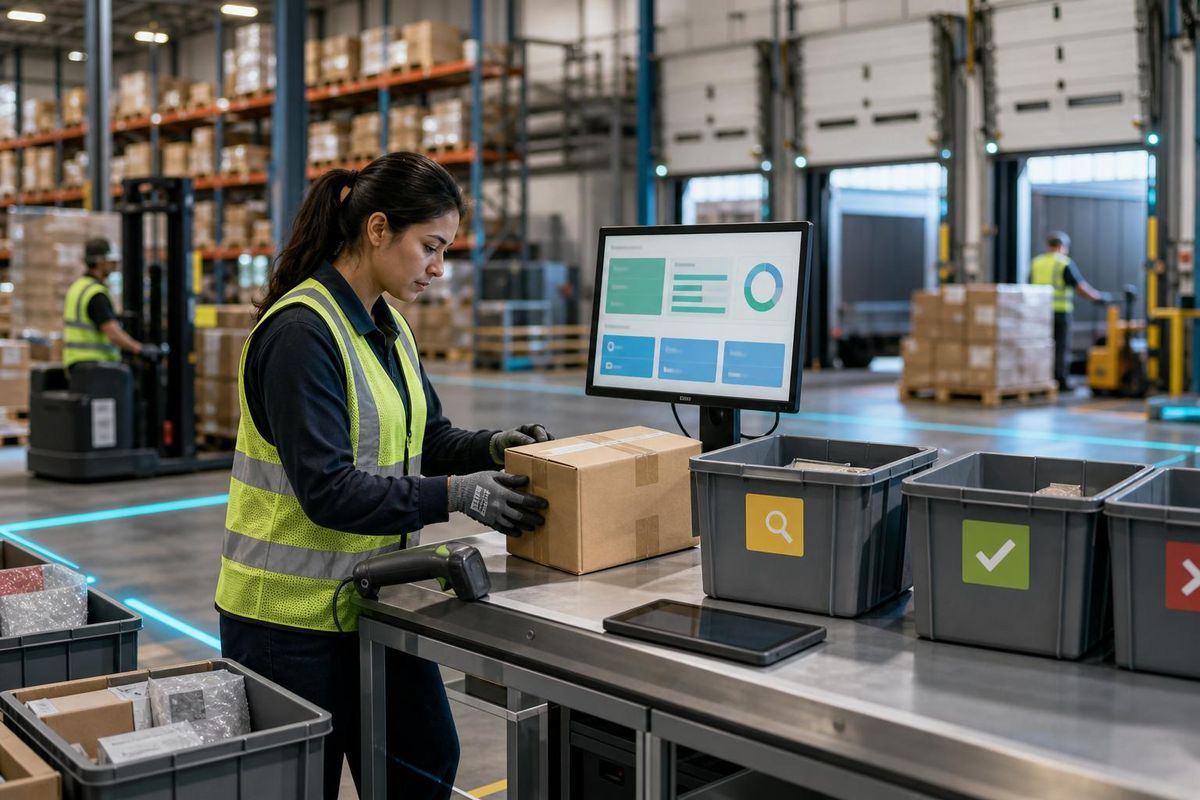
When the warehouse receives a returned product, employees scan its barcode, QR code, RFID tag, or serial number to match the physical item with the return request.
The system should also record the product’s origin, return date, reason for return, quantity, and current processing status.
Accurate registration helps prevent product loss, duplicate refunds, inventory errors, and processing delays.
Step 4: Inspect and Classify the Product
Employees inspect the product’s appearance, packaging integrity, usage level, functional condition, and overall quality.
Based on the inspection results, the returned item may be classified as:
- Ready for direct resale
- Requiring repackaging or relabeling
- Requiring repair or refurbishment
- Suitable for dismantling and component recovery
- Requiring return to the supplier
- Requiring recycling or disposal
This stage determines whether the product’s value can be recovered and is one of the most critical steps in the reverse logistics process.
Step 5: Carry Out the Appropriate Handling Process
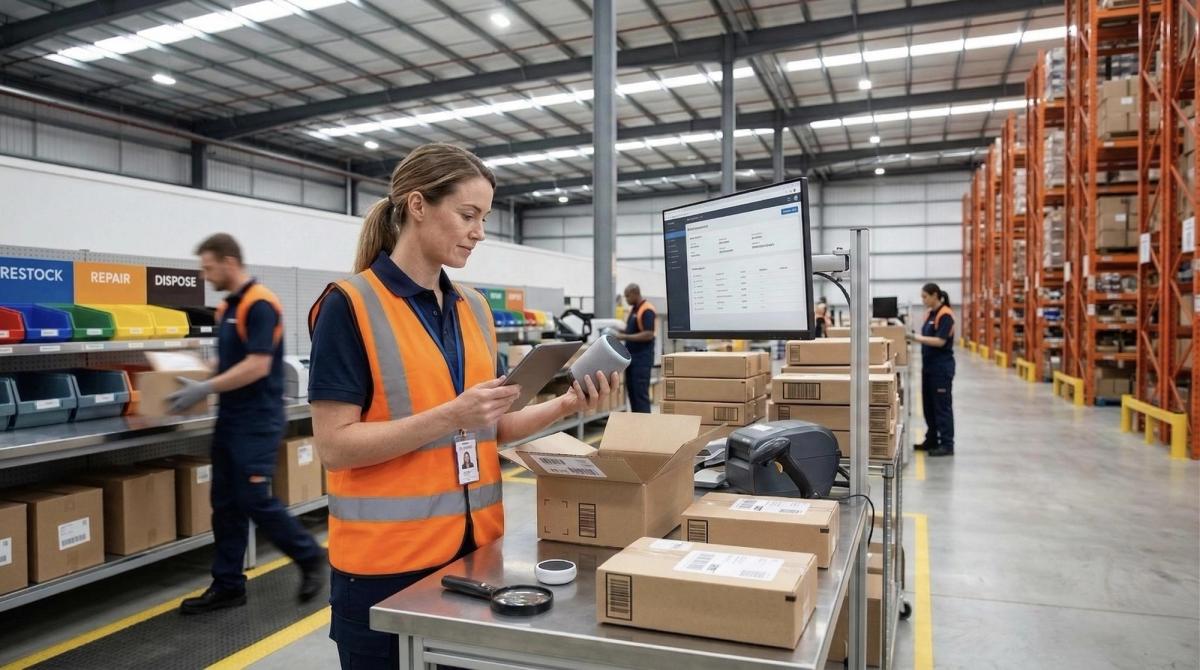
After classification, the product is sent to a restocking area, repackaging area, repair area, supplier-return area, recycling area, or disposal area.
Products that can be resold should be inspected, repackaged, and returned to inventory as quickly as possible to minimize the amount of time they remain unavailable for sale.
Step 6: Update Inventory and Financial Data
After processing is complete, the company must update its WMS, ERP, order management system, customer refund status, and financial records.
When the physical condition of returned goods does not match system data, the company may experience inaccurate inventory records, duplicate replenishment, refund errors, or loss of product traceability.
Step 7: Analyze Return Data
A mature reverse logistics process should not end when the returned item has been processed.
Companies should also analyze return reasons, processing times, recovered product value, transportation costs, and disposal rates. This information can reveal problems involving product quality, packaging, delivery, or sales practices.
Why Reverse Logistics Is Important to Your Business
Reverse logistics directly affects customer service, inventory management, operating costs, brand reputation, and a company’s ability to operate sustainably.
First, a convenient and transparent return experience can improve customer satisfaction. In e-commerce in particular, the ease of returning a product often affects whether a customer is willing to purchase from the company again.
Second, a returned product does not necessarily represent a complete loss. Through timely inspection, repackaging, repair, refurbishment, and resale, a business may recover part or even most of the product’s value.
Reverse logistics also affects inventory accuracy. When large volumes of returned goods remain in a pending area for extended periods, the company cannot accurately determine which products are available for sale, under repair, or awaiting disposal.
Returned products also consume warehouse space and labor resources. When handling procedures are unclear, warehouses can experience mixed inventory, blocked aisles, and unnecessary repeated handling.
For companies dealing with product recalls, hazardous materials, electronic products, medical equipment, or high-value industrial components, reverse logistics is also closely related to regulatory compliance, quality traceability, and safety management.
In addition, packaging recovery, component reuse, repair, refurbishment, and material recycling can reduce waste and improve supply chain sustainability.
Benefits of Optimizing Reverse Logistics
Lower Return-Processing Costs
Standardizing return authorization, receiving, inspection, and classification can reduce duplicated work, manual decision-making errors, and unnecessary internal handling.
Companies can also route products directly to the appropriate processing location according to product type and reason for return, reducing secondary transportation.
Higher Product Value Recovery
The sooner a returned product is processed, the more likely it is to be resold or reused.
When products remain in storage for too long, their packaging may become damaged, components may be lost, products may become outdated, or their market value may decline. Rapid inspection and restocking can reduce this loss of value.
Improved Inventory Accuracy
Connecting reverse logistics data with the WMS, ERP, and order management system allows companies to track the location, condition, and available quantity of returned goods in real time.
Companies can clearly distinguish among sellable inventory, inventory awaiting inspection, repair inventory, and inventory scheduled for disposal. This supports more accurate replenishment decisions.
Better Customer Experience
A clear return policy, faster refund process, and traceable return status can reduce customer waiting times and after-sales inquiries.
For B2B customers, reliable equipment repair, component-return, and reusable-container recovery processes can also support stronger long-term business relationships.
Better Use of Warehouse Space
Return-processing areas often become congestion points within a warehouse.
By establishing clearly defined receiving, inspection, classification, repair, and restocking areas, companies can reduce mixed inventory and disorganized storage while freeing up valuable warehouse space.
More Sustainable Operations
Optimized reverse logistics can increase the reuse of packaging, pallets, components, and raw materials.
Repair, refurbishment, remanufacturing, and material recycling can extend product life cycles, reduce dependence on new materials, and lower waste volumes.
How Can Warehouse Automation Improve Reverse Logistics?
When return volumes are low, companies can often rely on manual operations to complete receiving, inspection, sorting, and handling. However, as order volumes and return categories increase, manual processes can lead to slower processing, classification errors, delayed data updates, and higher internal transportation costs.
Warehouse automation can help businesses establish a more standardized and traceable reverse logistics process.
WMS Integration
A WMS can record the order information, reason for return, current location, inspection result, and final disposition of each returned product.
By integrating the WMS with the ERP, order management system, and customer service platform, companies can synchronize inventory, refund, and product-status information while reducing discrepancies between physical goods and system records.
Automated Identification and Data Collection
Warehouses can use barcodes, QR codes, RFID, or machine vision to identify returned products automatically.
This reduces manual data entry, improves receiving efficiency, and allows companies to track the complete journey of each returned item from receipt through final processing.
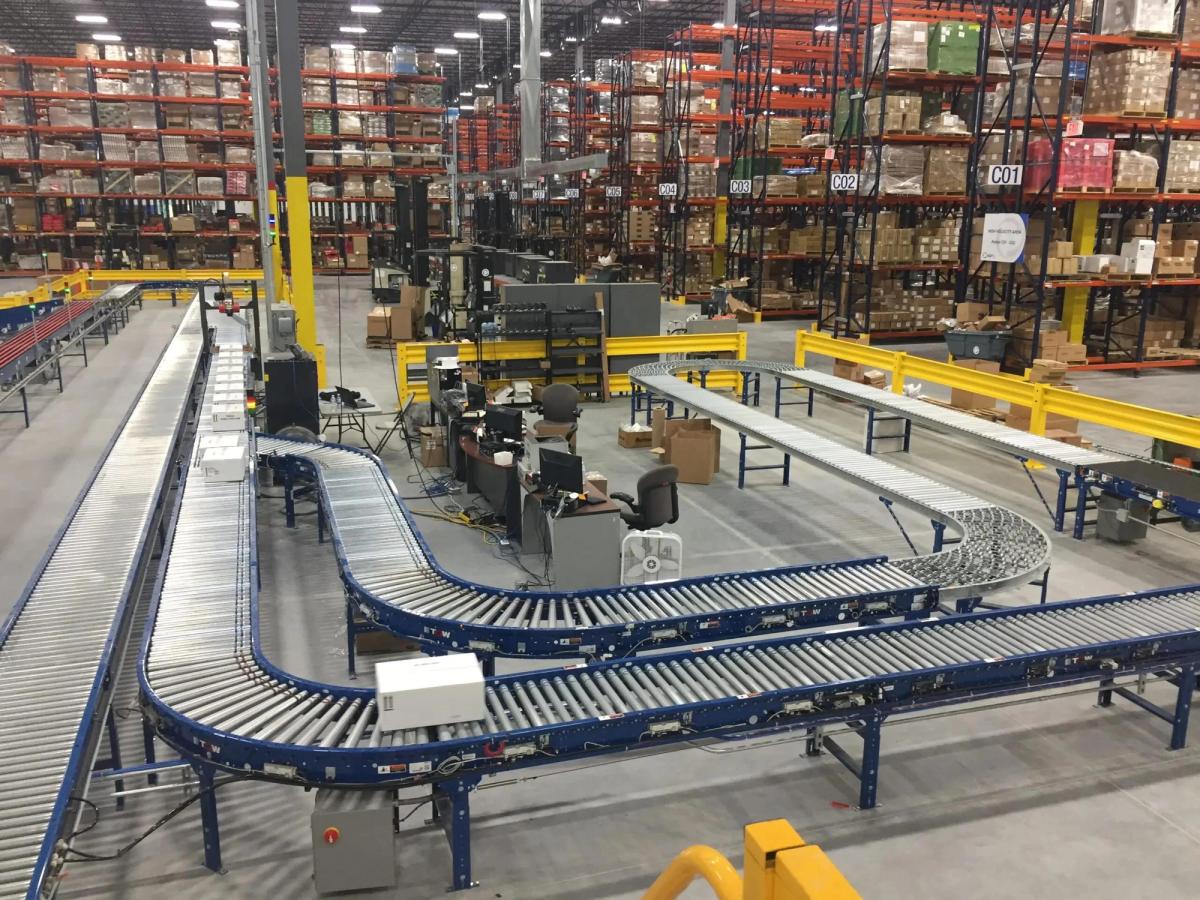
Conveyor and Automated Sorting Systems
After a returned product has been identified and initially inspected, a conveyor system can move it to the appropriate processing area.
Automated sorting equipment can direct products to restocking, repair, repackaging, supplier-return, recycling, or disposal areas based on product category, condition, or handling requirements.
AGV and AMR Internal Transportation
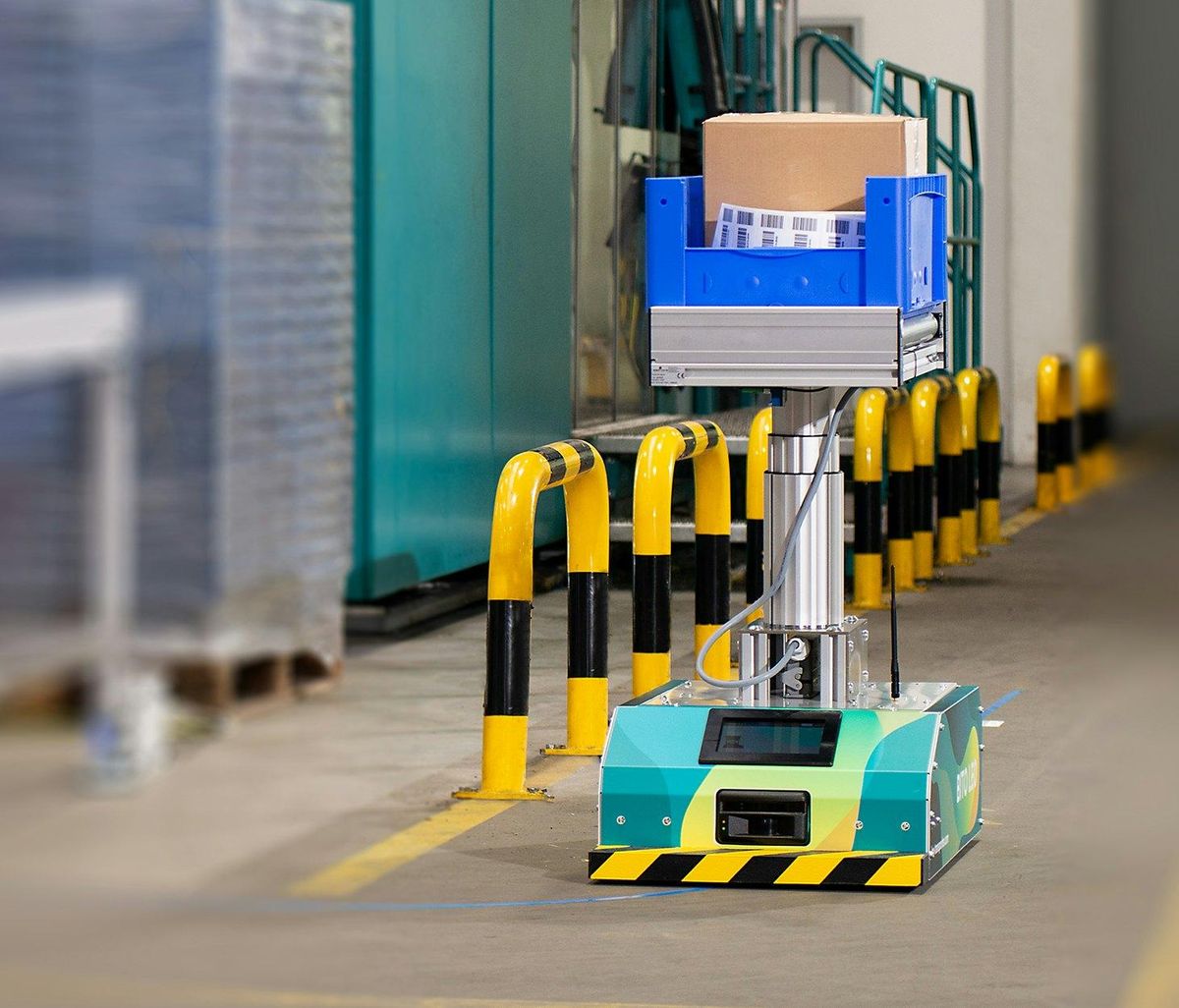
AGVs and AMRs can transport pallets, totes, or racks among return receiving areas, inspection workstations, repair areas, and storage locations.
By reducing manual travel and material handling, these systems can improve processing efficiency and reduce labor pressure during peak periods.
Goods-to-Person Picking and Automated Storage
For products that need to be restocked, repackaged, or repaired, automated storage and goods-to-person systems can deliver the required totes or items directly to the operator.
Employees no longer need to search through a large warehouse for returned products, allowing them to complete reinspection, component replacement, and repackaging more efficiently.
Data Analysis and Continuous Improvement
By analyzing return rates, reasons for return, processing times, and value-recovery rates for different products, companies can identify problems throughout the supply chain.
For example, if a specific product is frequently returned because of packaging damage, the company can improve the packaging structure or transportation method and reduce return rates at the source.
How Can Coolyne Help Companies Optimize Reverse Logistics?
Coolyne can plan a suitable reverse logistics automation solution based on a company’s return volume, product types, warehouse layout, and handling processes.
The solution may include:
- Return receiving and automated identification
- WMS integration with existing business systems
- Conveyor and automated sorting systems
- AGV and AMR internal transportation
- Tote and pallet automated storage
- Goods-to-person workstations
- Material delivery to repair and repackaging areas
- Return-data tracking and process visualization
During project planning, companies should not focus only on automation equipment. They must also analyze the actual handling path of returned products, manual operations, data flows, and exception scenarios.
By coordinating processes, software, and automation equipment, businesses can shorten return-processing cycles, reduce warehouse congestion, and improve the value-recovery rate of returned goods.
Contact Coolyne to discuss your reverse logistics and warehouse automation requirements and receive a customized solution for your operation.
Next Review
Move from article research to a scoped feasibility review.
Use the related products and solution paths below, then send your workflow and layout for a quick engineering review.
Related Solutions
Engineering Review