
Related Products
Semi-Automated Warehouse: Advantages and Practical Applications
Explore how semi-automated warehouses combine people, AGVs, storage systems, and conveyors to automate in stages with lower initial investment.
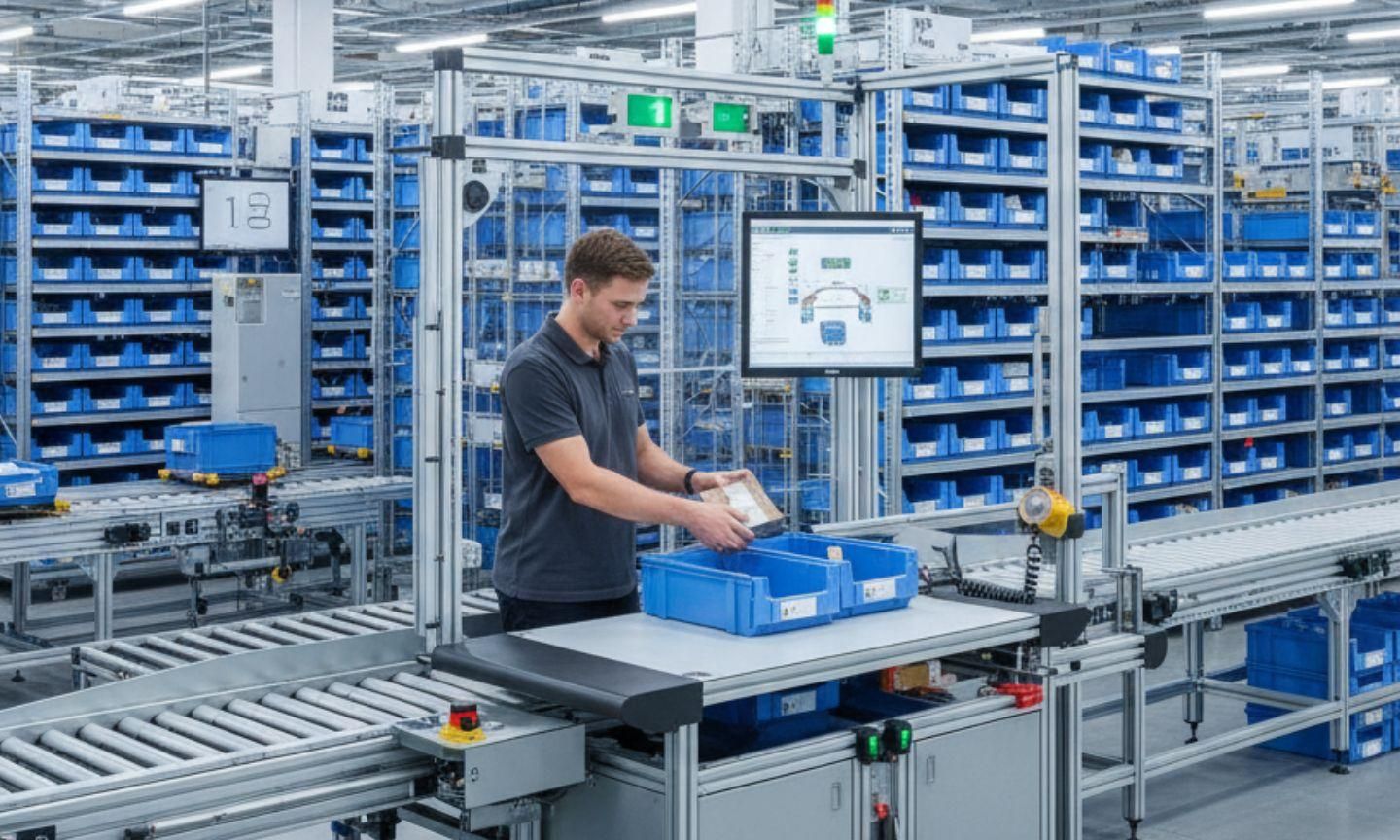
Explore how semi-automated warehouses combine people, AGVs, storage systems, and conveyors to automate in stages with...
In a semi-automated warehouse, AGVs, conveyors, and automated storage systems can handle some warehouse tasks, while employees continue to handle picking, packing, and exceptions.
This approach does not require the entire warehouse to be overhauled at once. Businesses can start with one operation and add automation equipment gradually as needed.
What Is a Semi-Automated Warehouse?
A semi-automated warehouse combines manual operations with automated equipment to carry out storage, material handling, order picking, and shipping.
For example, a warehouse may use AGVs to transport goods between storage and picking areas while employees still pick and pack products. The AGVs handle transportation, and workers process orders at workstations.
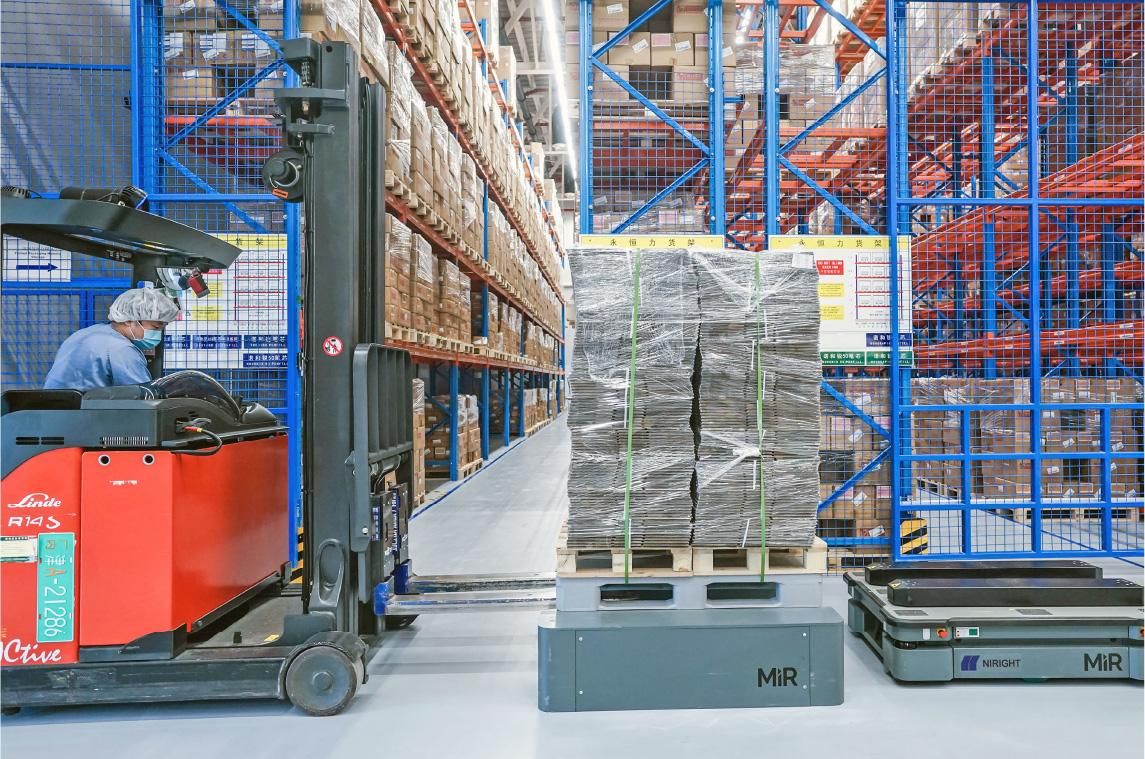
There is no standard equipment configuration for a semi-automated warehouse. Some facilities use just a few AGVs to move pallets. Others have installed automated storage systems and conveyors but still rely on employees for picking and packing.
The main difference between semi-automated and fully automated warehouses is the scope of automation and the extent to which daily operations depend on manual work. Fully automated warehouses typically connect major processes such as storage, material handling, picking, and conveying to achieve highly automated operations. Even so, personnel may still be needed for equipment maintenance, exception handling, and other support tasks.
Advantages of a Semi-Automated Warehouse Over a Fully Automated Warehouse
Less Disruption to Existing Warehouse Operations
For a warehouse that is already operating, semi-automation can be introduced in one area or process at a time, without changing the entire workflow at once.
For example, AGVs can be deployed between the receiving and storage areas while existing racks, manual picking operations, and packing stations remain in use. New equipment can be installed and tested area by area, allowing other parts of the warehouse to continue operating and minimizing disruption to daily receiving and shipping during construction and system changeovers.
By comparison, a fully automated system spanning multiple processes typically requires coordination across more equipment, workstations, and software interfaces. It may also involve more extensive warehouse layout changes and integrated system testing.
Lower Initial Investment and Investment Risk
A semi-automated warehouse does not require purchasing automation equipment for every part of the operation at once. Businesses can retain their existing facilities and add equipment and supporting systems as needed.
They can then evaluate how the installed equipment performs, how much it actually saves in labor costs, and whether the return on investment meets expectations before deciding whether to expand automation.
Investing in stages reduces the initial financial burden and helps businesses avoid buying too much equipment before their operational requirements are clear.
Greater Flexibility for Nonstandard Products and Special Orders
For warehouses handling a wide range of products or frequent changes in packaging specifications, keeping certain tasks manual can be more practical.
Highly automated workflows require equipment to handle more types of goods. If products vary considerably in size, weight, or packaging format, specialized load carriers or handling mechanisms may be needed, or existing equipment may have to be modified.
A semi-automated warehouse can assign well-defined, repetitive tasks to equipment, while employees continue to handle irregularly shaped items, fragile goods, and special orders. Even when product ranges or packaging specifications change, some tasks can be adapted by adjusting manual procedures without immediately modifying the entire automation system.
Practical Applications of a Semi-Automated Warehouse
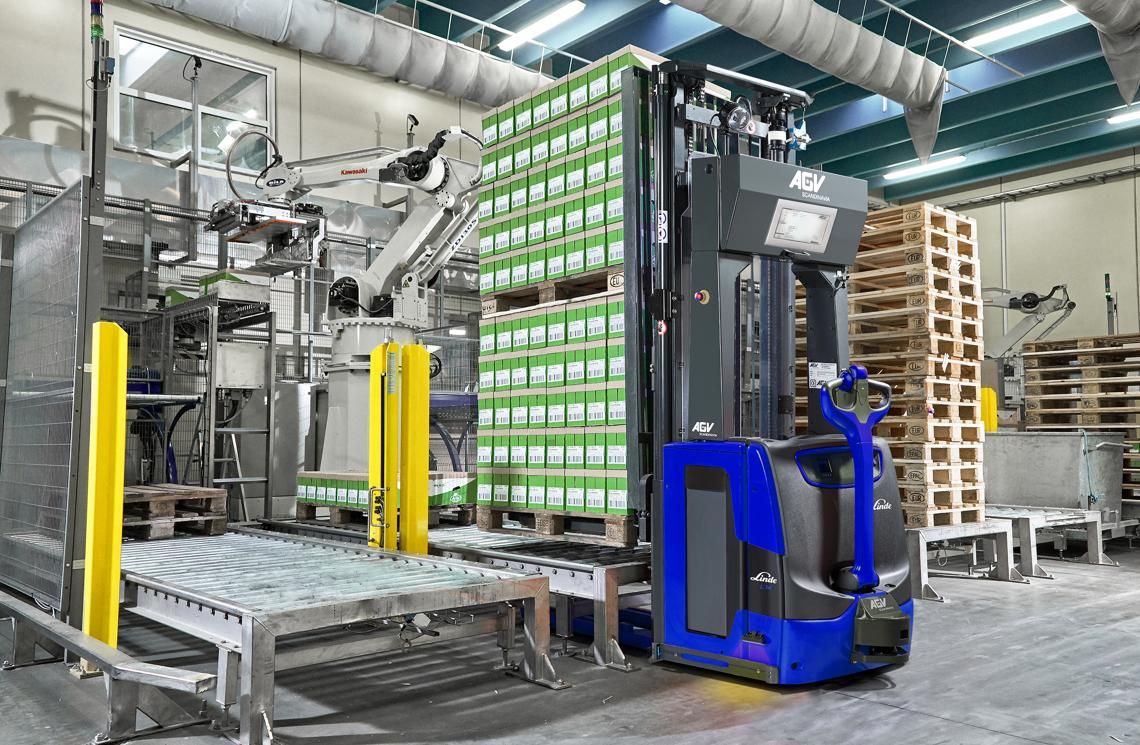
Employees and AGVs can work together effectively in receiving and pallet handling.
When goods arrive at the receiving area, employees unload them, inspect the packaging, scan barcodes, and confirm receipt. Once the goods have been received, forklift AGVs transport pallets that meet their handling requirements to designated storage locations or staging areas.
The warehouse can still use manually operated forklifts for unusually sized pallets, problematic loads, or other goods unsuitable for automated transport. High-volume pallet movements along relatively fixed routes can be handled continuously by AGVs.
In order picking, a common combination is automated storage and manual picking.
Warehouses can use AS/RS, shuttle systems, or tote-storage robots to store and retrieve goods. When an order comes in, the system delivers the required totes to a picking workstation. Employees pick the products and confirm the quantities, while the equipment returns the remaining goods to storage.
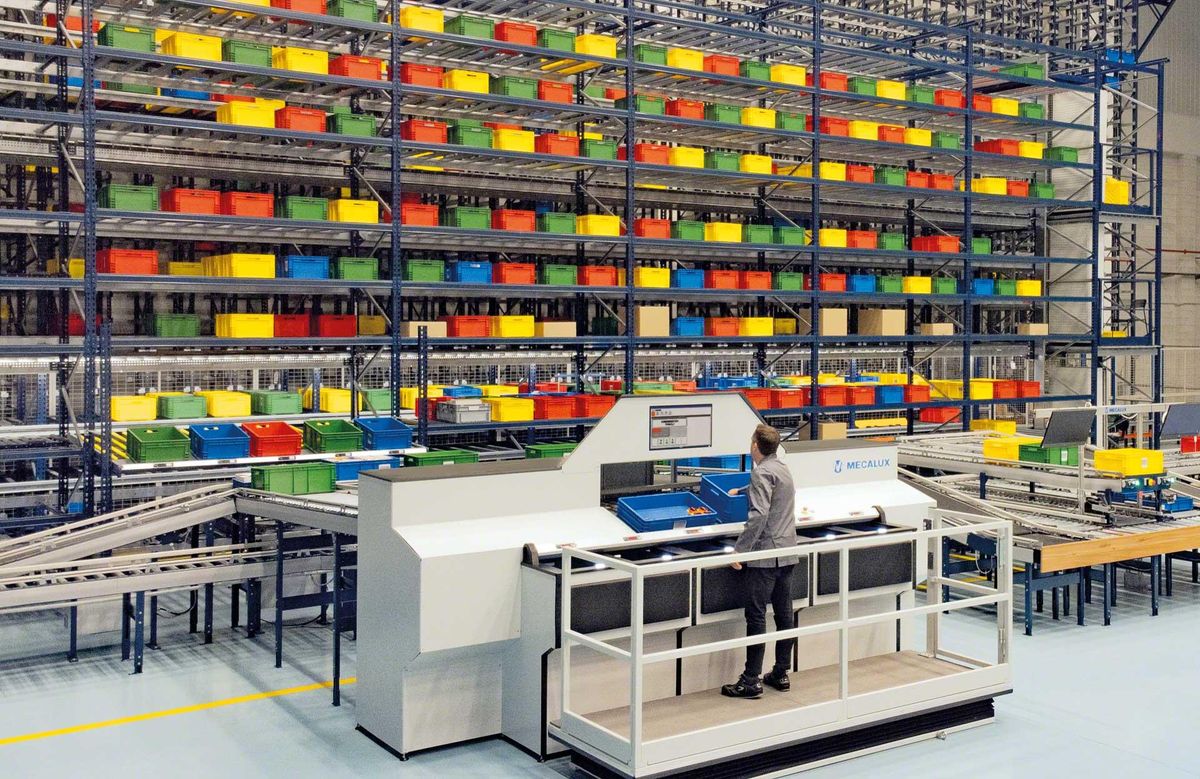
With this Goods-to-Person approach, employees no longer need to spend so much time walking between storage racks. However, reducing walking time does not mean that picking speed will keep increasing indefinitely.
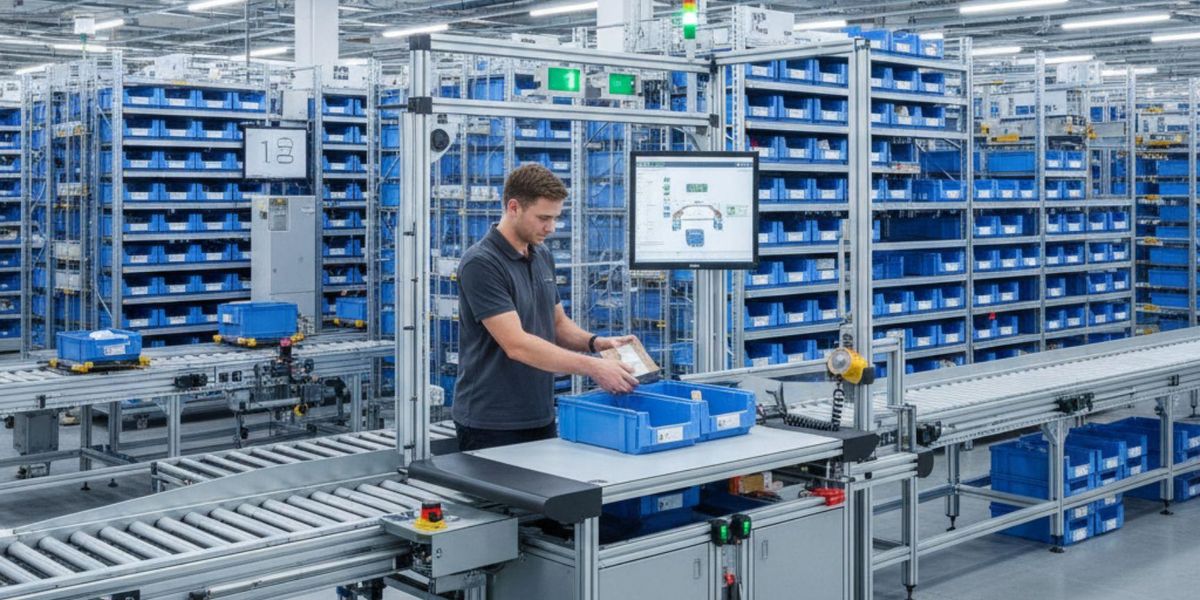
If totes regularly queue up at a workstation, the employees may be unable to keep up with incoming goods. In that case, the warehouse could add picking stations, adjust order allocation, or introduce buffer space near the workstation rather than simply making the automated storage equipment run faster.
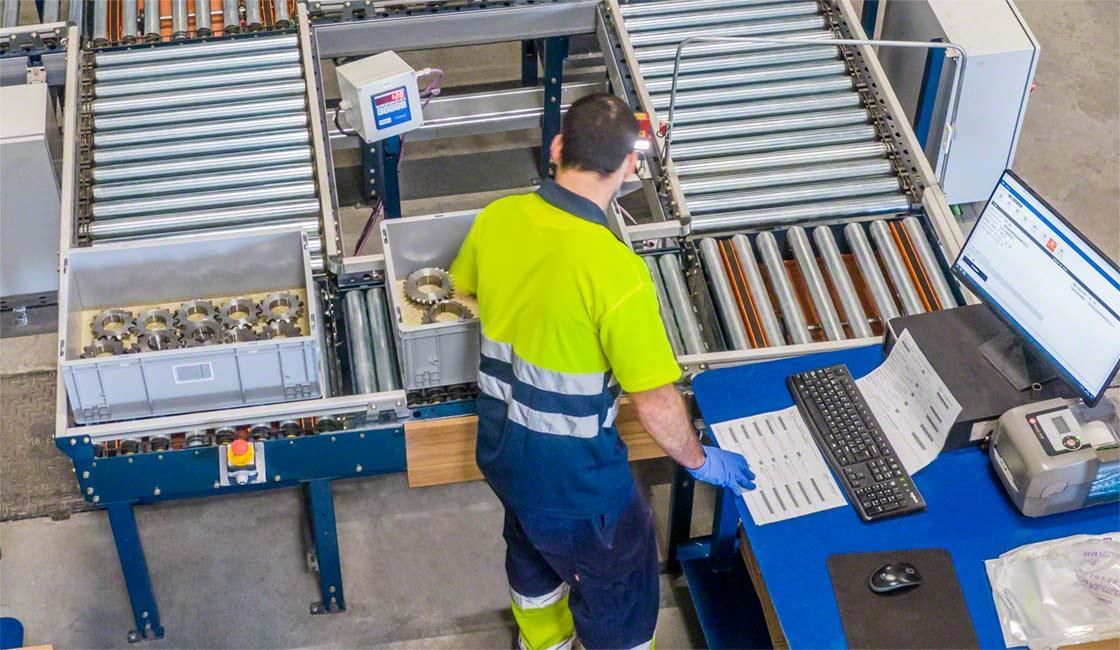
For warehouses that are not yet ready to modify their racking systems, AMRs can also assist with picking. Employees continue picking from the existing rack aisles, while robots carry order containers or transport goods that have already been picked.
In outbound operations, manual packing combined with automated sorting is another common semi-automated arrangement.
After an order has been picked, the goods travel by conveyor to the packing area. Employees check the order, pack the products, and apply labels. The sealed cartons then enter an automated sorting system, which directs them to different shipping lanes according to their destinations.
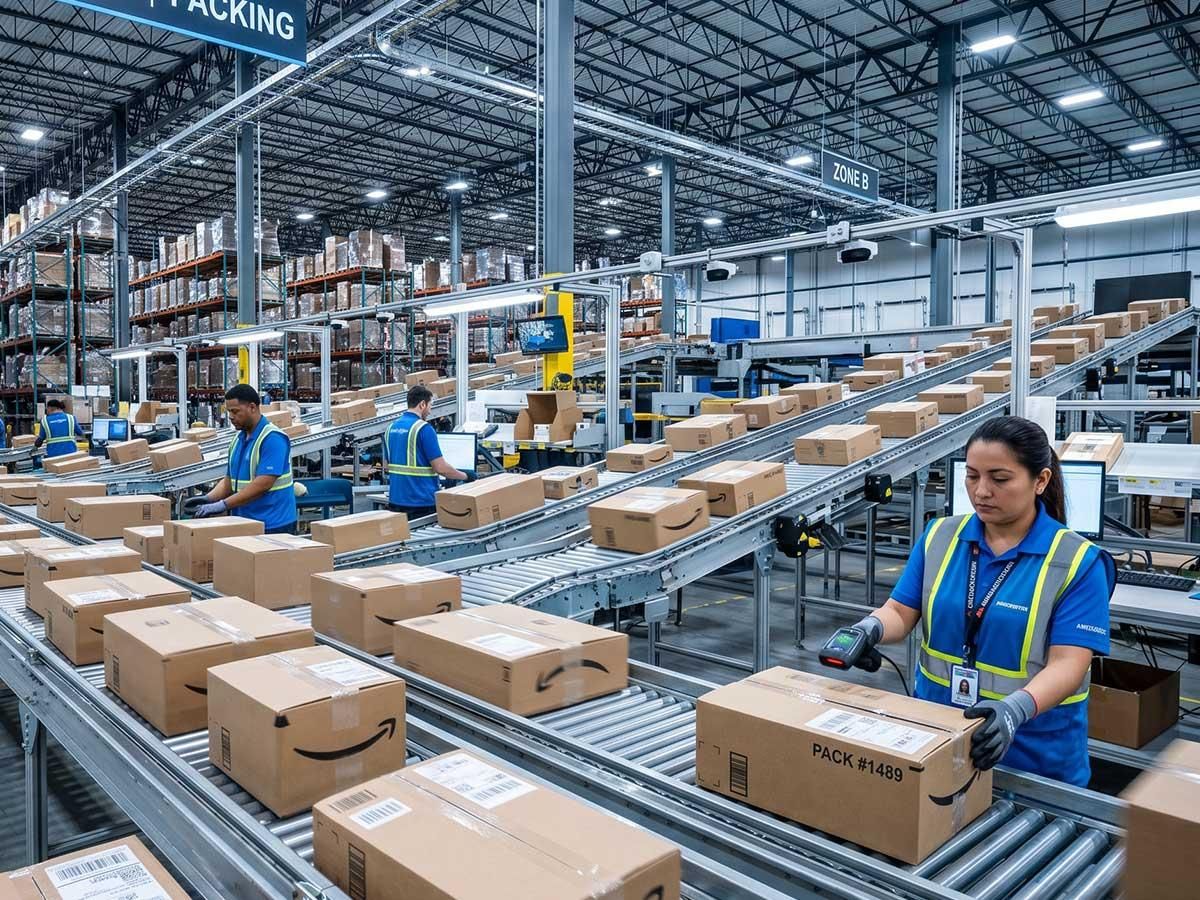
This allows packing staff to stay at fixed workstations rather than repeatedly carrying cartons to different outbound areas. Special orders can still be handled separately by employees, while standard orders continue through the conveyor and sorting system.
But if the packing area cannot keep up, the automated sorter may sit idle despite having spare capacity, simply because not enough cartons are reaching it. Based on actual order volumes, the warehouse can adjust the number of packing stations, conveyor pacing, or buffer space to reduce waiting and equipment downtime.
Putting these stages together, a semi-automated warehouse might use the following order-fulfillment process:
Automated storage retrieval → Manual picking → Conveyor transport → Manual packing → Automated sorting → Shipping
If you are planning to automate your warehouse in stages, Coolyne can provide a free automation feasibility assessment and ROI analysis based on your existing warehouse layout, workflows, and material-handling needs. This can help you identify a suitable semi-automated solution and determine the scale of investment.
Next Review
Move from article research to a scoped feasibility review.
Use the related products and solution paths below, then send your workflow and layout for a quick engineering review.
Related Solutions
Engineering Review