
Related Products
Deep Dive: How to Accurately Calculate Your Warehouse Automation ROI
Learn how to calculate warehouse automation ROI by accounting for total cost of ownership, hidden costs, maintenance, operational savings, and payback period.
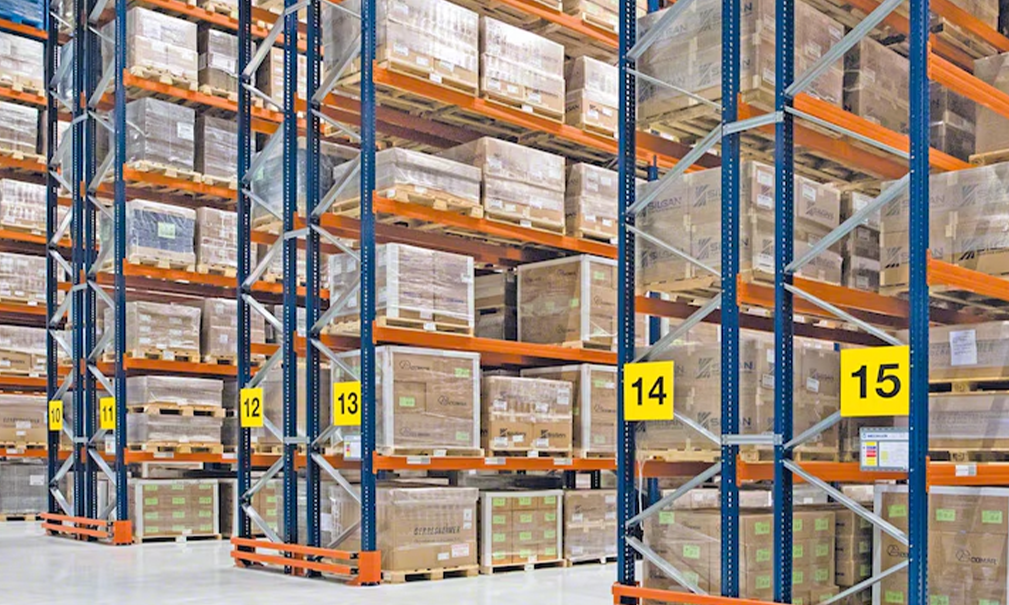
Learn how to calculate warehouse automation ROI by accounting for total cost of ownership, hidden costs, maintenance,...
In today's reshaped supply chain landscape, improving efficiency and mitigating severe labor shortages have become top priorities for business leaders. Implementing warehouse automation is undoubtedly the ultimate solution to address these critical pain points.
However, many companies fall into a common trap when advancing their automation initiatives: treating the initial equipment quote as the final project cost. This discrepancy directly leads to actual returns that diverge significantly from early financial forecasts. To achieve an accurate and realistic warehouse automation roi, we must look beneath the surface and uncover the true, comprehensive scope of expenses behind the numbers.
Why Equipment Quotes Fail to Reflect the True Cost of Warehouse Automation
When you receive a Request for Quote (RFQ) from suppliers, the figures presented typically cover only the mechanical hardware—such as AMRs, pallet stackers, and conveyor lines—along with basic software licensing. This represents merely the tip of the iceberg.
The fundamental reason equipment quotes fail to reflect the true cost is that warehouse automation is not just a commercial commodity purchase; it is a highly sophisticated system integration engineering project. A standard quote cannot evaluate whether your existing warehouse floor flatness meets engineering standards, calculate the operational disruption losses during legacy system migration, or cover the long-term workforce transition and upskilling costs over the following years. Relying solely on equipment quotes inevitably exposes a project to severe budget overruns during implementation.
What Are the Hidden Costs of Warehouse Automation?
To calculate a scientifically sound warehouse automation roi, you must account for several easily overlooked hidden costs in your initial financial models:
- System Integration & API Development (WMS/ERP Integration): Automation hardware must interface seamlessly with your existing Warehouse Management System (WMS) or Enterprise Resource Planning (ERP) platform. The costs for custom API development, data cleansing, and software validation often exceed initial expectations.
- Facility Retrofitting & Infrastructure Upgrades: Many advanced automation systems have stringent environmental requirements. For instance, specific four-way shuttle systems demand exceptionally precise floor leveling, while high-density storage configurations may require overhauling fire sprinkler layouts or upgrading electrical grid capacity.
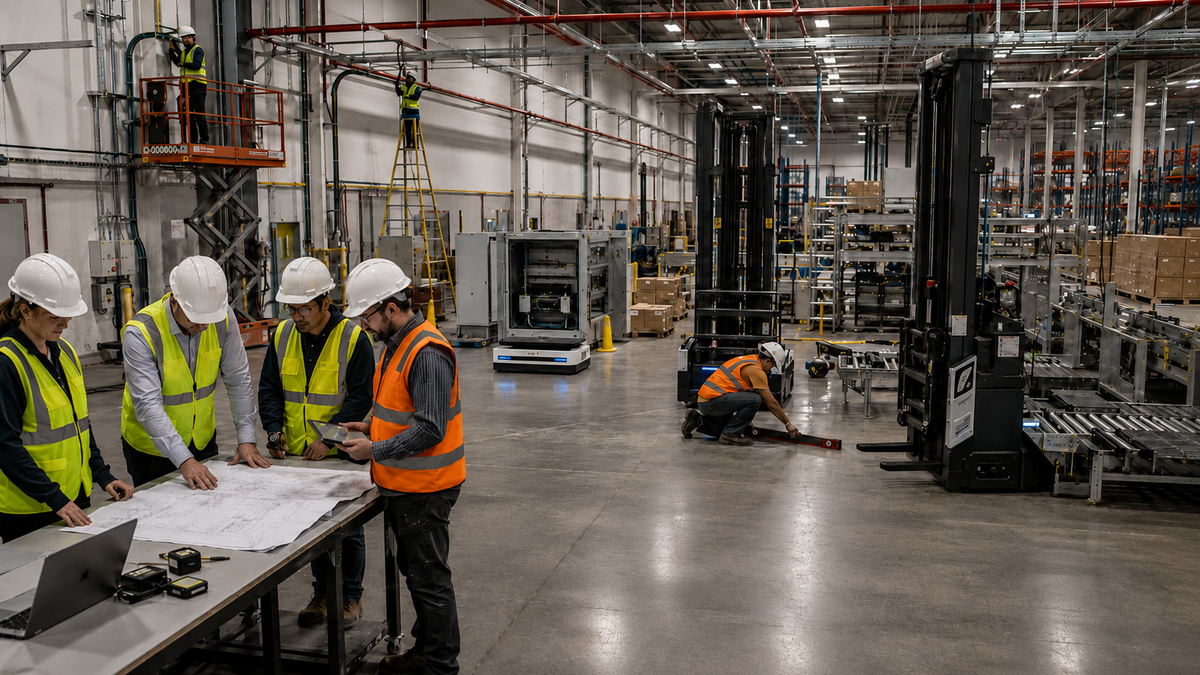
- Operational Disruption & Transition Losses: During the system installation, debugging, and cutover 'transition phase', warehouse operational efficiency may temporarily decline. Businesses often need to rent temporary fulfillment spaces or schedule staff overtime to maintain daily shipping schedules.
- Employee Upskilling & Cultural Transition: Frontline operators require structured time to transition from traditional 'person-to-goods' workflows to advanced 'goods-to-person' systems, incurring substantial training hours and indirect productivity costs.
What Ongoing Maintenance Costs Does Warehouse Automation Require?
The lifecycle of an automated system generally spans 8 to 15 years. Throughout this period, ongoing operational and maintenance expenses (OpEx) serve as critical variables determining your overall warehouse automation roi:
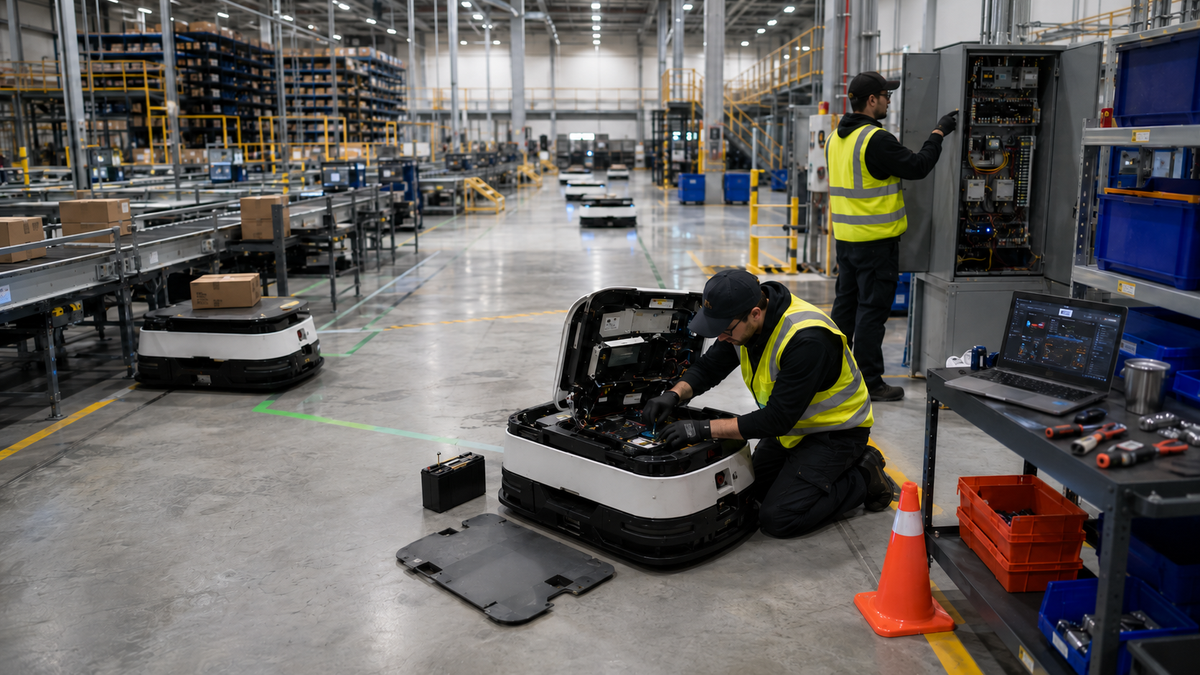
- Preventative Maintenance & Wear-and-Tear Parts: Mechanical components inevitably degrade over time. Allocating a fixed annual budget is essential for routine inspections, lubrication, and replacing high-wear components like belts, bearings, and batteries.
- Software Upgrades & SLA Support: Warehouse Control Systems (WCS) and Robot Control Systems (RCS) require continuous iterative updates to adapt to evolving business workflows. Annual technical support Service Level Agreements (SLAs) are typically charged as a fixed percentage of the total equipment value.
- Retention of Specialized Technical Talent: Automated fulfillment centers move away from traditional manual laborers toward skilled electromechanical engineers and IT maintenance specialists who can troubleshoot system errors. The compensation for these professionals is significantly higher than that of standard warehouse staff.
What Benefits Does Warehouse Automation Bring?
While the Total Cost of Ownership (TCO) demands a significant upfront investment, a properly planned automation initiative delivers profound returns that completely revitalize corporate financial statements and competitive advantages. When evaluating warehouse automation roi, benefits are categorized into Hard ROI (directly quantifiable cost savings) and Soft ROI (strategic advantages that drive long-term business growth):
1. Hard ROI: Direct Reductions in Operational Expenditures
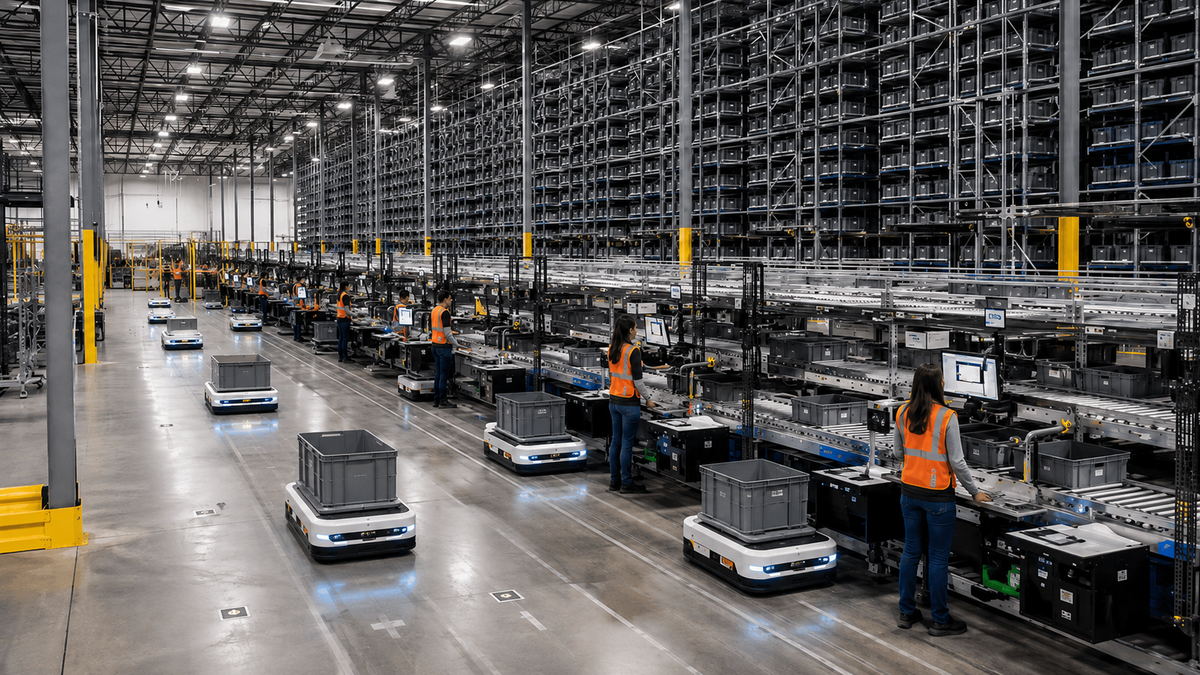
- Extreme Labor Cost Optimization: This is the most immediate financial dividend. By introducing 'Goods-to-Person' systems (such as AMRs or bin-picking robots), employees no longer need to walk miles per day across massive traditional warehouse floors to locate inventory. Automation cuts unproductive walking time by over 70%, allowing businesses to reduce frontline fulfillment headcount by 50-70% while maintaining or increasing throughput. This directly insulates the operation from labor shortages and rising minimum wage pressures.
- Maximizing Spatial Efficiency & Density: Traditional warehouses waste vast amounts of square footage on wide forklift aisles and vertical safety clearances. High-density storage systems (such as four-way shuttles, Vertical Lift Modules, or AutoStore) utilize tight matrix grids and vertical height, expanding spatial utilization by 200% to 400%. Financially, this eliminates the need to lease expensive new distribution centers or expand existing footprints, saving millions in annual rent and utility overhead.
- Eliminating Order Errors & Compliance Chargebacks: Manual picking is bound by human physiological limits, leading to errors from fatigue or distraction. Automated systems integrated with barcode scanning, inline weighing, and AI vision checks elevate picking accuracy to over 99.9%. Consequently, secondary shipping fees, return-processing labor, and expensive chargebacks for violating rigid vendor compliance standards are virtually eliminated.
2. Soft ROI: Strategic Amplifiers for Business Growth
- 24/7 Operations & Scalability: Robotic fleets do not require shifts and incur no holiday overtime premiums. During seasonal supply chain surges like Black Friday or Cyber Monday, automated systems run at full capacity 24 hours a day. This high-intensity, continuous fulfillment capability slashes order lead times, translating directly into heightened customer loyalty in competitive markets.
- Real-Time Inventory Visibility & Turnover: Automation hardware depends on highly precise software execution. As items are picked by robotic arms or sorted on conveyors, transactional data syncs with your WMS/ERP instantly. This zero-latency inventory visibility drastically reduces capital tied up in safety stock, maximizing your overall inventory turnover ratio and equipping executives with data-driven strategic insights.
- Workplace Safety & Compliance: Traditional fulfillment environments carry inherent injury risks and strict regulatory oversight (such as OSHA compliance). High-level falls, forklift collisions, and chronic repetitive strain injuries represent significant hidden operational liabilities. Automation relocates workers from high-risk, heavy physical labor into comfortable monitoring and exception-handling roles, sharply reducing workers' compensation risks while strengthening corporate ESG performance and employer brand value.
How to Calculate Your Investment Return (ROI)

Once all comprehensive costs and benefits are accounted for, you can apply classic financial frameworks to evaluate project viability. The primary formula for ROI is expressed as:
ROI = [ (Total Project Benefits - Total Cost of Ownership) / Total Cost of Ownership ] x 100%
Payback Period (Years) = Upfront Capital Investment (CapEx + Hidden Costs) / Net Annual Savings (Annual Benefits - Annual OpEx)
Professional Insight: A financially healthy warehouse automation project typically reflects a payback period between 2 to 5 years. When engineering your business case, always substitute raw equipment acquisition sticker prices with the Total Cost of Ownership (TCO). This ensures your final ROI metrics serve as a reliable, strategic baseline for executive decisions.
coolyne Provides Free ROI Analysis and Project Feasibility Evaluations
Every fulfillment center is entirely unique—defined by its distinct product characteristics, transactional profiles, SKU velocity, and architectural constraints. Consequently, there is no one-size-fits-all template that can guarantee success across different automation deployment models.
As your trusted intelligent warehousing partner, coolyne maintains an elite team of experienced supply chain experts. We look beyond basic hardware components to optimize your entire operational matrix. Right now, coolyne is offering complimentary ROI analyses and project feasibility evaluations. We will work directly with your team to flush out hidden integration costs, accurately quantify hard and soft operational savings, and build a transparent, localized total cost model. Our mission is to ensure that every dollar of your automation budget maximizes financial performance.
Next Review
Move from article research to a scoped feasibility review.
Use the related products and solution paths below, then send your workflow and layout for a quick engineering review.
Related Solutions
Engineering Review