
Related Products
Warehouse Automation Trends 2026: Which Technologies Should Businesses Watch?
Explore the major warehouse automation trends for 2026, including artificial intelligence, AMRs, autonomous forklifts, AS/RS, robotic picking, digital twins, system integration, and sustainable warehousing.
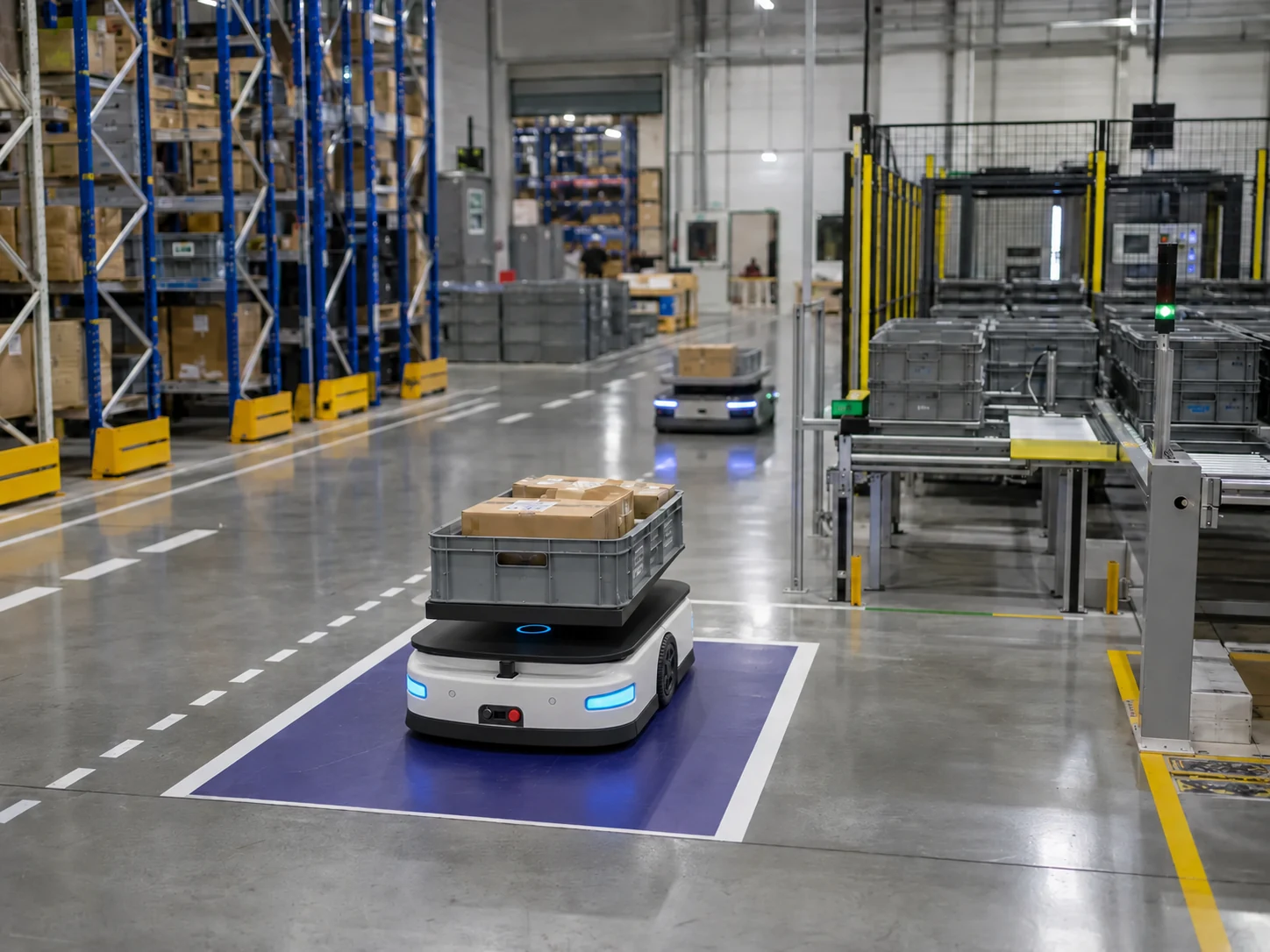
Explore the major warehouse automation trends for 2026, including artificial intelligence, AMRs, autonomous forklifts...
Warehouse automation is moving beyond the use of individual machines to replace manual labor. It is now evolving into a system-wide transformation driven by artificial intelligence, mobile robots, automated storage systems, and warehouse software.
According to the 2026 MHI Annual Industry Report, produced with Deloitte, 71% of surveyed supply chain leaders believe artificial intelligence will have a disruptive impact on supply chains, while robotics and automation ranked as the second most disruptive technology at 39%. A DHL survey of 2,597 supply chain professionals also found that 44% viewed artificial intelligence as the primary force shaping the future of logistics, followed by robotics at 28% and ESG at 25%. (mhi.org)
These findings show that the main question in 2026 is no longer whether companies should adopt warehouse automation. The more important issue is how to select, integrate, and scale the right technologies.
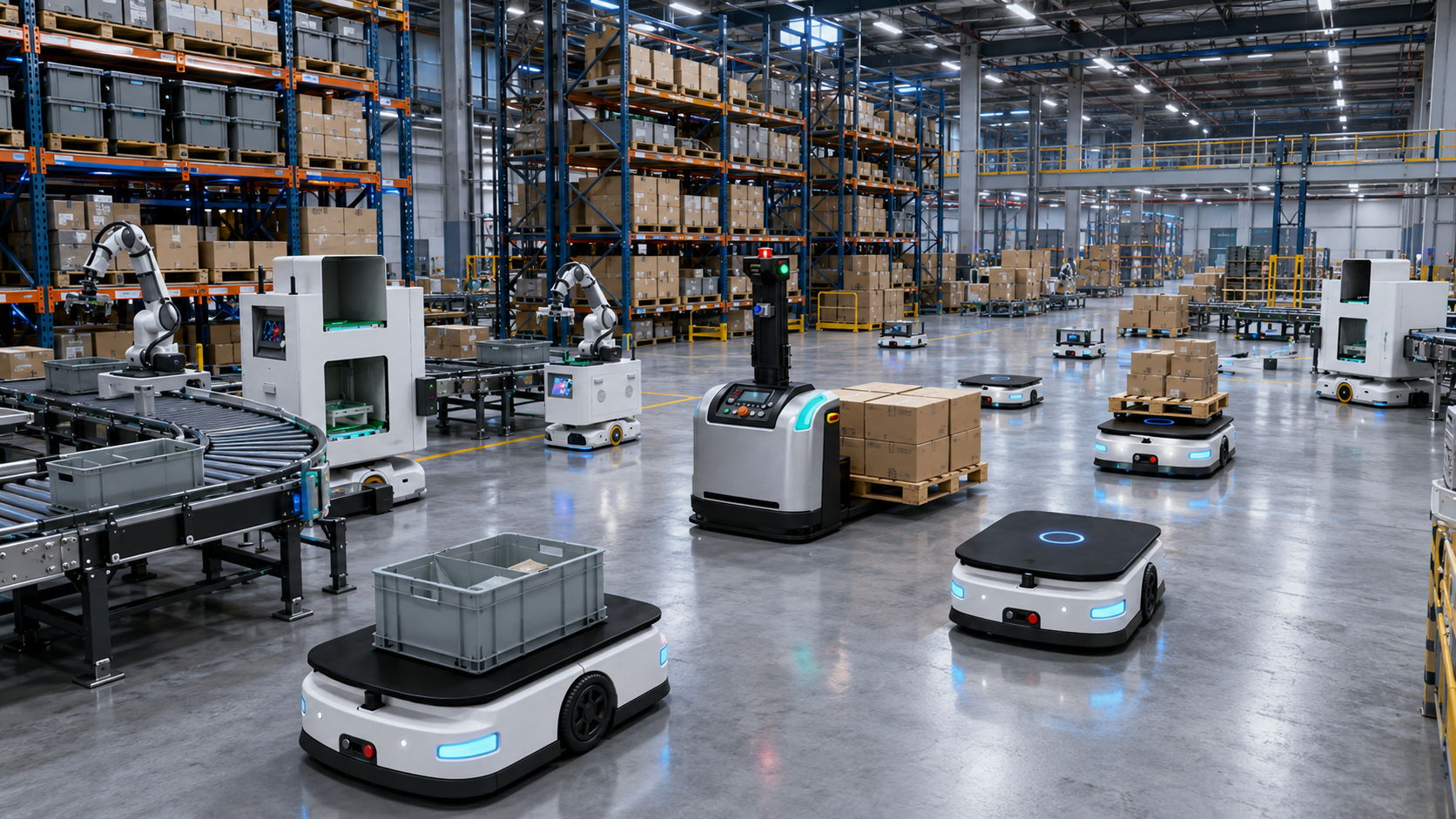
1. Artificial Intelligence Is Taking a More Active Role in Real-Time Warehouse Decisions
Artificial intelligence is shifting from being a data analysis tool to becoming an operational decision-making system inside the warehouse.
AI can combine order data, inventory information, equipment status, and historical operating data to support demand forecasting, dynamic slotting, picking route optimization, task prioritization, and predictive maintenance. For example, when order profiles or workloads change unexpectedly, the system can reassign robot tasks to reduce congestion and empty travel.
However, AI cannot compensate for poor data quality. The more accurate the inventory, order, and equipment status data is, the more reliable AI-driven scheduling decisions will be. For this reason, companies still need to improve data collection and system interfaces before deploying AI at scale.
2. AMRs and Autonomous Forklifts Will Continue to Expand
AMRs, AGVs, and autonomous forklifts will remain major areas of warehouse automation investment in 2026.
Interact Analysis expects the global mobile robot market to grow from less than $5 billion in 2024 to $14 billion by 2030, representing a compound annual growth rate of approximately 19%. The market is also gradually shifting from traditional AGVs toward AMRs that offer more advanced navigation and path-adjustment capabilities. By 2030, autonomous forklifts are expected to account for only about 14% of mobile robot shipments, but they may generate roughly one-third of total market revenue. (interactanalysis.com)
This does not mean AGVs will disappear. In applications involving fixed routes, standardized pallets, and repetitive transportation tasks, AGVs can still provide cost and stability advantages. In dynamic warehouses where workers, vehicles, and goods move frequently, AMRs and SLAM-based autonomous forklifts generally offer greater flexibility.
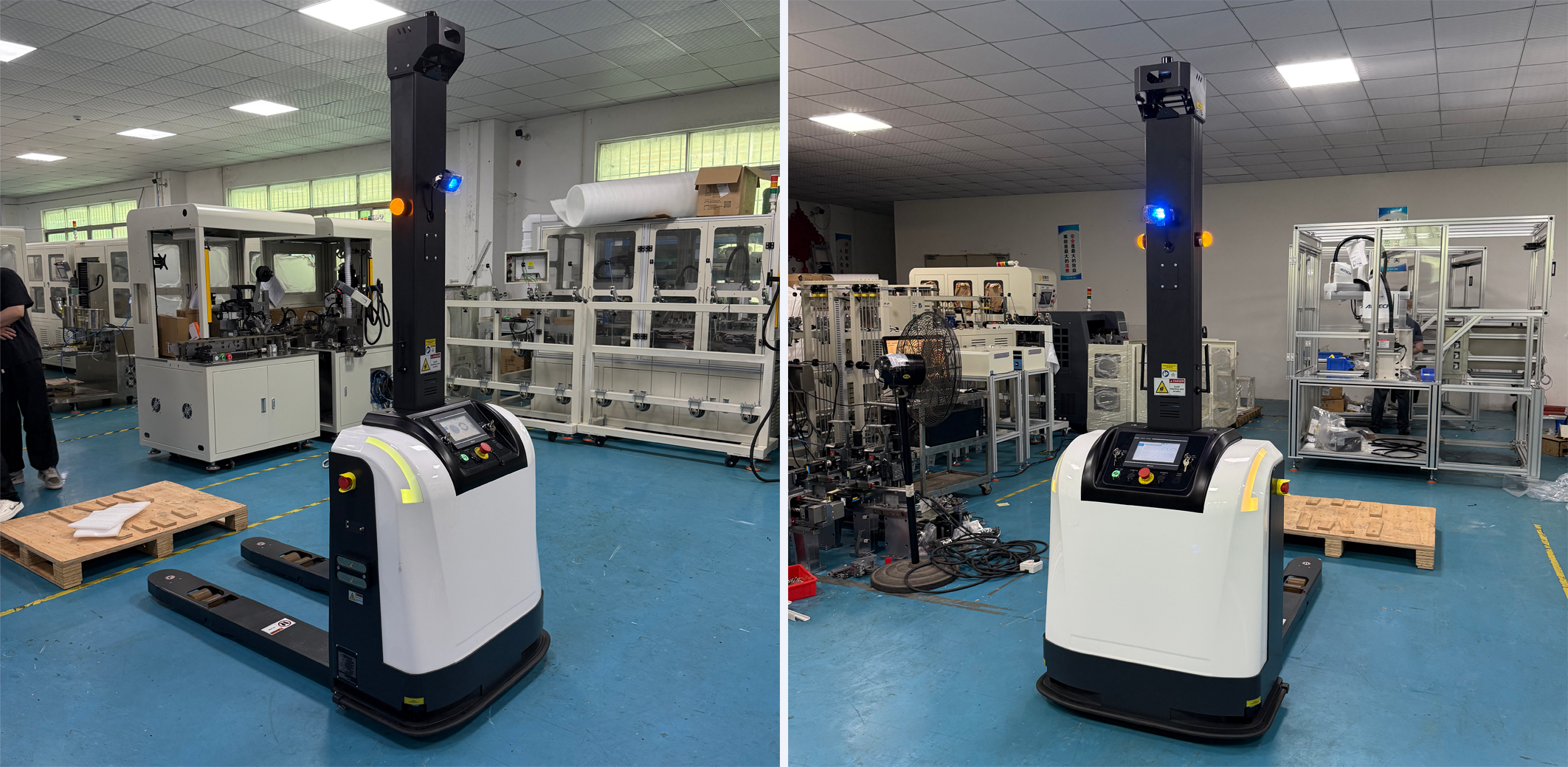
3. Goods-to-Person Systems and High-Density Storage Will Become More Common
As SKU counts increase, order sizes become smaller, and warehouse space becomes more expensive, goods-to-person systems and automated storage and retrieval systems are attracting greater attention.
AS/RS solutions can make better use of vertical warehouse space and increase storage capacity per square foot. Bin-handling robots, shuttle systems, and goods-to-person workstations can reduce the time workers spend walking between storage locations, allowing them to focus on picking, verification, and packing.
A clear trend in 2026 is that companies are becoming more likely to combine multiple technologies instead of relying on one large, single-system solution. For example, AS/RS can support high-density storage, AMRs can transport goods between workstations and packing areas, and autonomous forklifts can handle full-pallet inbound, outbound, and line-side delivery tasks.
4. Robotic Picking Is Handling a Wider Range of Non-Standard Products
Robotic picking systems were previously best suited for products with regular shapes and consistent dimensions. With advances in 3D vision, deep learning, and flexible grippers, robots can now recognize and handle a wider variety of shapes, orientations, and surface materials.
A study on large-scale robotic parcel picking found that optimizing grasp locations and suction cup selection through machine learning reduced picking failures by 20% compared with traditional heuristic methods. (arxiv.org)
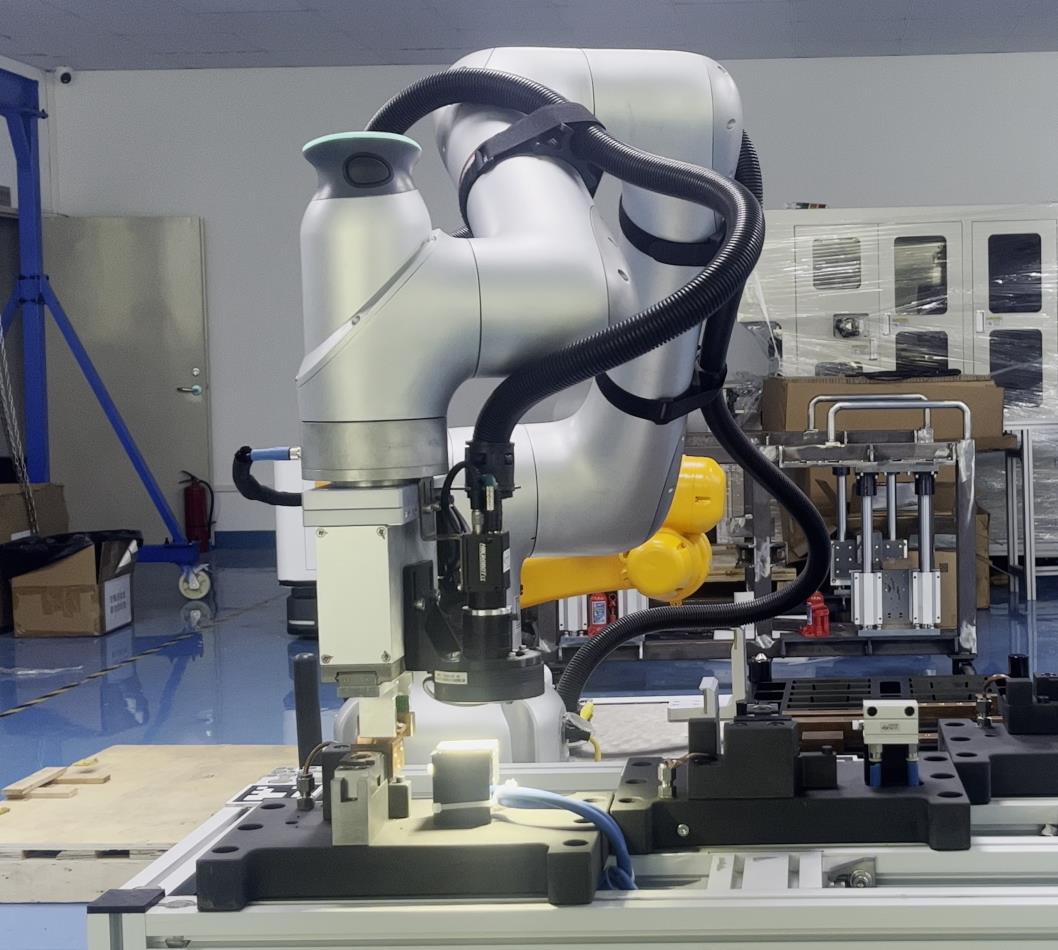
However, robotic picking is still not suitable for every product. Transparent packaging, soft bags, fragile goods, and highly mixed inventory may still require manual handling. A more practical approach is to automate repetitive, high-volume picking tasks involving products with relatively stable physical characteristics.
5. WMS, WCS, and Robot Fleet Management Systems Are Becoming More Integrated
As the number of automated devices increases, the main challenge is often no longer whether the robots can operate. The real issue is whether different machines and software systems can work together effectively.
A WMS manages inventory and orders, while a WCS controls conveyor systems, stacker cranes, and other automated equipment. Robot fleet management software assigns tasks to AMRs and autonomous forklifts. These systems also need to connect with ERP, MES, and production equipment.
Deloitte has noted that there is no single warehouse automation solution that fits every company. Successful implementation depends on accurate operating data, process analysis, building conditions, fire safety requirements, and floor condition assessments. In some cases, the planning and procurement cycle for an automation project may exceed one year. (deloitte.com)
For this reason, system integration capabilities will become an increasingly important criterion when companies evaluate automation suppliers in 2026.
6. Digital Twins Are Evolving from Visualization Tools into Operational Tools
A digital twin creates a virtual model of the warehouse, including its layout, racking, equipment, orders, and workforce.
Before implementation, companies can use digital twins to simulate robot quantities, route planning, workstation locations, and peak order volumes. This makes it possible to identify traffic congestion, low equipment utilization, and workflow bottlenecks before the system goes live.
After deployment, the digital twin can receive real-time equipment data and support monitoring of throughput, inventory status, and abnormal tasks.
7. Modular and Phased Automation Is Becoming the Preferred Approach
The warehouse automation market in 2026 continues to be affected by trade policies, cost fluctuations, and investment uncertainty. Although warehouse automation order value increased by approximately 7% in 2025, part of that growth was driven by higher steel, labor, and project costs rather than an equivalent increase in actual demand. Interact Analysis expects the global warehouse automation market to grow at a compound annual rate of approximately 6% between 2025 and 2030. (automatedwarehouseonline.com)
In this environment, companies are placing greater emphasis on scalable solutions that can be implemented in phases. Instead of building a fully automated, lights-out warehouse all at once, businesses can begin by automating pallet transportation, receiving, replenishment, or line-side delivery. Additional equipment can then be added based on actual throughput and return on investment.
This approach reduces the risk of a large initial investment and makes it easier to validate system stability before expanding.
8. Sustainability and Energy Management Are Becoming Key Design Criteria
The value of warehouse automation is no longer measured only by labor savings. Energy consumption, battery life, charging strategies, space utilization, and carbon emissions are also becoming important factors in project decisions.
Smart charging systems can schedule charging based on equipment tasks and battery levels, helping reduce energy demand peaks caused by simultaneous charging. Route optimization can also reduce empty robot travel. High-density storage systems may lower the amount of building space required, which can reduce lighting, cooling, and maintenance needs.
Future automation solutions will need to balance throughput, return on investment, energy efficiency, and operational resilience.
How Should Companies Plan a Warehouse Automation Project in 2026?
Companies should not make investment decisions simply because a particular technology is popular. Project planning should begin with an analysis of order volumes, SKU profiles, pallet and tote specifications, average and peak throughput, labor costs, site conditions, and existing software interfaces.
A more reliable approach is to select a clearly defined process with sufficient data and measurable results for an initial pilot. Examples include full-pallet transportation, raw material delivery, finished goods putaway, or goods-to-person picking.
Before implementation, companies should define key performance indicators such as throughput, equipment utilization, order accuracy, downtime, and payback period.
Conclusion
The warehouse automation trends shaping 2026 can be summarized in three words: intelligent, mobile, and integrated.
Artificial intelligence is improving warehouse decision-making. AMRs and autonomous forklifts are changing how materials move. At the same time, deeper integration among WMS, WCS, robot fleet management systems, and digital twins will determine whether individual technologies can deliver stable operational improvements.
Companies do not need to build a fully unmanned warehouse immediately. However, they should establish a scalable automation roadmap that supports gradual expansion.
Contact us to discuss your material handling requirements and receive a customized warehouse automation solution.
Next Review
Move from article research to a scoped feasibility review.
Use the related products and solution paths below, then send your workflow and layout for a quick engineering review.
Related Solutions
Engineering Review