
Related Products
Automated Stacker Crane: How Stacker Cranes Are Used in Automated Warehousing
Learn how automated stacker cranes support high-bay storage, ASRS throughput, and conveyor and AGV integration in modern warehouses.
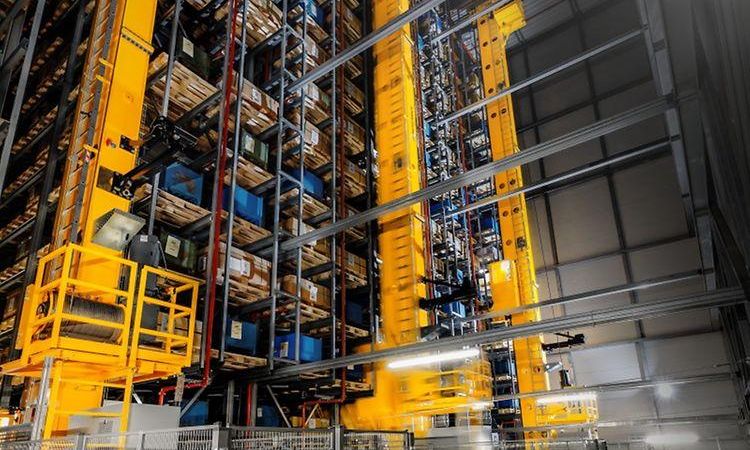
Learn how automated stacker cranes support high-bay storage, ASRS throughput, and conveyor and AGV integration in mod...
In high-bay warehouses, pallets often need to be stored at heights of more than ten meters. Relying only on manually operated forklifts or conventional ground-based handling equipment makes it difficult to balance storage height, operating efficiency, and space utilization.
For companies facing high land costs or limited warehouse floor space, the real constraint is often not the number of racks, but the amount of usable space available.
An Automated Stacker Crane is a common piece of equipment in an AS/RS. It travels along a fixed aisle and performs horizontal travel, vertical lifting, and the storage and retrieval of pallets or totes between racks.
Unlike a conventional forklift, a stacker crane usually operates within a designated aisle. This makes it particularly suitable for high-bay racking, fixed storage locations, and high-frequency inbound and outbound operations.
What Is an Automated Stacker Crane?
An Automated Stacker Crane is an automated storage and retrieval machine that operates within high-bay rack aisles.
A typical system includes a mast, travel mechanism, lifting carriage, forks or other load-handling devices, and a control system.
After receiving a storage task, the stacker crane travels along the aisle to the target rack position while lifting the carriage to the required height. The forks then place the pallet or tote into the assigned storage location.
The retrieval process works in reverse:
Rack Location → Stacker Crane → Outfeed Station
Once the load reaches the outfeed station, it can be transferred to a conveyor, AGV, or other material-handling equipment for the next step.
Stacker cranes are particularly suitable for warehouses with fixed storage locations, clearly defined aisles, and relatively standardized pallets or totes.
In many AS/RS installations, one stacker crane serves a single aisle and handles storage and retrieval tasks on both sides. Because the travel path and rack positions remain fixed, the equipment can continuously perform large numbers of repetitive inbound and outbound tasks.
This is one reason stacker cranes work well in high-bay automated warehouses: they operate in a highly standardized environment rather than along constantly changing transport routes.
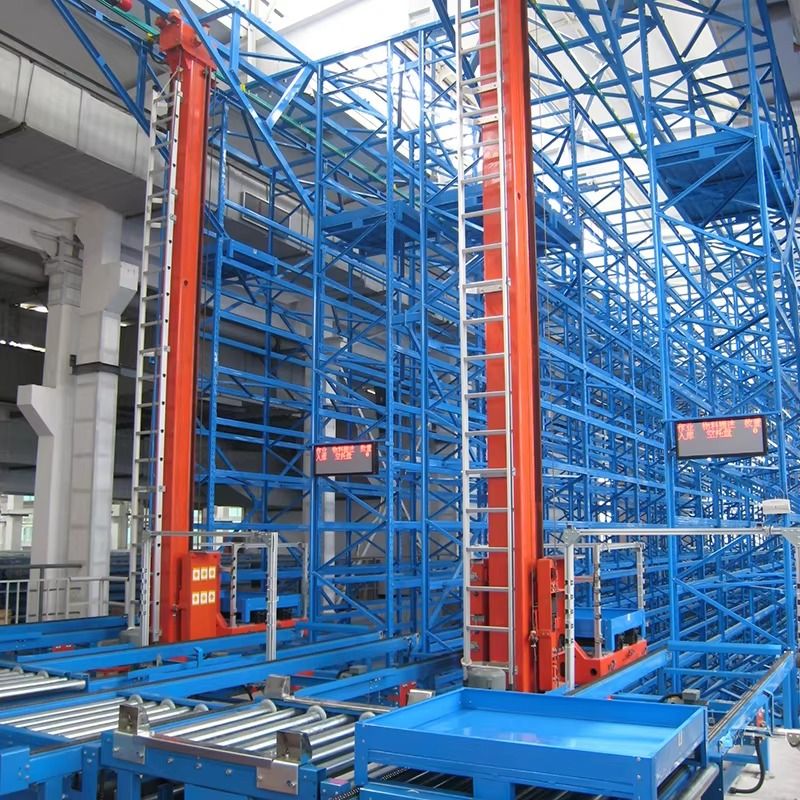
Advantages of Automated Stacker Cranes
One of the clearest advantages of a stacker crane is its ability to make better use of vertical warehouse space.
Conventional forklifts need room for vehicle height, turning radius, operating aisles, and driver visibility. These requirements place practical limits on both rack height and aisle width.
A stacker crane runs on a fixed rail and does not need large turning areas. Racks can therefore be built higher and aisles can be made narrower.
For a warehouse already approaching full capacity, this can matter more than simply moving goods faster. Expanding outward requires additional land and building space, while high-bay storage creates more capacity within the existing footprint.
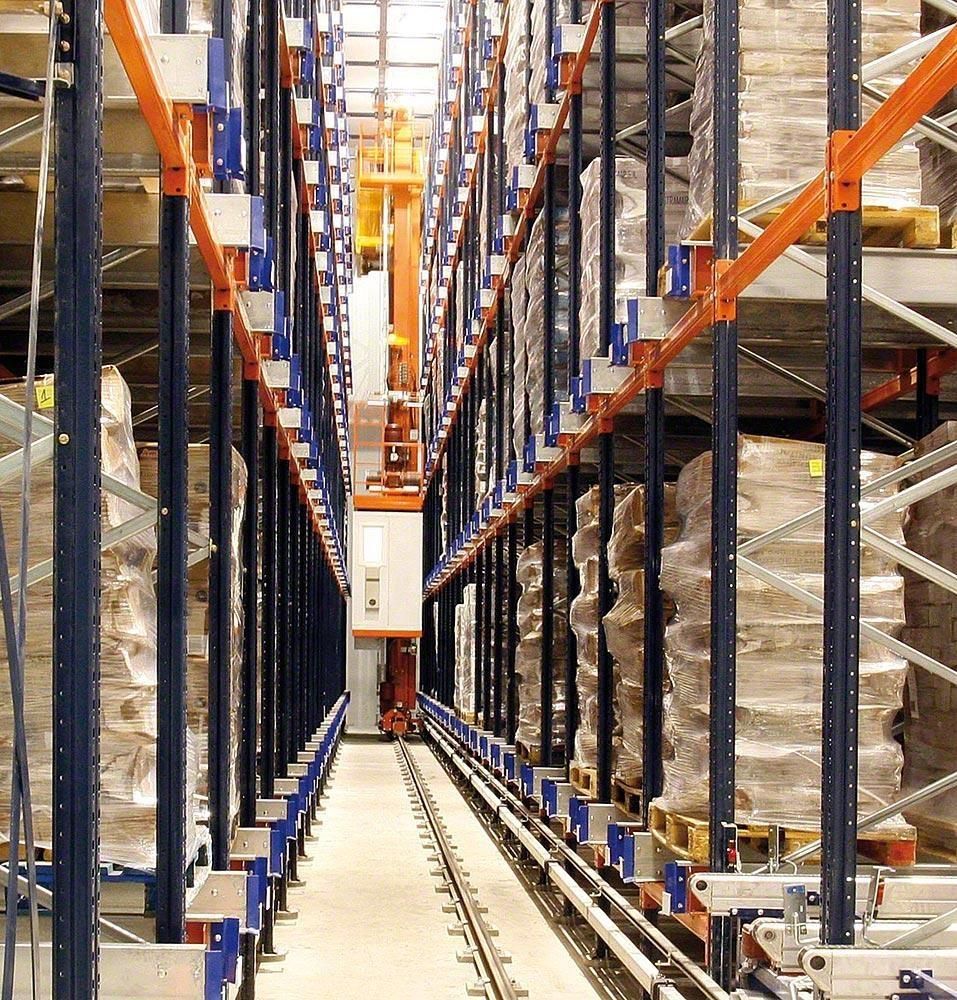
Fixed-rail operation also makes the movement pattern more predictable. A typical storage or retrieval cycle mainly consists of:
Travel → Lift → Position → Fork Transfer
The route, target location, and transfer point are all well defined, which makes stacker cranes well suited to high-frequency pallet or tote handling.
Once high-bay storage and retrieval are automated, operators no longer need to drive forklifts repeatedly into high-rack areas. Repetitive storage, retrieval, and night-shift operations can be carried out continuously by the equipment.
After a pallet is stored or retrieved, it still needs to move to other parts of the warehouse.
In a complete AS/RS, the stacker crane can automatically transfer loads to conveyors, AGVs, or other handling equipment. Pallets enter through the infeed station, are stored by the stacker crane, and are later transferred to other equipment for onward movement.
This level of density and efficiency does depend on one important condition: the warehouse layout needs to remain relatively stable.
That is one of the main considerations in a stacker crane project. Once the warehouse is built, major changes to racks, aisles, or material-flow routes may require modifications to rails, mechanical structures, and control systems.
How Is an Automated Stacker Crane Different from a Forklift AGV?
Automated Stacker Cranes and Forklift AGVs can both move and store pallets, but they operate in different parts of the warehouse.
A stacker crane mainly handles storage and retrieval inside high-bay racking.
A Forklift AGV is better suited to moving pallets between warehouses, production areas, buffer zones, and different workstations.
The stacker crane travels along fixed aisles and rails, with its main task being to reach a specific storage location and complete high-bay storage or retrieval.
A Forklift AGV navigates across the warehouse floor and can move from one area to another, giving it greater flexibility in route and task coverage.
For space utilization, the stacker crane is better suited to dense high-bay storage. A high-bay AS/RS can use racks more than ten meters high while keeping aisle widths relatively narrow.
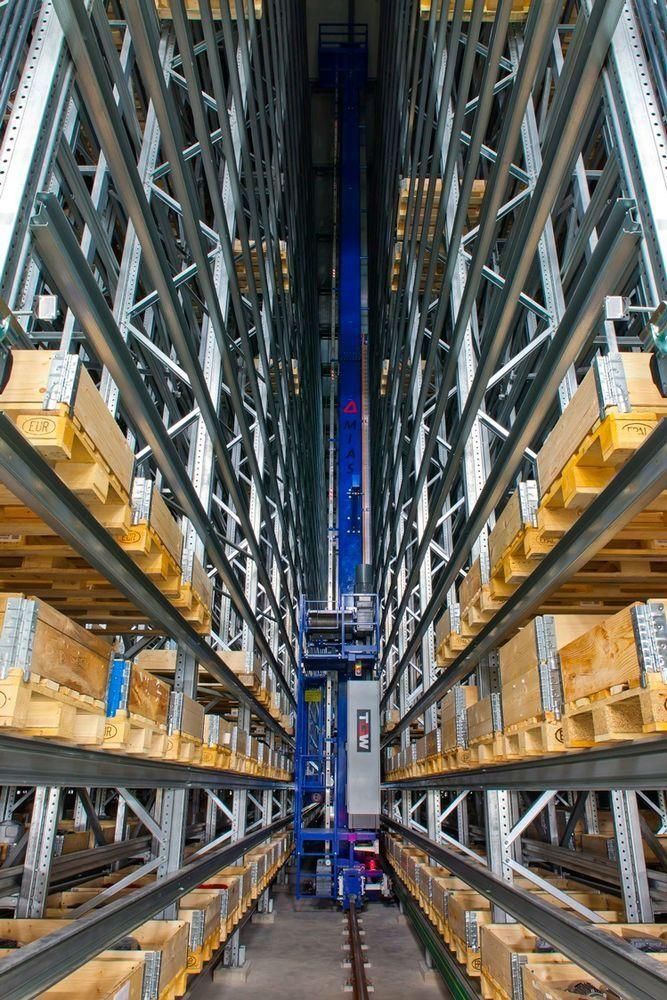
A Forklift AGV requires more floor space for vehicle movement, turning, and obstacle avoidance when operating within rack areas.
Forklift AGVs are more adaptable when the warehouse layout changes.
If a production line is relocated or a new pallet transfer point is added, transport routes can often be adjusted by reconfiguring the map and task logic.
A stacker crane is tied to its aisle and rack structure. Changing its operating area usually requires changes to the racks, rail system, and controls.
In real projects, the two types of equipment are often used together rather than asking one machine to handle every task.
Forklift AGV → AS/RS Infeed → Stacker Crane → High-Bay Rack
For inbound material, the Forklift AGV moves the pallet from the receiving area to the AS/RS infeed station, where the stacker crane takes over and stores it in the high-bay rack.
For outbound material, the stacker crane retrieves the pallet and returns it to the outfeed station. The Forklift AGV then transports it to production, picking, or shipping.
This division of work often matches real warehouse operations more closely: high-bay storage requires stability and density, while movement between different areas requires greater flexibility.
Automated Stacker Cranes Have Become an Important Part of Logistics 4.0
In an automated warehouse, high-bay storage is usually only one part of the overall material flow.
After a pallet enters the AS/RS infeed station from receiving, the stacker crane places it into the assigned storage location. When production, picking, or shipping requires that inventory, the crane retrieves the pallet and returns it to the outfeed station.
The pallet can then continue its journey by conveyor or AGV:
Receiving / Production → AS/RS Infeed → Stacker Crane → High-Bay Storage → Stacker Crane → Outfeed → Conveyor / AGV
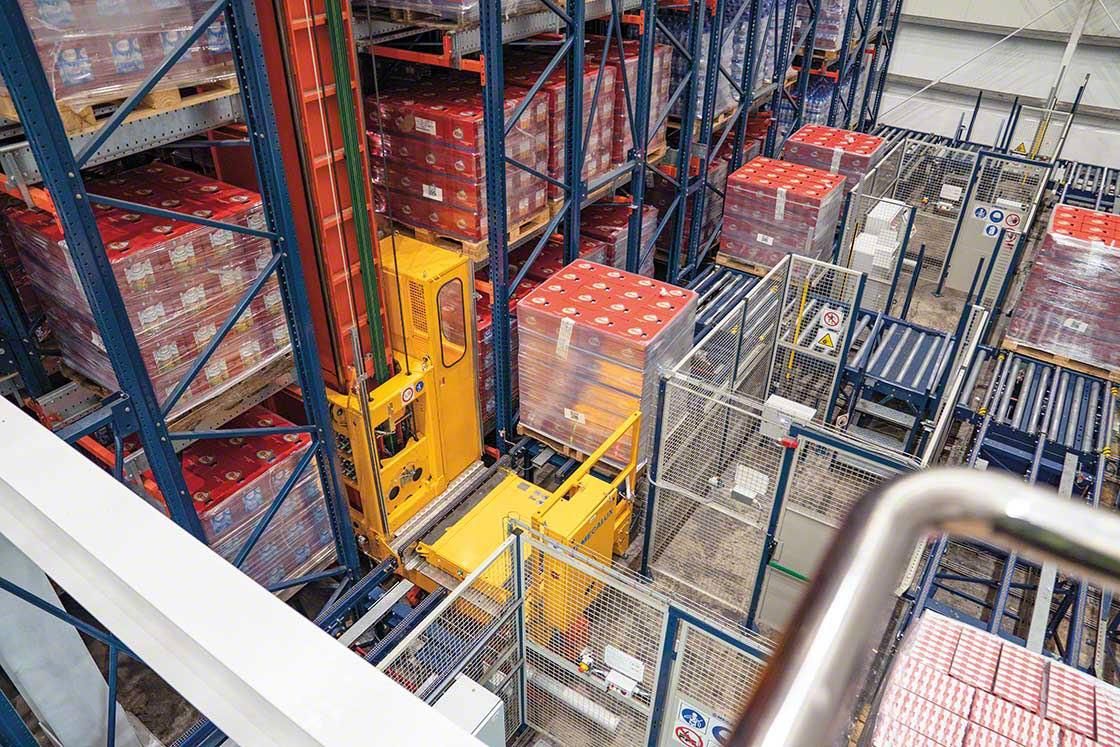
Once conveyors or AGVs continue the transport, high-bay storage becomes connected to the wider material flow of the warehouse or factory.
This is an important part of Logistics 4.0. Automating a single machine is relatively straightforward; the harder task is keeping storage, transport, and production connected without requiring manual handoffs at every stage.
Upper-level systems generate and coordinate storage and retrieval tasks, while the stacker crane performs the actual movements within the high-bay rack area. The efficiency of its transfers with infeed and outfeed stations and surrounding handling equipment directly affects the real throughput of the AS/RS.
For raw-material warehouses, finished-goods warehouses, and high-bay pallet storage, a stacker crane project should be evaluated against building height, pallet volume, number of aisles, target throughput, and peak inbound and outbound demand.
For existing warehouses, it is also important to confirm whether the current racks, infeed and outfeed stations, and surrounding handling equipment can integrate smoothly with the new AS/RS.
If you are planning a new high-bay warehouse, or your existing facility is already facing limits in storage density, manual high-level handling, or inbound and outbound efficiency, you can contact Coolyne to discuss your current warehouse layout, pallet flow, and possible automation options.
Next Review
Move from article research to a scoped feasibility review.
Use the related products and solution paths below, then send your workflow and layout for a quick engineering review.
Related Solutions
Engineering Review