
Related Products
Fleet Automation Solutions for Cold Chain Logistics Challenges
Learn how cold chain fleet automation combines low-temperature mobile robots, intelligent logistics management, and 3D digital twins to keep materials moving.
Learn how cold chain fleet automation combines low-temperature mobile robots, intelligent logistics management, and 3...
Cold chain warehouses place different demands on automation than standard ambient-temperature facilities.
There can be significant temperature differences between chilled areas, frozen zones, and ambient sections. Robots may need to pass through cold-room doors, buffer zones, and multiple temperature environments. At the same time, pallets, totes, racks, and workstations may not be fully standardized across different areas.
In this kind of environment, getting a single AMR or AGV to complete one transport task is not the hardest part. The real challenge is keeping multiple robots running reliably over the long term while supporting the entire cold chain logistics process.
The robots themselves need to withstand low temperatures, while the overall fleet must also handle complex warehouse conditions and constantly changing logistics tasks.
The Role of Fleet Automation in Cold Chain Logistics
A large share of material movement in cold chain warehouses takes place inside low-temperature areas.
After pallets enter a cold storage facility from receiving, they need to be moved to storage locations. When orders are released, goods must then move from storage to picking, packing, or outbound stations. In cold chain warehouses connected to production, there may also be continuous tasks such as raw material delivery, WIP transfer, and finished-goods return.
These movements happen repeatedly throughout the day and are part of normal warehouse operations.
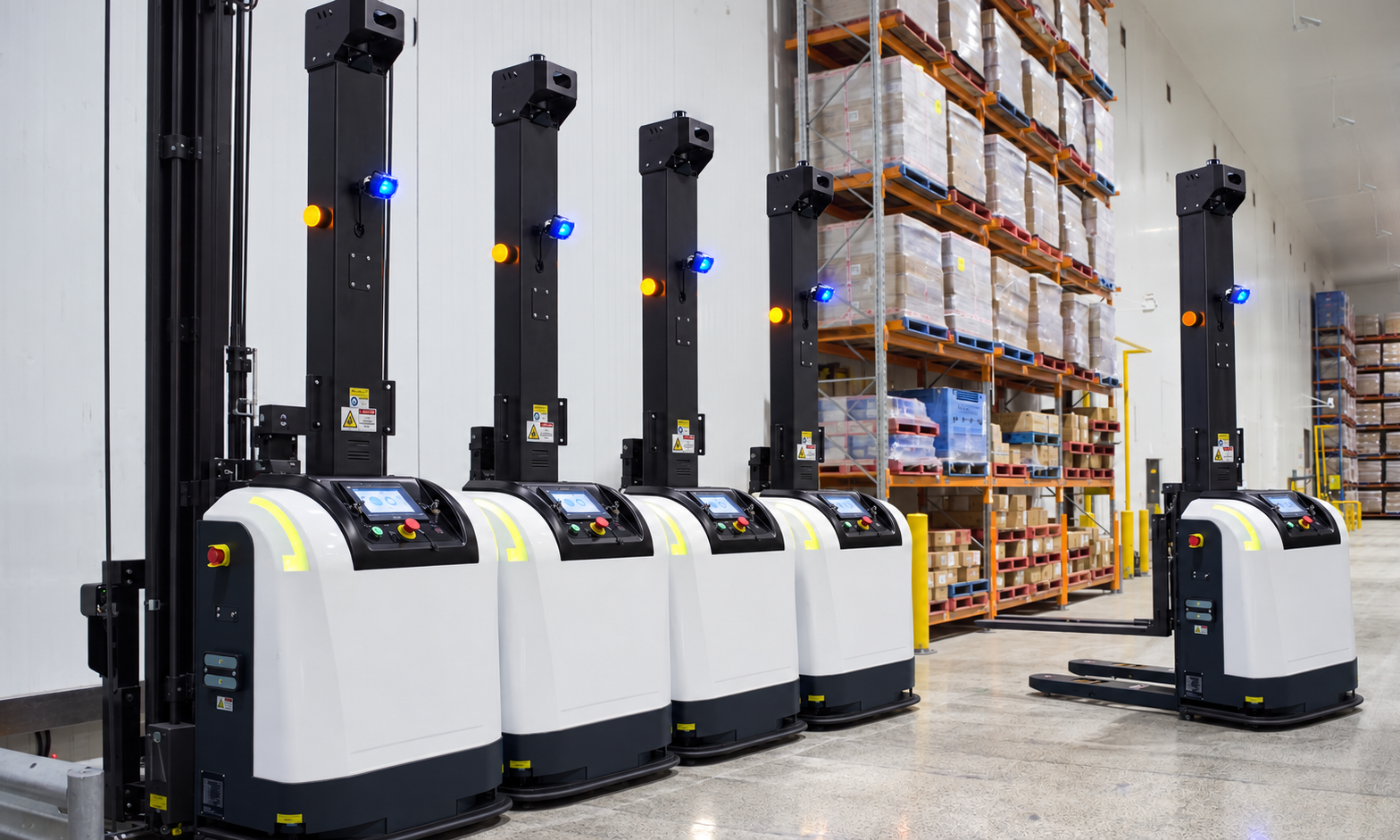
AMRs, AGVs, and Autonomous Forklifts can take over many of these point-to-point transport tasks, reducing the need for operators to spend long periods inside low-temperature areas while keeping materials moving.
Once the operation expands from a single vehicle to an entire fleet, the challenge changes. Whether one robot can complete a task is no longer the only concern. How well multiple robots work together begins to directly affect the overall logistics flow.
Low-temperature operation and complex material flow are therefore two of the most common challenges in cold chain fleet automation.
Two Major Challenges in Cold Chain Logistics Automation
Low temperatures first affect the robots themselves, while warehouse layout and task variation place additional demands on the entire fleet.
Low-Temperature Adaptability of Critical Components
Batteries, motors, sensors, electronic components, lubricants, and cables all have their own operating temperature ranges. If a standard mobile robot runs in a low-temperature environment for extended periods, battery life, charging, sensing, and mechanical performance may all be affected.
Battery performance is one of the most direct concerns. If usable runtime drops at low temperatures, robots may need to charge more often, and operating cycles originally designed for ambient conditions may no longer work as expected.
Temperature changes can also affect sensing systems. When robots move between frozen areas and warmer buffer zones, condensation or frost may interfere with LiDAR, cameras, and other sensors. Tire traction, lubricants, drive mechanisms, and certain sealing components also need to be considered for low-temperature operation.
An AMR that performs reliably in an ambient warehouse cannot simply be placed into a cold storage facility for long-term use. Low-temperature capability needs to be considered at the robot design level.
Even after the vehicle itself can handle low temperatures, the real warehouse environment introduces another set of challenges.
Complexity of the Warehouse Environment and Logistics Tasks
Many cold chain logistics centers expand gradually as the business grows, which means aisles, doors, transfer stations, and racking conditions may differ from one area to another.
A robot may need to travel through main aisles, narrow passages, airlocks, and areas shared with manually operated forklifts. Different routes may also support different levels of traffic.
Task volume is rarely distributed evenly either. Some stations may suddenly generate a large number of replenishment or outbound tasks, while other areas have relatively little transport demand.
During peak periods, these differences become more obvious. Some routes may begin to queue, tasks may build up, while other robots may temporarily have no suitable work.
In this situation, autonomous navigation alone is not enough. The entire fleet must keep adjusting to current tasks and traffic conditions.
Coolyne Cold Chain Fleet Automation Solutions
Coolyne's approach starts with the vehicles themselves.
The robots first need to operate reliably in the target low-temperature environment. Multiple vehicles can then be coordinated through a logistics management system. Once the fleet is running continuously, a 3D Digital Twin System can provide a clearer view of operating conditions and logistics bottlenecks.
Low-Temperature Mobile Robots
Coolyne can configure mobile robots for cold storage environments based on warehouse temperature, payload, transport routes, and actual operating requirements.
Cold chain projects can involve very different operating conditions. Some robots work continuously inside a fixed frozen zone, while others frequently travel between ambient areas, buffer zones, and cold rooms.
These operating patterns expose the vehicles to different temperature changes, so the required robot configuration will not necessarily be the same.
Vehicle type also depends on the actual material flow. Pallet transport may use a Forklift AGV or Lifting AGV, while aisle width, load size, transfer method, and task frequency also need to be considered.
In practice, rated payload is only one part of robot selection. The areas a robot travels through each day, the temperature changes it experiences, and the way it interfaces with transfer stations can all affect the final configuration.
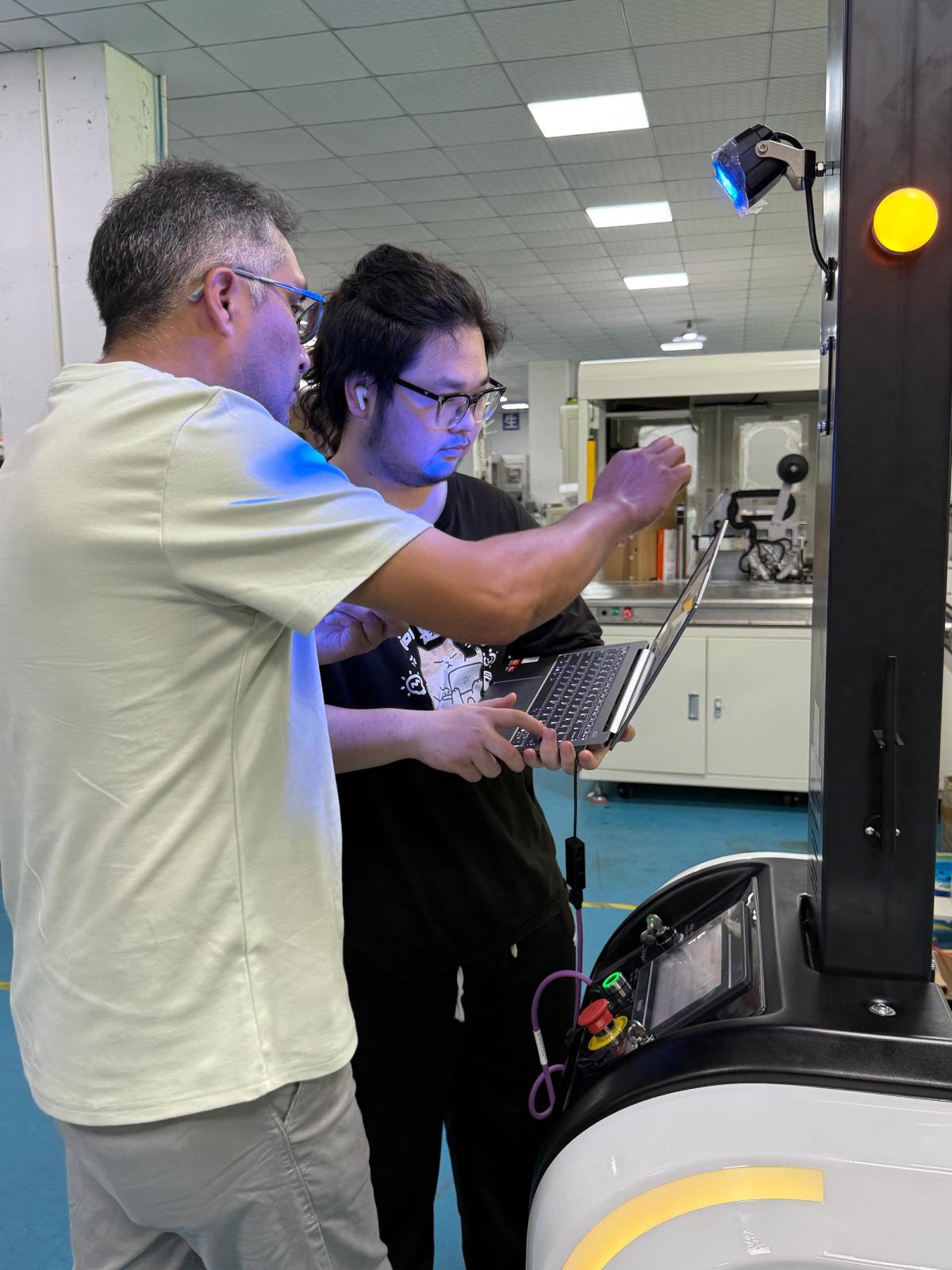
Once the vehicles can transport materials reliably, the next step is getting multiple robots to work together.
Intelligent Logistics Management System
When several robots operate in the same fleet, the system needs to continuously coordinate vehicles and transport tasks.
Coolyne's intelligent logistics management system can assign tasks based on job requirements, robot location, vehicle status, and current traffic conditions.
Shared aisles, intersections, cold-room doors, and other restricted areas can also be included in traffic management. When several robots approach the same area, the system can control passage order to reduce blocking between vehicles.
Charging also needs to be coordinated with current workload. If several robots leave operation to charge at the same time, the number of vehicles available for transport can quickly drop. Staggering charging based on battery level and task demand helps keep enough robots available within the fleet.
In actual operation, the priority is to maintain enough available vehicles to handle current tasks. A robot waiting or charging does not necessarily mean the overall system is inefficient.
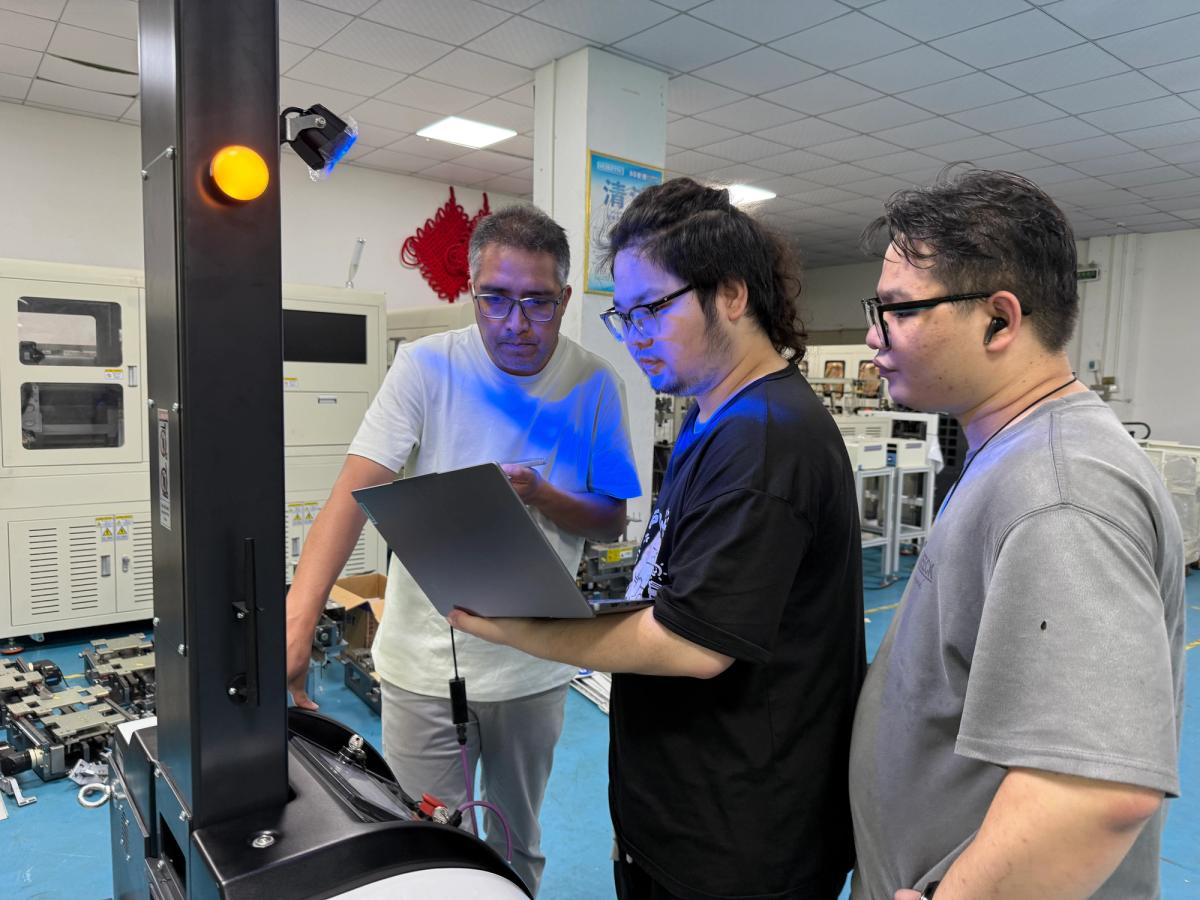
As the number of vehicles, routes, and tasks grows, however, task lists and vehicle status alone may not make it easy to see where congestion is actually happening.
Placing that operating data back into the real warehouse environment makes the situation much easier to understand.
Robot Fleet Visualization Based on a 3D Digital Twin
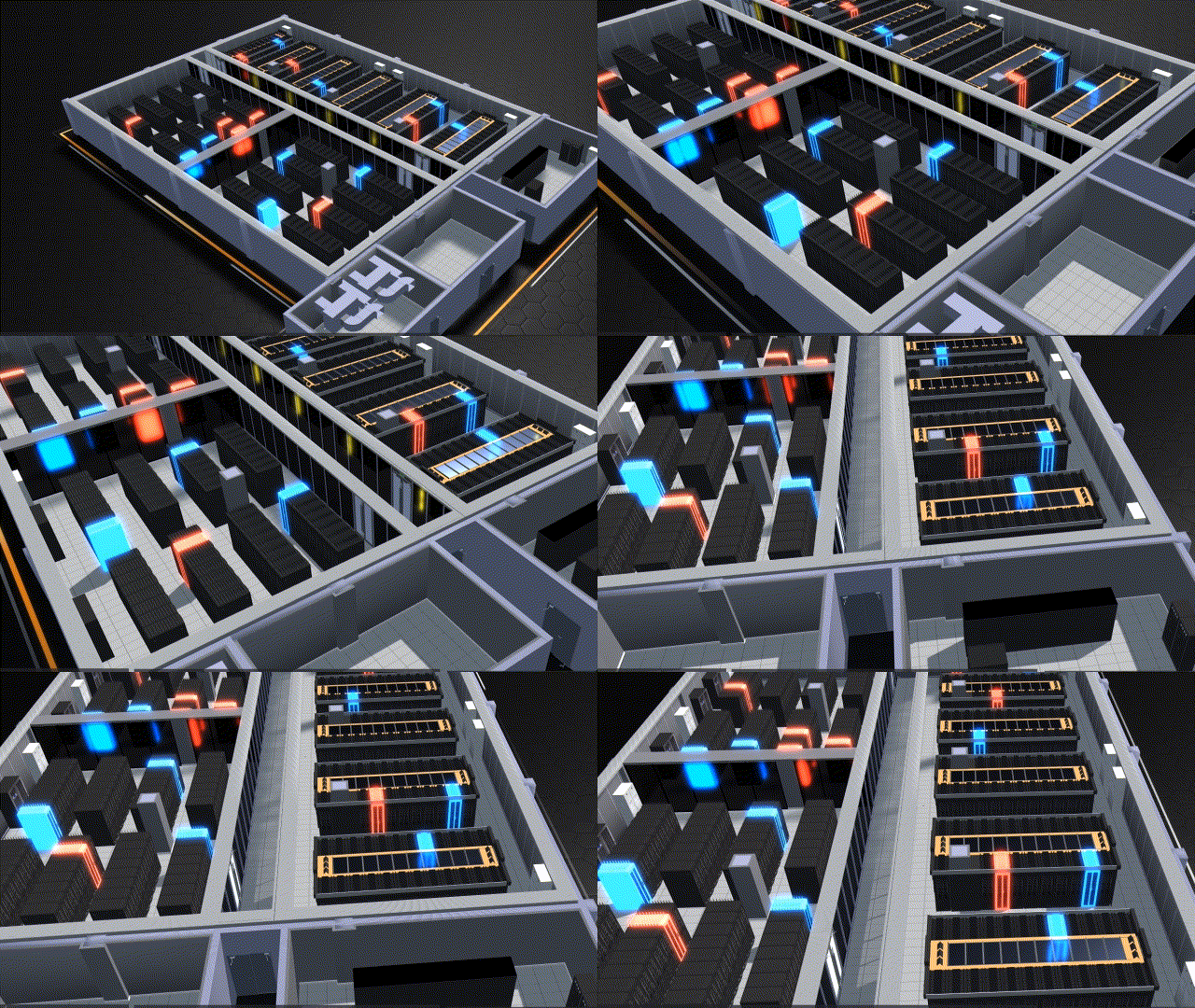
Coolyne can use a 3D Digital Twin System to map cold storage racks, aisles, temperature zones, doors, workstations, and AMRs or AGVs into a corresponding three-dimensional warehouse environment.
Vehicle position, current route, and task status can be linked directly to the 3D model. Operators can see where a robot is located, what task it is performing, and what stations, routes, and other vehicles are around it.
For example, if a queue begins to form at a cold-room entrance, operators can see which robots are moving toward that area and whether the congestion is beginning to affect nearby routes.
If a large number of vehicles are concentrated in the same outbound area while unfinished tasks remain elsewhere, the system can also help determine whether the issue comes from task allocation, station processing capacity, or a local traffic restriction.
With a 3D Digital Twin, vehicles, routes, stations, and tasks can be directly related to the actual warehouse model. When queues or task backlogs appear, it becomes easier to see exactly where the problem is occurring.
If you are evaluating cold storage AMRs, AGVs, or fleet automation, you can contact Coolyne to discuss your warehouse temperature, payloads, current material flow, and automation requirements.
Next Review
Move from article research to a scoped feasibility review.
Use the related products and solution paths below, then send your workflow and layout for a quick engineering review.
Related Solutions
Engineering Review