
Related Products
What Is Case Picking? Benefits, Applications, and Optimization Strategies
Learn what case picking is, how it compares with pallet picking, which industries use it, and how to optimize case-picking efficiency with slotting, WMS data, and automation.
Learn what case picking is, how it compares with pallet picking, which industries use it, and how to optimize case-pi...
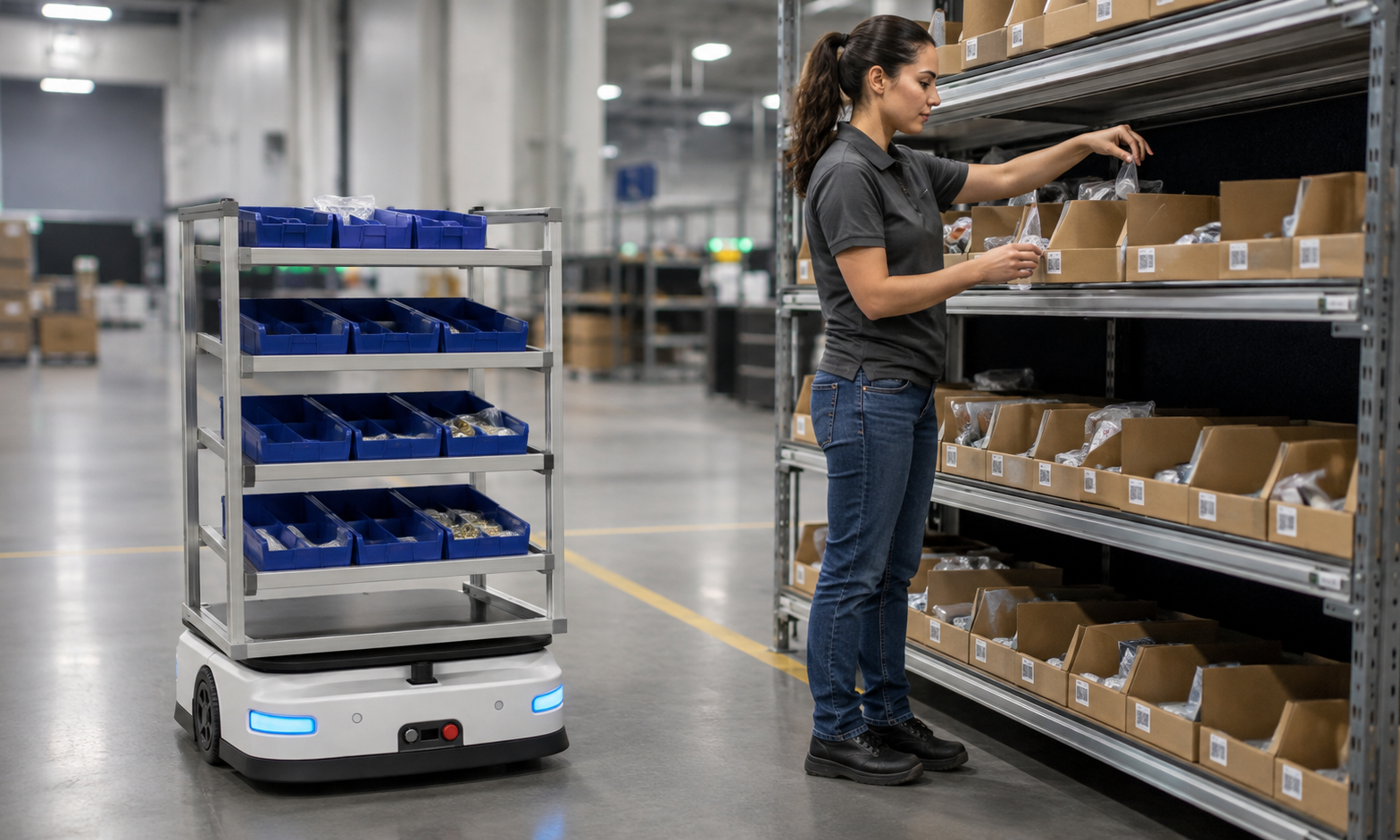
In warehouse order fulfillment, not every order requires cartons to be opened and individual items to be picked. For products such as beverages, food, consumer goods, and industrial components that are commonly stored and distributed in full cases, warehouses can pick complete cases directly. This process is known as case picking.
Compared with piece picking, case picking reduces unnecessary carton opening and individual item handling. Compared with pallet picking, it provides greater flexibility for fulfilling orders at the case level. As a result, case picking is widely used in retail distribution, food and beverage operations, consumer goods, manufacturing, and third-party logistics.
What Is Case Picking?
Case picking is a warehouse picking method in which complete cartons or cases are picked according to order requirements without opening the outer packaging and picking individual items inside.
For example, if a pallet contains 40 cases of beverages and a retail store orders eight cases, the warehouse can pick the required eight cases and send them to the next stage of order consolidation or shipping without opening the cartons and handling individual bottles.
However, case picking does not necessarily mean removing cases from a pallet. Cases can also be stored and picked from shelving, carton flow racks, forward picking locations, or other case-level storage systems.
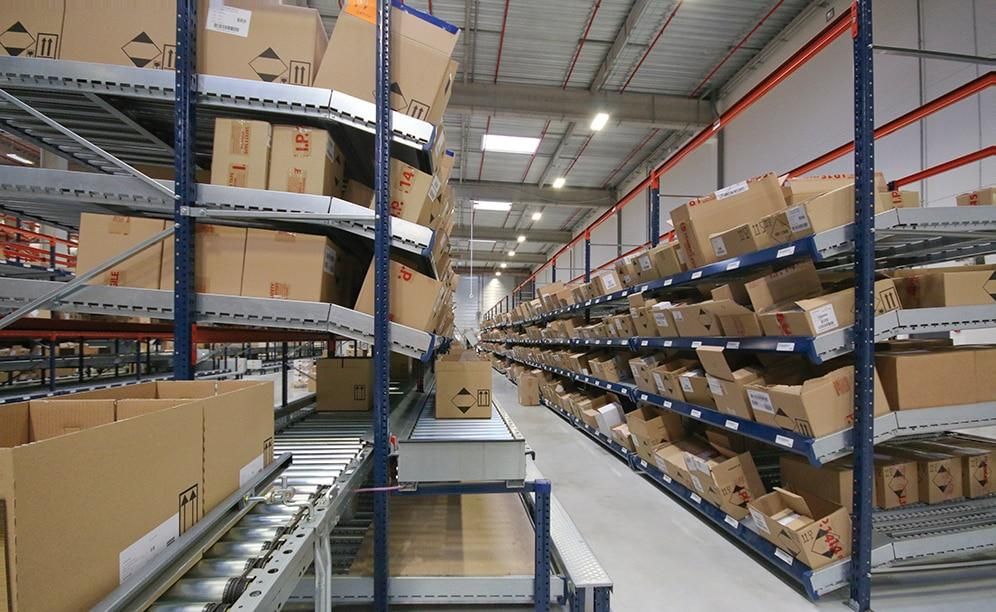
A typical case-picking process may include:
Order received → WMS creates picking task → Inventory location identified → Required number of cases picked → Order consolidation → Palletizing or packing → Shipping
Case picking can be performed manually or supported by conveyors, AGVs/AMRs, automated storage systems, and warehouse management software.
The core of case picking is to identify the correct SKU and quantity at the case level and move the selected cases into the next stage of the order fulfillment process.
Case Picking vs. Pallet Picking
Based on the unit being handled, warehouse picking can generally be divided into:
- Piece Picking: Picking individual items.
- Case Picking: Picking complete cartons or cases.
- Pallet Picking: Picking complete pallets.
Case picking and pallet picking both involve larger handling units than piece picking, but the main difference is the level at which the order is fulfilled.
| Comparison | Case Picking | Pallet Picking |
|---|---|---|
| Picking unit | One or more complete cases | One complete pallet |
| Splitting full-pallet inventory | May be required | Usually not required |
| Fulfillment level | Case level | Pallet level |
| SKU combination | Often involves multiple SKUs | Usually ships palletized inventory directly |
| Common equipment | Manual picking, conveyors, AGVs/AMRs, robots | Forklifts, pallet AGVs, autonomous forklifts |
| Typical applications | Store replenishment, wholesale distribution, case-level fulfillment | Bulk distribution, full-pallet shipping |
For example, a supermarket may order eight cases of beverages, five cases of snacks, four cases of paper products, and three cases of cleaning supplies. The warehouse must retrieve these cases from different inventory locations and combine them into one store order. This is a typical case-picking operation.
If the customer instead orders a full pallet of the same product, it is usually more efficient to retrieve the entire pallet and send it directly to the shipping area. This would be pallet picking.
In practice, many warehouses use several picking methods at the same time. High-volume orders may ship by the full pallet, medium-volume orders may be fulfilled through case picking, while smaller orders may require piece picking.
The right method therefore depends on the order unit, quantity per order, SKU mix, and the way inventory is organized within the warehouse.
Benefits of Case Picking
The main advantage of case picking is that it provides a balance between fulfillment flexibility and warehouse efficiency.
Higher Picking Efficiency
When an order is already based on full cases, case picking eliminates unnecessary carton opening and individual item handling.
For example, if a case contains 24 units and the customer requires the entire case, the warehouse only needs to perform one case-level pick rather than handle all 24 units individually.
For warehouses processing large volumes of store replenishment or wholesale orders, this can significantly reduce repetitive handling and improve overall throughput.
Less Product Handling
Case picking allows products to remain in their original shipping cartons, reducing the need for carton opening, repacking, and repeated product contact.
For food, beverages, consumer goods, and industrial components, this can simplify operations and reduce the risk of damage or handling errors during fulfillment.
Less Individual Item Handling
Compared with piece picking, case picking reduces the amount of individual item verification, picking, placement, and repacking required.
When a large proportion of warehouse orders are already placed in full-case quantities, this can reduce the handling time required per order and minimize repetitive manual work.
However, full cases are generally heavier than individual items. Actual labor requirements will therefore also depend on factors such as case weight, travel distance, picking height, and the material handling equipment available.
Suitable for Medium-Volume, Multi-SKU Orders
Many retail and wholesale orders fall somewhere between individual-unit orders and full-pallet quantities.
For example, a convenience store may require ten cases of beverages, six cases of snacks, and three cases of paper products.
Case picking allows a distribution center to combine the required number of cases from different SKUs, making it particularly suitable for medium-volume, multi-SKU fulfillment.
Easier Integration With Automation
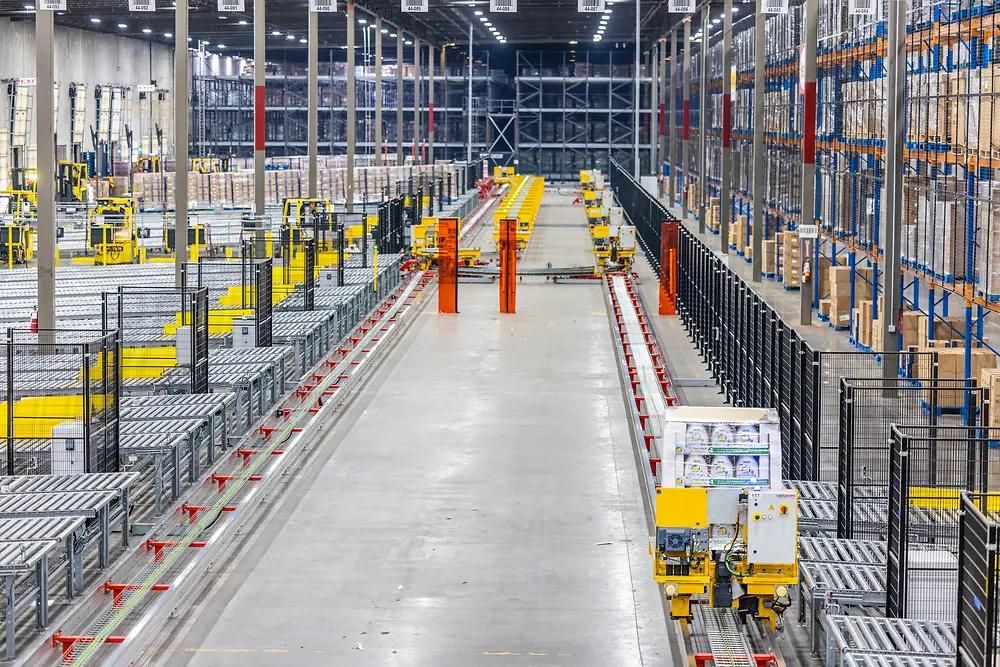
When cases are handled using dimensionally consistent cartons, pallets, racks, or standardized load carriers, they can be integrated more easily with conveyors, AGVs/AMRs, automated storage systems, and robotic equipment.
Automation does not necessarily mean using robots to pick every individual case. In many warehouses, storage, replenishment, and transportation between operational areas are automated first, reducing the amount of time employees spend on non-picking activities.
For this reason, case picking is particularly suitable for operations where products are stored in full cases but customer orders frequently require less than a full pallet.
Which Industries Can Benefit From Case Picking?
Case picking can be suitable for any operation where products are commonly stored and distributed in full cases while customer orders are frequently placed at the case level rather than by the full pallet.
Food and Beverage
Bottled water, beverages, canned goods, packaged foods, and snacks are commonly packed in standardized cases, and many of these SKUs have relatively high turnover rates.
Distribution centers can retrieve the required number of cases from pallets, shelving, or other case-level storage locations according to each customer or store order before consolidating them for shipment.
Retail and Chain Store Distribution
Supermarkets, convenience stores, pharmacies, and other retail chains require frequent store replenishment.
Because sales rates and inventory levels vary between locations, each store may require only several cases of a particular SKU rather than a complete pallet. This makes case picking a common fulfillment method in retail distribution centers.
Consumer Goods
Cleaning products, paper products, personal care products, and household goods are commonly received and stored in cases.
These products can then be distributed at the case level according to the requirements of different retailers, distributors, or sales channels.
Manufacturing
Industrial components, standard parts, auxiliary materials, and other production supplies may also be stored in full cases within a central warehouse.
Based on production requirements, the necessary cases can be delivered to different production lines, assembly areas, or line-side storage locations.
In these applications, case picking can also be integrated with intralogistics and automated material handling systems.
Third-Party Logistics (3PL)
3PL warehouses often handle multiple customers, large numbers of SKUs, and orders of widely varying sizes.
Some orders may ship as full pallets, others may require case picking, while smaller orders may need to be broken down further for piece-level fulfillment.
Case picking therefore plays an important role between pallet-level and piece-level order fulfillment in many 3PL operations.
Pharmaceutical and Medical Supply Distribution
Some pharmaceutical cartons, medical consumables, and standardized healthcare products can also be distributed by the case.
However, these operations may also need to manage batch information, expiration dates, inventory accuracy, and product traceability.
How to Maximize Case-Picking Efficiency
Case-picking efficiency depends on much more than how quickly an operator can physically pick a carton.
SKU distribution, order profiles, picking routes, replenishment timing, internal transportation, and WMS task allocation can all affect overall performance.
A more effective approach is therefore to analyze order and SKU characteristics first, then determine the appropriate inventory layout, picking strategy, and level of automation.
Analyze Order and SKU Characteristics
The first step in optimizing case picking is understanding the types of orders the warehouse actually processes.
Important data points include:
- Average number of cases per order;
- Average number of SKUs per order;
- Which SKUs have the highest outbound frequency;
- Which SKUs frequently appear together in the same orders;
- Whether individual SKUs are typically shipped by single case, multiple cases, or full pallet.
This information provides the basis for designing picking areas, assigning storage locations, and selecting the appropriate operating strategy.
Optimize Slotting Based on Outbound Frequency
Once SKU characteristics are understood, inventory locations can be arranged according to turnover and order frequency.
High-frequency SKUs should generally be placed in more accessible picking locations, while slower-moving products can be stored farther away.
Warehouses can use ABC classification and slotting strategies to concentrate high-turnover products in the primary case-picking area, reducing unnecessary travel by employees and material handling equipment.
For high-volume products, dedicated forward picking locations can also be created and replenished from reserve storage.
Shorten Picking Routes
In manual case-picking operations, travel between inventory locations can account for a significant portion of total working time.
Optimizing SKU placement, pick sequencing, and warehouse travel routes can reduce unnecessary movement.
Depending on the order profile, warehouses may also use:
- Zone picking;
- Batch picking;
- Wave picking;
- Dedicated fast-pick areas for high-frequency SKUs.
The objective is to reduce unnecessary travel and allow operators to complete more productive picking tasks within the same amount of time.
Select the Right Picking Strategy for the Order Profile
Different order structures require different case-picking strategies.
If a large proportion of orders is concentrated among a small number of fast-moving SKUs, a dedicated fast-pick area may be appropriate.
If individual orders contain many different SKUs, zone picking can divide the warehouse into separate picking areas, with each zone completing part of the order before final consolidation.
If multiple customer orders contain many of the same SKUs, cases can first be picked in batches and then allocated to individual orders.
The picking strategy should therefore be determined by SKU distribution, cases per order, and order similarity before deciding whether additional automation is required.
Optimize Forward-Pick Replenishment
Even with an efficient picking route, overall case-picking performance will suffer if forward picking locations frequently run out of stock.
A common approach is to keep full-pallet inventory in reserve storage and replenish the forward case-picking area according to inventory levels and order demand.
This creates a clear two-stage material flow:
Reserve pallet storage → Forward case-picking locations → Customer orders
Pallet handling supports inventory replenishment, while the case-picking area is responsible for actual order fulfillment.
For fast-moving SKUs, this approach can reduce replenishment delays and prevent pickers from repeatedly entering reserve storage areas.
Automate Case Transportation
Case picking involves more than removing cartons from storage locations. Cases must also move between several warehouse areas, for example:
Storage area → Case-picking area → Order consolidation → Palletizing → Shipping
If these transportation tasks rely heavily on employees pushing carts or manually operated forklifts, internal material movement can become a bottleneck even when the picking process itself is efficient.
For fixed routes and high-volume flows, conveyors can be an effective option.
For applications with changing routes, multiple operational areas, or a need for greater layout flexibility, AGVs or AMRs may be more suitable.
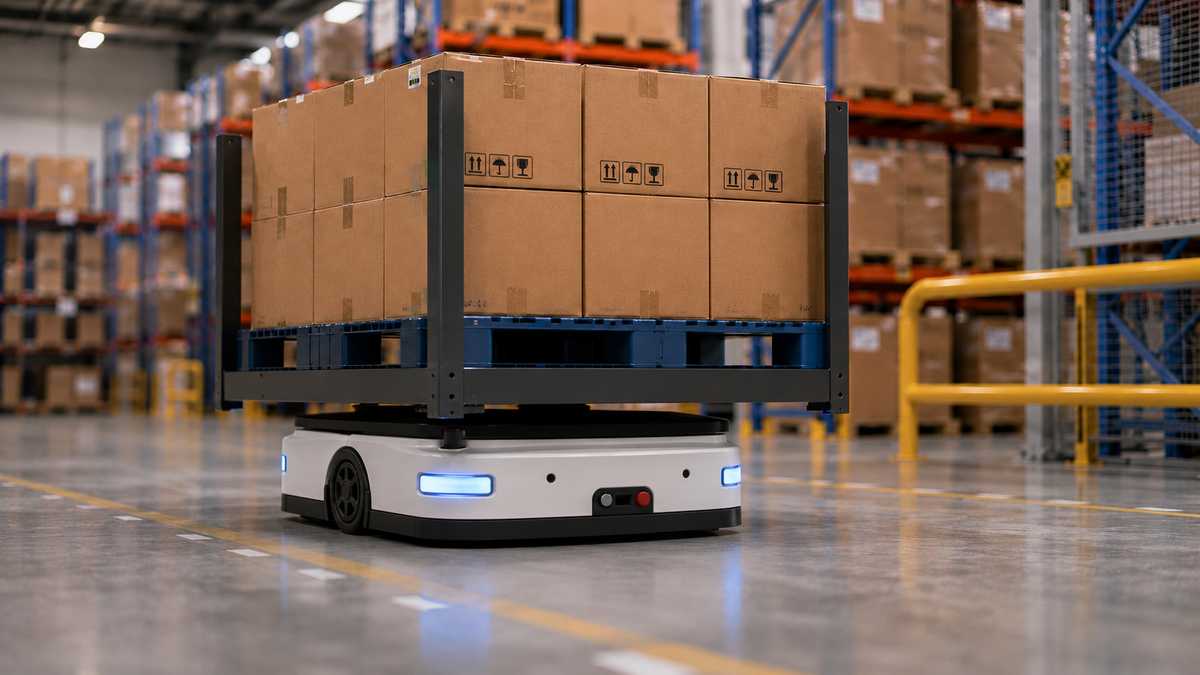
For example, a Coolyne Lifting AGV can transport compatible racks, load carriers, or customized platforms carrying full cases.
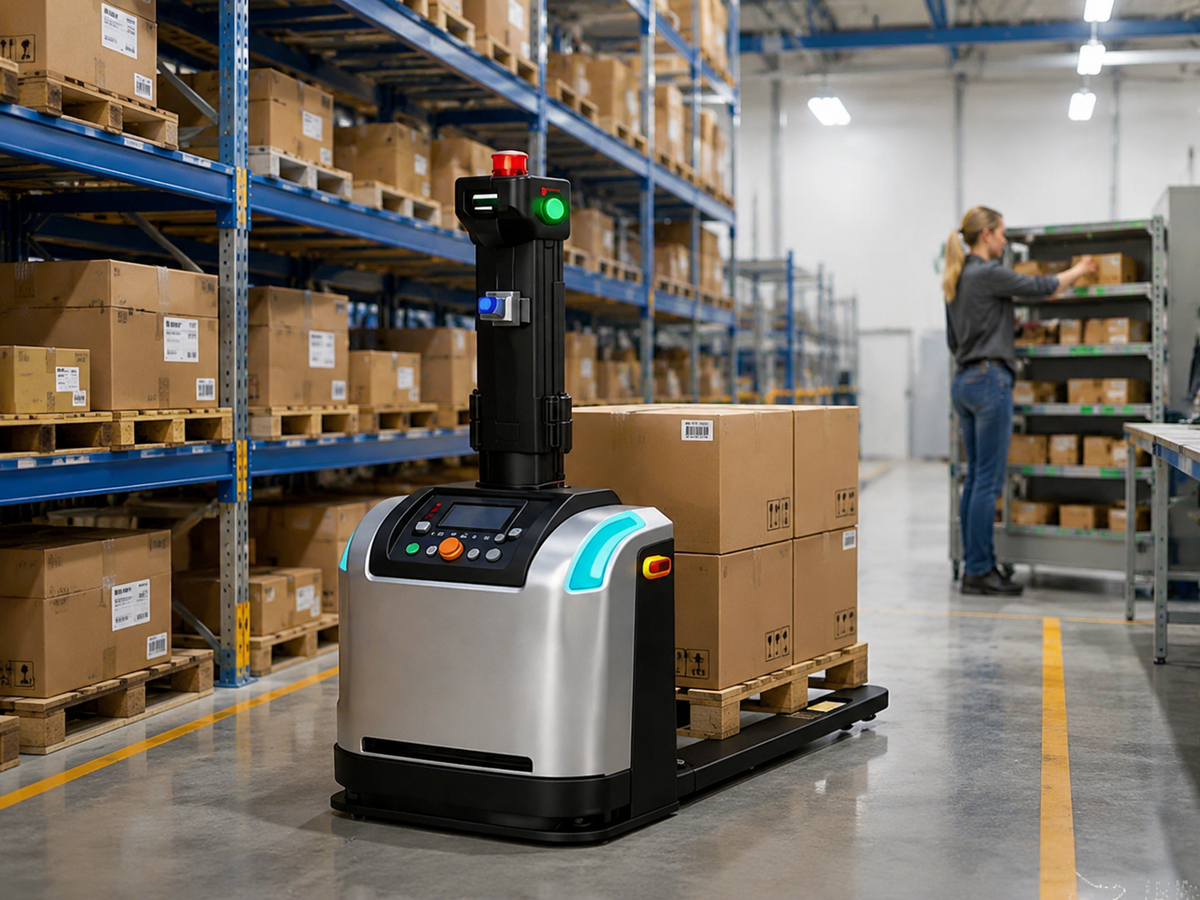
The lifting AGV moves underneath a compatible carrier, lifts it using its integrated lifting mechanism, and then transports the load to the assigned destination.
Within a case-picking operation, it can be used to:
- Move racks or carriers loaded with full cases to the case-picking area;
- Deliver cases closer to operators and reduce long-distance retrieval;
- Transfer goods between different case-picking zones;
- Move completed orders to consolidation or palletizing areas;
- Return empty racks or carriers automatically.
In this application, the lifting AGV primarily handles material transportation rather than directly picking individual cases.
Its role is to reduce manual cart movement, carrying, and travel between warehouse areas so that operators can spend more time on actual case picking and order verification.
Use WMS Data for Continuous Optimization
A WMS can record SKU turnover, inventory locations, order frequency, picking times, replenishment requirements, and task completion data.
By analyzing this information, warehouses can identify:
- Which SKUs should be moved closer to picking locations;
- Which picking routes are unnecessarily long;
- Which areas frequently become congested;
- Which case-picking locations regularly run out of stock;
- Which internal transport tasks require excessive manual labor;
- Which processes may benefit from further automation.
Summary
Case picking is well suited to warehouses where products are stored and distributed in full cases but customer orders frequently require less than a full pallet. Compared with piece picking, it reduces unnecessary carton opening and individual item handling, while offering greater flexibility than full-pallet picking for multi-SKU orders with varying case quantities.
Efficient case picking, however, depends on more than the picking action itself. SKU placement, picking strategy, forward replenishment, and internal transportation all have a direct impact on order fulfillment performance.
When optimizing a case-picking operation, warehouses should first use actual order and SKU data to determine the right storage layout and picking strategy, then address transportation bottlenecks with conveyors, lifting AGVs, or other automation where appropriate. This allows automation to support the actual case-level fulfillment process rather than simply adding more equipment.
Next Review
Move from article research to a scoped feasibility review.
Use the related products and solution paths below, then send your workflow and layout for a quick engineering review.
Related Solutions
Engineering Review