
Related Products
What Is an RGV (Rail Guided Vehicle)? How It Works, Types, and Applications
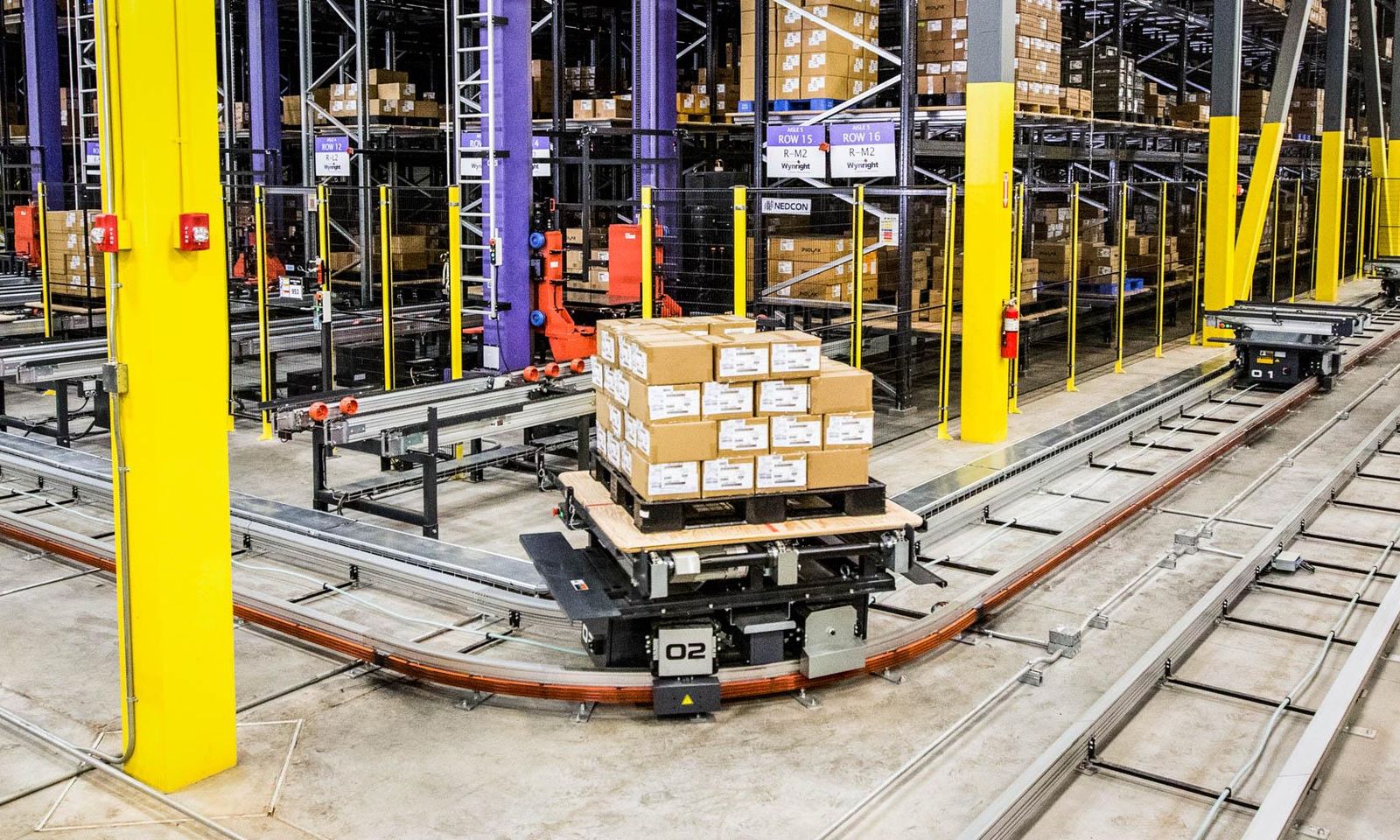
RGV stands for Rail Guided Vehicle, an automated material handling vehicle that travels along a fixed rail system.
Types of RGV Systems · How Does an RGV Work? · Advantages of RGVs
In an automated warehouse, a stacker crane has already delivered a pallet to the end of a storage aisle, but the outbound workstation is still dozens of meters away. If several aisles share the same outbound workstations, pallets need to be transported from different transfer points to their designated destinations.
These seemingly simple short-distance transport tasks can affect how quickly a warehouse processes outbound goods. When several workstations need to move goods at the same time, coordinating vehicles and reducing waiting times become important challenges.
Rail Guided Vehicles (RGVs) are a common solution for automating these transport tasks.
What Is an RGV?
RGV stands for Rail Guided Vehicle, an automated material handling vehicle that travels along a fixed rail system.
Simply put, an RGV moves goods such as pallets, bins, and containers between workstations without requiring a human operator to drive it.
A typical RGV system includes rails, vehicles, drive units, positioning devices, and a control system. Depending on the type of goods being transported, the vehicles can also be equipped with roller conveyors, chain conveyors, or lifting platforms for loading and unloading.
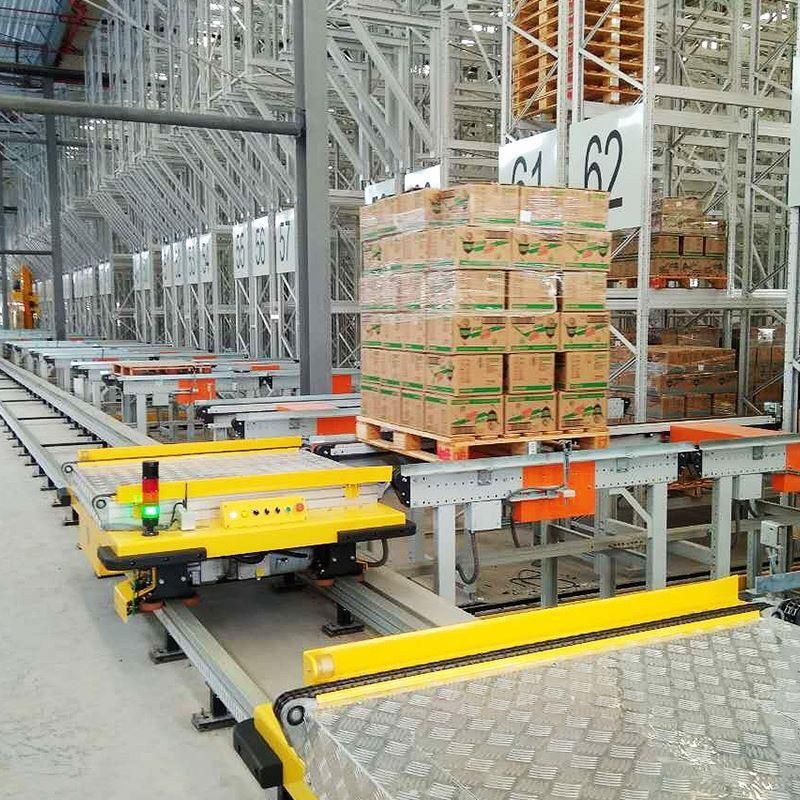
For example, in an automated warehouse, an RGV can connect directly to a pallet conveyor. The conveyor transfers a pallet onto the vehicle, which then transports it to the next workstation. The entire process can be automated.
However, unlike a conventional forklift, an RGV cannot freely change its direction of travel. It can only move along the installed rails, so adding new transport destinations usually requires extending or modifying the track.
Types of RGV Systems
RGVs can be classified in several ways, including load capacity, power supply, and track layout.
Track layout is one of the easiest ways to understand the different types because it determines which locations an RGV can reach and how multiple vehicles operate together.
Based on track layout, RGV systems can generally be divided into three types.
1. Straight-Line Shuttle RGV
This is one of the simpler RGV system configurations.
The vehicle travels back and forth along a straight track, picking up and delivering goods between multiple workstations.
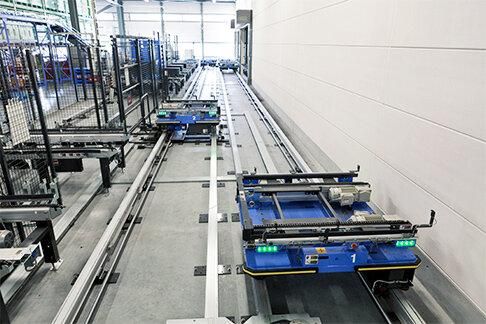
Imagine a factory with four processing workstations arranged along the same production line. An RGV can collect materials from the first workstation and deliver them to another designated location further down the line.
This layout doesn't require a complicated track network, making installation and maintenance relatively straightforward.
However, when multiple vehicles share the same track, they may block one another. Without passing sections, a vehicle that remains at a workstation for too long can force those behind it to wait.
2. Loop RGV
If workstations are spread across a larger area and goods need to move between multiple locations, a loop track may be worth considering.
For example, a distribution center might have several storage areas and outbound workstations. RGVs can travel along a loop, picking up or unloading goods at different locations according to their assigned tasks.
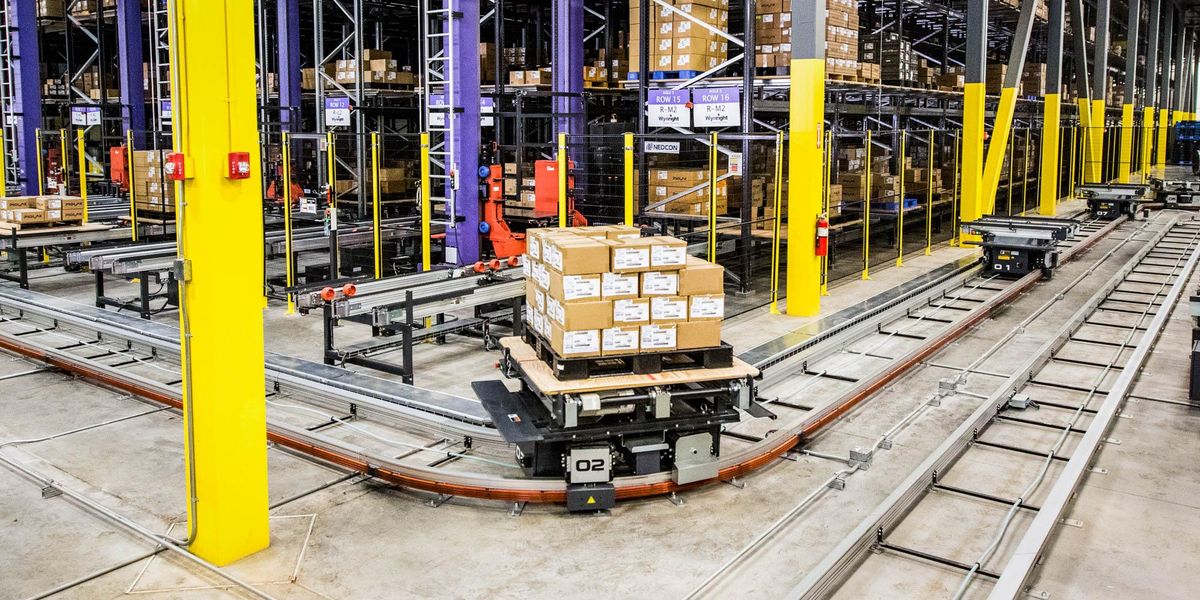
A loop track connects workstations in different areas through a closed transport route, allowing multiple RGVs to circulate according to the scheduling system.
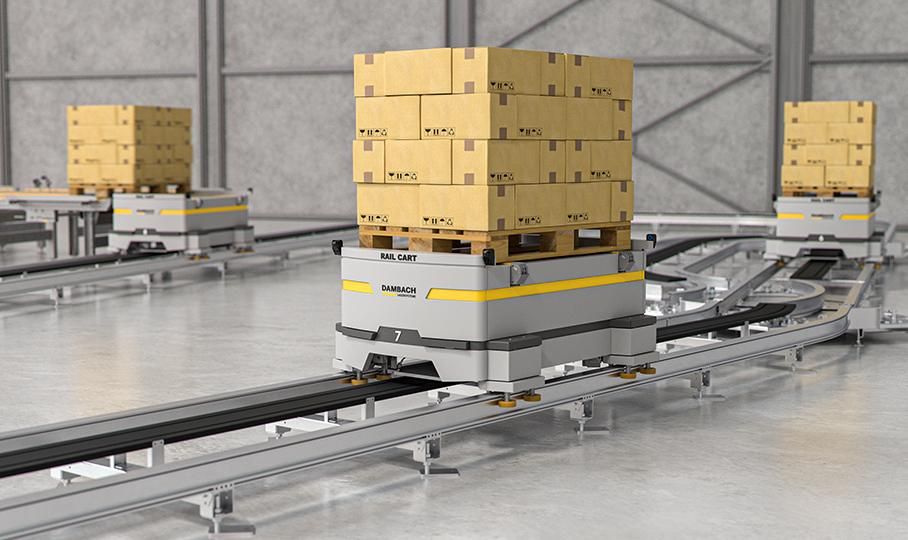
However, actual transport capacity still depends on the number of vehicles, workstation dwell times, and track layout. If the track has no bypass sections, a vehicle stopped at a workstation may still block those behind it.
3. Branched-Track RGV
When workstations are not arranged along a straight line and cannot easily be connected by a loop, a branched-track system may be needed.
Imagine a factory with three production lines sharing one material warehouse.
An RGV can travel along the main track and then pass through a track switch onto the branch leading to the designated production line, delivering materials to the appropriate workstation.
This eliminates the need to build a completely separate transport system for each production line.
Branched tracks use switches to direct vehicles along different routes. When multiple RGVs share the same track network, the control system must also coordinate switch positions and vehicle movements to prevent conflicts.
How Does an RGV Work?
An RGV may look like a vehicle that simply follows a track to deliver goods, but in practice, it needs to work with other equipment and control systems.
Take pallet transportation on a production line as an example.
Suppose a packaging line has finished packing a pallet of products, which now needs to be moved to the outbound staging area.
When the higher-level system issues a transport task, the scheduling system assigns an RGV to the pickup point. Once the vehicle reaches the designated position and the transfer conditions are met, it receives the pallet through onboard rollers or another loading mechanism. The RGV then travels along the track to its destination and transfers the pallet to the receiving workstation.
The entire process requires no one to drive the vehicle. But how does the RGV know where it is?
That's where the positioning system comes in.
RGVs can use encoders, position sensors, RFID tags, and other technologies to determine their locations. The drive control system then uses this information to stop the vehicle accurately at the designated position. The specific positioning method depends on the equipment design.
When multiple RGVs operate on the same track, scheduling becomes even more important.
For example, if one vehicle is already traveling through a particular track section and another is preparing to enter it, the system needs to control access based on track occupancy to prevent conflicts.
An RGV system's transport capacity isn't determined by vehicle speed alone. If loading and unloading take a long time, or vehicles frequently wait for access to the same track section, even fast-moving RGVs may not deliver high overall throughput.
Advantages of RGVs
1. Reduce Repetitive Manual Material Handling
Imagine a factory that needs to move finished components from Workstation A to Workstation B hundreds of times every day.
If employees handle these transfers manually, they have to travel the same route over and over again.
RGVs can take over these repetitive transport tasks. Once the goods are ready at a workstation, the system can dispatch a vehicle to collect them and deliver them to the designated location.
This means employees no longer have to spend so much time moving goods back and forth and can instead focus on machining, assembly, inspection, or other work.
2. Enable Accurate Transfers Between Automated Equipment
In an automated warehouse, transferring goods isn't as simple as placing a pallet somewhere nearby.
For example, when an RGV needs to transfer a pallet to a fixed conveyor, the vehicle must stop in the correct position. Otherwise, the pallet may not transfer properly.
Because RGVs travel along fixed tracks, positioning devices and stopping controls allow them to repeatedly stop at designated transfer points.
This makes it easier to integrate RGVs with conveyors, lifts, and other automated equipment.
Of course, actual stopping accuracy still depends on track installation, positioning devices, and drive control performance.
3. Support Regular Transport Schedules
For production lines that need materials transported at regular intervals, RGVs can repeatedly pick up and deliver goods between fixed workstations.
Working with a scheduling system, the vehicles can carry out transport tasks according to production requirements, reducing the need for manual dispatching and making material flow between production processes more consistent.
Applications of RGV Systems
RGVs aren't limited to automated warehouses. They are also used in manufacturing, logistics distribution, and heavy material handling.
However, the way RGVs are used varies across applications.
Automated Storage and Retrieval Systems (AS/RS)
In an Automated Storage and Retrieval System (AS/RS), RGVs are often used to connect stacker crane aisles with inbound and outbound workstations.
For example, imagine a warehouse with six stacker crane aisles but only two centralized outbound workstations.
Installing a separate long-distance conveyor for every aisle could take up a considerable amount of space.
An alternative is to connect the outbound conveyors from different aisles to an RGV track, allowing the RGVs to transport pallets to the designated outbound workstations.
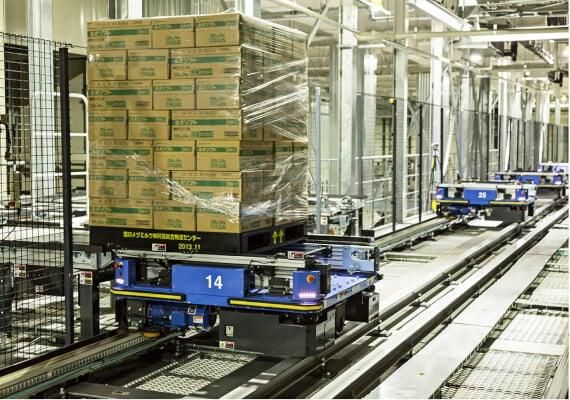
This allows multiple aisles to share the same horizontal transport system.
Manufacturing Production Lines
In factories involved in machining, automotive parts manufacturing, and other industrial processes, RGVs can move materials between different production stages.
For example, a batch of components may need to move from machining to inspection and then to assembly after passing inspection.
If these workstations remain in relatively fixed positions, rails can connect them, allowing RGVs to transport materials according to production tasks.
However, fixed tracks can become a limitation in factories that frequently rearrange their production lines. Whenever a workstation is relocated, the track layout may also need to be modified.
Heavy Material and Pallet Handling
Some factories need to transport more than ordinary bins. They may handle large molds, heavy tooling, or fully loaded pallets.
These loads can be heavy or bulky, making repeated manual transportation impractical.
RGVs can be equipped with load platforms, drive systems, and track structures designed for the weight and dimensions of the materials being transported, allowing them to move heavy loads between fixed processing areas.
Of course, not every RGV is designed for heavy loads. Its actual load capacity depends on the vehicle and track design.
Distribution Centers and Logistics Sorting
In distribution centers, RGVs can connect different storage areas with outbound workstations.
For example, pallets from several storage areas may need to be delivered to different outbound conveyor lines. The system can assign an RGV to collect a pallet from the appropriate location and transport it to its designated transfer point.
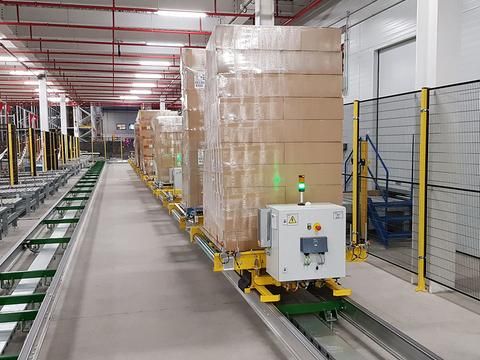
However, if a warehouse has numerous scattered pickup locations that change frequently, installing fixed tracks may not be very practical.
RGV vs. AGV vs. AMR: A Comparison
RGVs, AGVs, and AMRs can all transport goods automatically, but they are not exactly the same type of equipment.
The easiest way to understand their differences is to look at how they navigate and what happens when their routes need to change.
RGVs travel along physical tracks. Where a vehicle can go depends on where the tracks lead.
AGVs (Automated Guided Vehicles) don't rely on physical rails like RGVs do. They can use magnetic guidance, laser navigation, and other technologies to move according to routes and operating rules defined by the system.
AMRs (Autonomous Mobile Robots), on the other hand, place greater emphasis on autonomous localization, environmental perception, and path planning. They can adjust their routes based on assigned tasks and the surrounding environment.
However, the differences between AGVs and AMRs aren't as clear-cut as they might seem.
Some modern AGVs already support autonomous navigation, dynamic path planning, and obstacle avoidance. Therefore, it's inaccurate to assume that AGVs can only follow fixed routes or that AMRs can always navigate freely around any obstacle.
Considering an automated material handling system for your factory or warehouse? Coolyne can help you evaluate suitable AGV/AMR solutions based on your load types, transport routes, and operational requirements. Contact us to discuss your project needs.
Next Review
Move from article research to a scoped feasibility review.
Use the related products and solution paths below, then send your workflow and layout for a quick engineering review.
Related Solutions
Engineering Review