
Related Products
What Role Do AMRs Play in the Supply Chain?
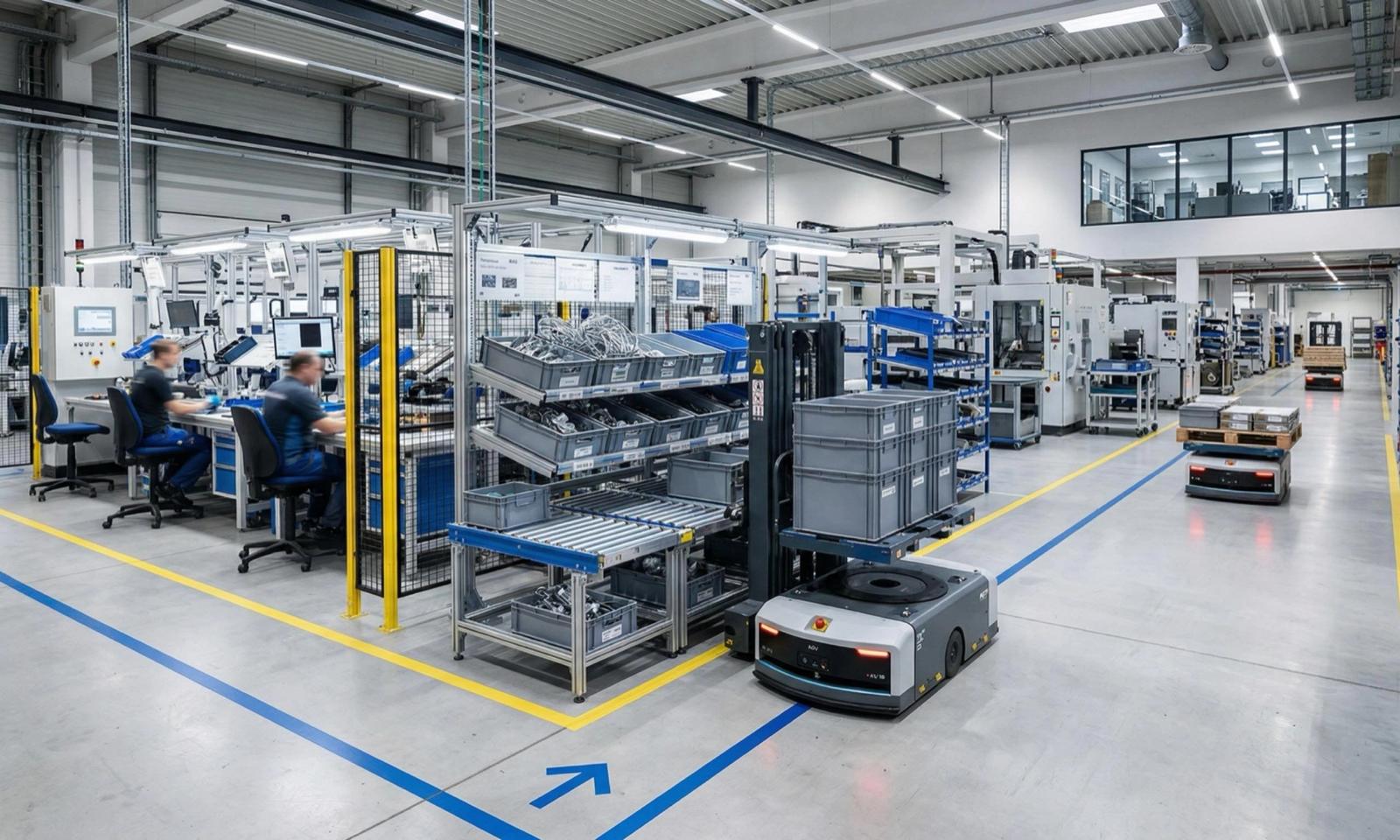
A shipment of components has already arrived at the factory, but the production line is still waiting for materials.
How AMRs Benefit the Supply Chain · AMRs vs. Traditional Material Handling in the Supply Chain · How AMRs Work Alongside People in the Supply Chain
A shipment of components has already arrived at the factory, but the production line is still waiting for materials. Orders have been picked in the warehouse, yet the packing area is still waiting for the goods. Situations like these are fairly common in factories and distribution centers.
In the supply chain, goods don't just move from suppliers to manufacturers and eventually to customers. They also need to move constantly within factories, warehouses, and distribution centers. When internal material handling can't keep up with production or order processing, everything downstream can slow down.
Autonomous mobile robots (AMRs) can take over some of these repetitive transport tasks. They navigate independently within designated work areas and move materials to the right locations based on assigned tasks, reducing the need for manual transportation.
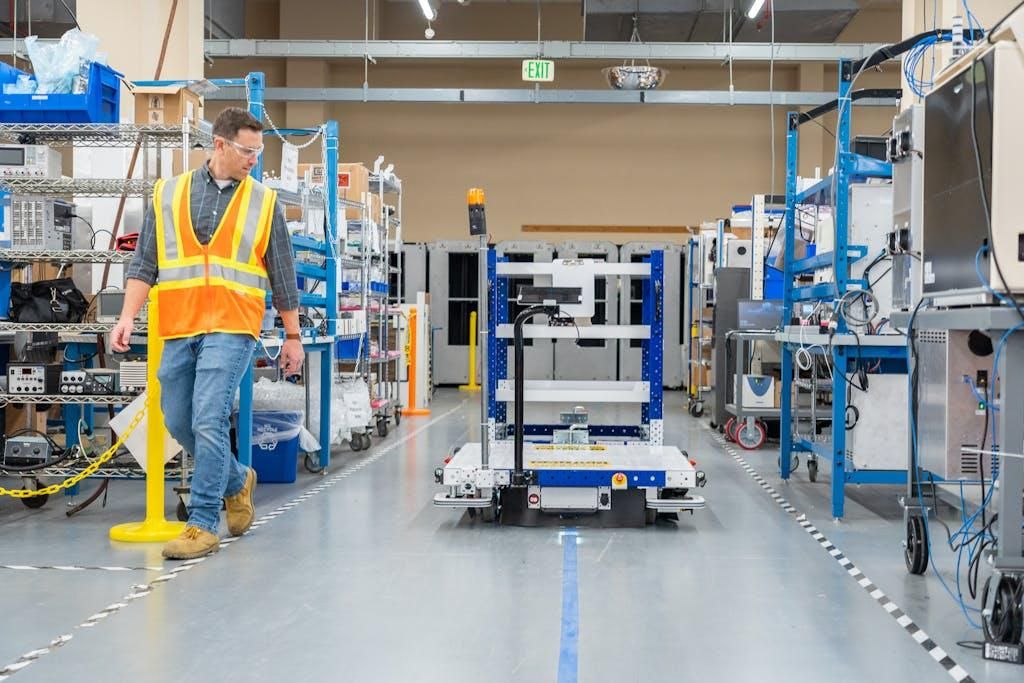
For supply chain operations, the value of AMRs goes beyond simply moving goods from point A to point B. They can also reduce the time spent waiting for materials between different operations, helping production, warehousing, and order processing run more smoothly.
How AMRs Benefit the Supply Chain
1. Improve Employee Productivity
In a large warehouse, pickers can spend a significant part of their day walking. They have to move through different aisles, find products, pick orders, and push loaded carts to the next area.
All that walking and transporting takes up valuable time without directly contributing to picking more orders.
AMRs can change the way this work gets done.
In collaborative picking operations, employees pick the products while robots carry and transport the orders. In warehouses using goods-to-person picking systems, mobile robots can also bring shelves or bins to fixed workstations, so employees don't have to keep walking back and forth between storage locations.
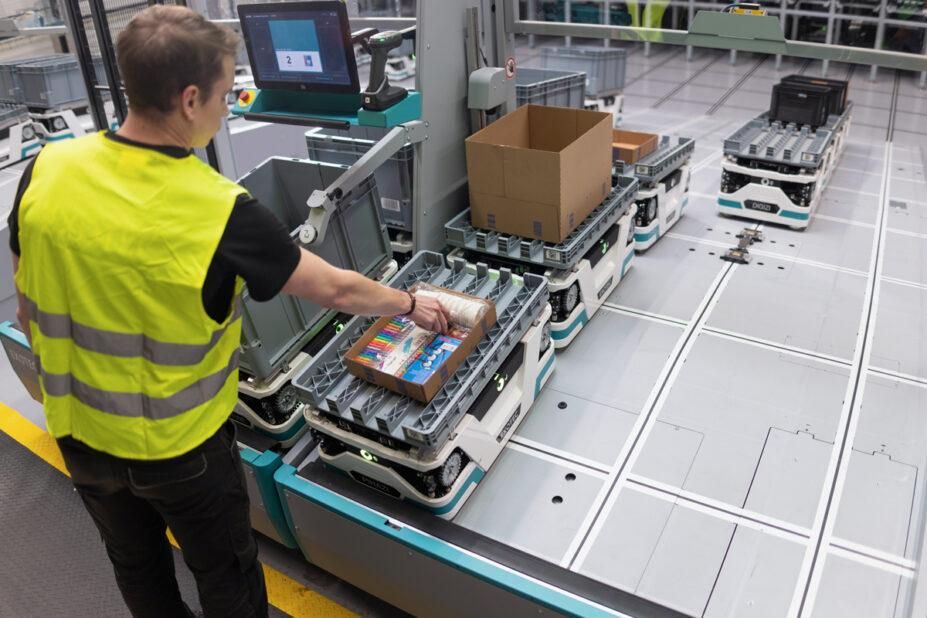
The same problem exists in manufacturing. When production workers need components, they often have to wait for a delivery or even leave their workstations to collect materials themselves. With AMRs handling these transport tasks, employees can spend more time on assembly, inspection, and other work.
When employees no longer have to spend so much time moving materials, warehouses can devote more labor to order processing, while factories can reduce interruptions caused by workers leaving their stations to collect supplies.
2. Improve Inventory Management and Replenishment
Why do warehouse pickers sometimes run out of products when there's still plenty of stock in the warehouse?
Because the goods may still be sitting in reserve storage instead of being replenished to the picking area.
Many distribution centers keep the same products in both reserve storage and picking locations. When stock in the picking area runs low, more products have to be brought over from reserve storage. If replenishment doesn't happen in time, order picking may come to a halt even though the warehouse still has inventory available.
AMRs can handle the transportation between reserve storage and picking areas.
When the Warehouse Management System (WMS) generates a replenishment task, the robot fleet management system can assign an AMR to deliver the goods to the designated area. This reduces the need for employees to repeatedly move materials between the two locations.
Production line replenishment works in much the same way. Once components are prepared in the material staging area, AMRs can deliver them to the appropriate workstations. This is particularly worth considering in factories where several production lines share the same material warehouse.
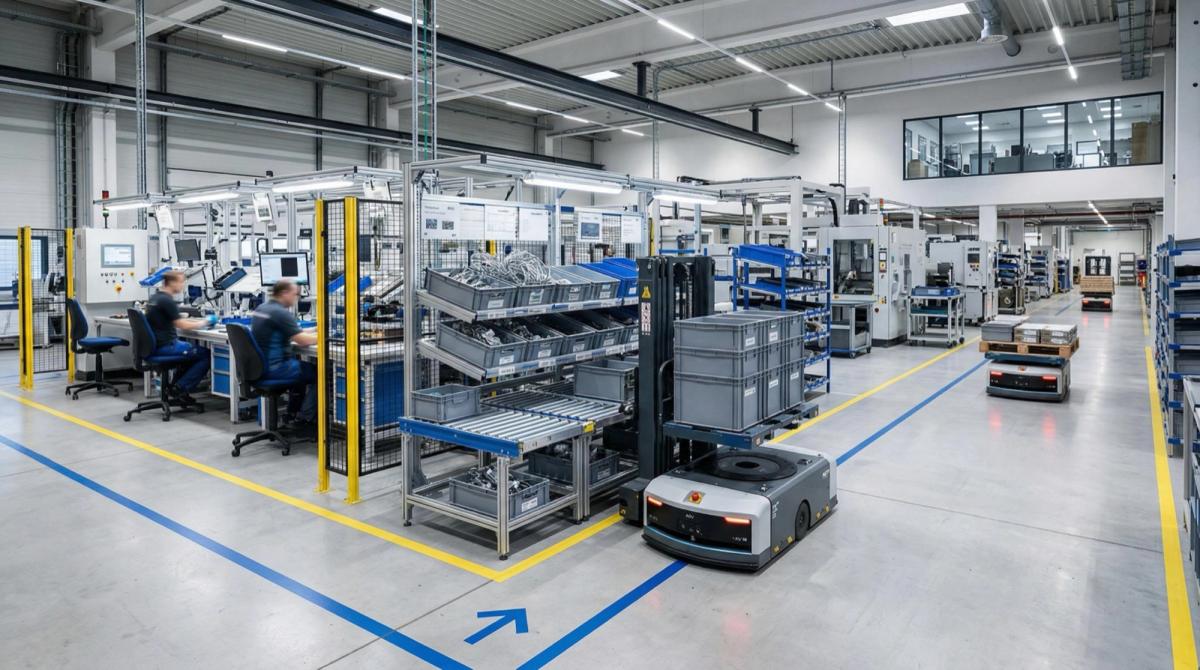
However, AMRs don't decide when inventory should be replenished, nor do they automatically fix inaccurate inventory records. Inventory management still depends on systems such as WMS, while AMRs primarily carry out the physical transport tasks.
3. Speed Up Order Processing and Fulfillment
Slow order processing doesn't always mean warehouse pickers aren't working fast enough.
Imagine a distribution center where the picking area is already full of completed orders, but the packing area is still waiting for them. The employees responsible for moving those orders may be busy with other tasks and unable to deliver them right away.
So even though picking is finished, the orders can't move on to the next step.
With AMRs, completed order bins can be transported to the packing area. Once packing is finished, the goods can also be moved to the consolidation area or outbound staging area.
For warehouses with work areas spread across a large facility, this can reduce the time orders spend waiting to be transported between operations, allowing picked goods to move into packing and shipping preparation sooner.
For order fulfillment, this means fewer delays caused by internal material handling that could affect shipping schedules.
But it still depends on where the real bottleneck is. If the packing area is already struggling to keep up, having AMRs continuously deliver more orders will only create a bigger backlog.
4. Increase Flexibility in Logistics Operations
The layout of a factory or warehouse rarely stays the same forever.
A factory might have three production lines today and five next year. A warehouse might add new packing stations as order volumes grow or rearrange its storage racks.
With fixed conveyor systems, these changes may require rerouting conveyor lines or even modifying existing equipment.
AMRs offer much more flexibility.
Imagine a factory with four assembly lines sharing one component warehouse. Production Line A needs frequent replenishment today, while Line B needs relatively little. The fleet management system can assign AMRs based on actual transport demand instead of keeping each robot on the same route.
If the factory adds another production line later, the new delivery point can be incorporated into the existing transport network, provided the aisles, transfer locations, and system configuration can accommodate it.
The same applies to warehouses. Adding new pickup or delivery points doesn't necessarily mean building an entirely new transport route.
For businesses that frequently adjust production schedules or handle different types of orders, this flexibility can reduce the constraints that fixed transport routes place on production and warehouse layouts.
But flexibility has its limits. If every production line needs replenishment at the same time, or robots are crowding into the same aisle, changing routes alone won't solve a shortage of transport capacity.
5. Reduce Safety Risks Associated With Repetitive Material Handling
In some factories, employees spend their days pushing carts loaded with components between the warehouse and production lines. They might travel the same route dozens of times a day.
Pushing and pulling heavy loads over long periods, along with frequent manual lifting, can cause fatigue and increase the risk of musculoskeletal injuries.
AMRs can take over some of these tasks.
For example, once employees have loaded components in the material staging area, a robot can transport the loaded cart to the production line. Production workers only need to handle the transfer at the designated location instead of pushing a heavy cart across the factory floor.
This is particularly useful for operations that frequently transport heavy bins, pallets, or material racks.
However, introducing robots into a factory also brings new safety considerations. Employees, forklifts, and AMRs may need to share the same aisles, so intersections, loading areas, and locations with heavy pedestrian traffic all need to be planned carefully.
AMRs can reduce certain manual handling risks, but they don't replace proper workplace safety management.
AMRs vs. Traditional Material Handling in the Supply Chain
If forklifts, pallet jacks, and conveyors can already move goods, why use AMRs?
The answer is that none of these options is necessarily better than the others. It depends on the transport task.
Forklifts are flexible. If you need to move a shipment at short notice or place pallets on high storage racks, a forklift is often a good choice. And if a warehouse only has a few transport tasks each day, deploying a dedicated AMR system may not make financial sense.
Fixed conveyors are better suited to a different situation: goods moving continuously along the same route in large volumes.
For example, if a packaging line needs to keep sending cartons to a palletizing area, a fixed conveyor can handle the job well as long as the production layout remains stable.
AMRs are better suited to situations where transport tasks happen frequently, but pickup and delivery locations change.
Imagine a warehouse with several storage areas and packing stations. One moment, goods need to move from Zone A to Packing Station 1. A little later, another shipment needs to go from Zone C to Packing Station 3.
If everything is handled manually, employees have to keep traveling between these areas. Building fixed conveyors to connect every location could make the system quite complicated.
That's where AMRs are worth considering.
Of course, it's not enough to know whether a piece of equipment can move the goods. You also need to work out how much transport capacity is actually required.
If a transport task only comes up two or three times an hour, an existing forklift may be enough. If large volumes of goods move continuously along the same route every day, a conveyor may be the better option.
Tasks that involve frequent trips between multiple locations, take up a lot of employee time, and have changing transport requirements are the ones worth evaluating for AMR automation first.
How AMRs Work Alongside People in the Supply Chain
When AMRs and employees work together, the real challenge isn't simply deciding who transports the goods and who picks the orders. It's making sure both can complete their tasks at the right pace.
For example, during collaborative picking, an employee finishes picking an order and is ready to move on to the next one, only to find that the next AMR hasn't arrived yet. The employee has no choice but to wait.
Meanwhile, several AMRs may have already arrived at another picking workstation, but the employee there is still working on the previous batch. The robots end up waiting in line.
Both situations waste time.
If a warehouse simply adds more robots without adjusting task assignments and workstation operations, overall picking efficiency may not improve.
That's why the fleet management system needs to consider more than just assigning tasks to robots. It also needs to account for workstation capacity. How long does an employee typically take to complete a picking task? When should the robot arrive? How many robots need to access the same workstation at once?
Production line replenishment presents a similar challenge.
If a robot delivers materials too early, they may pile up beside the workstation and take up valuable floor space. If it arrives too late, production workers may have to stop and wait.
AMR transport tasks therefore need to follow actual production demand rather than simply keeping robots moving back and forth.
Loading and unloading is another detail that's easy to overlook.
If employees have to spend a long time adjusting bins or manually handling goods every time a robot arrives, some of the time saved through automated transportation will be lost. In certain applications, it may be necessary to modify the load carrier design or use automated conveyor equipment for transfers.
For factories and warehouses considering AMRs, it's worth looking at how work is currently done. How much time do employees spend transporting materials or waiting? Which workstations are frequently waiting for supplies? Which transport tasks happen over and over again?
Once these questions are answered, it's easier to plan AMR routes, task sequences, and employee responsibilities so the robots can fit into existing production and warehouse operations.
How Can Coolyne Help You Implement AMR Automation?
Considering introducing AMRs into your supply chain? Coolyne can help evaluate which material handling tasks are suitable for automation based on your factory or warehouse layout, material types, and transport requirements, and plan an appropriate AMR solution. Contact us to discuss your project needs.
Next Review
Move from article research to a scoped feasibility review.
Use the related products and solution paths below, then send your workflow and layout for a quick engineering review.
Related Solutions
Engineering Review