
Related Products
How We Designed Heavy-Roll AGV Logistics for Six Coating Lines
See how Coolyne designed heavy-roll AGV logistics for six coating lines, including 2.5-ton roll transport, buffering, dispatching, and safety logic.
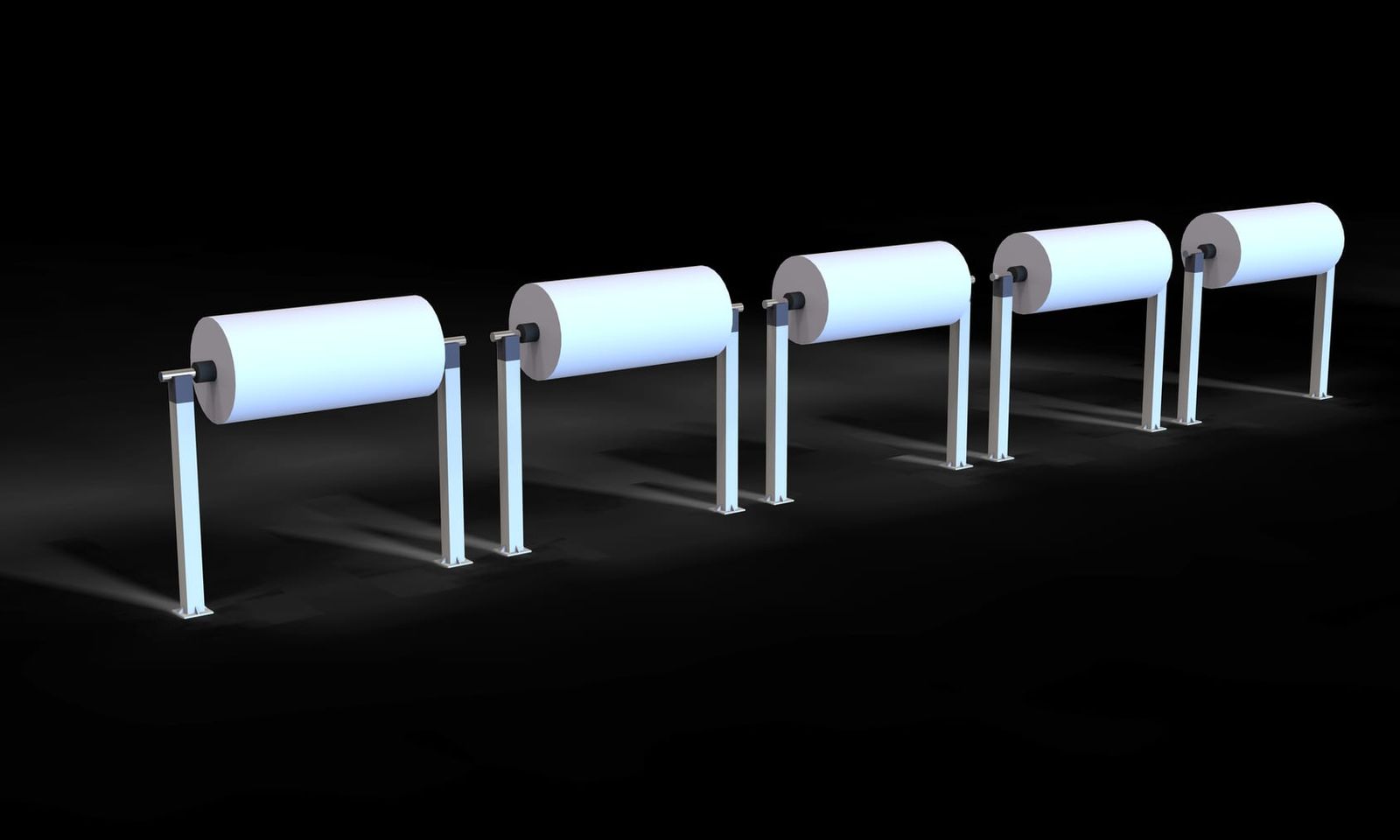
See how Coolyne designed heavy-roll AGV logistics for six coating lines, including 2.5-ton roll transport, buffering,...
In this coating workshop heavy-roll AGV logistics project, we needed to plan raw-material delivery and finished-roll transfer for six wide coating production lines.
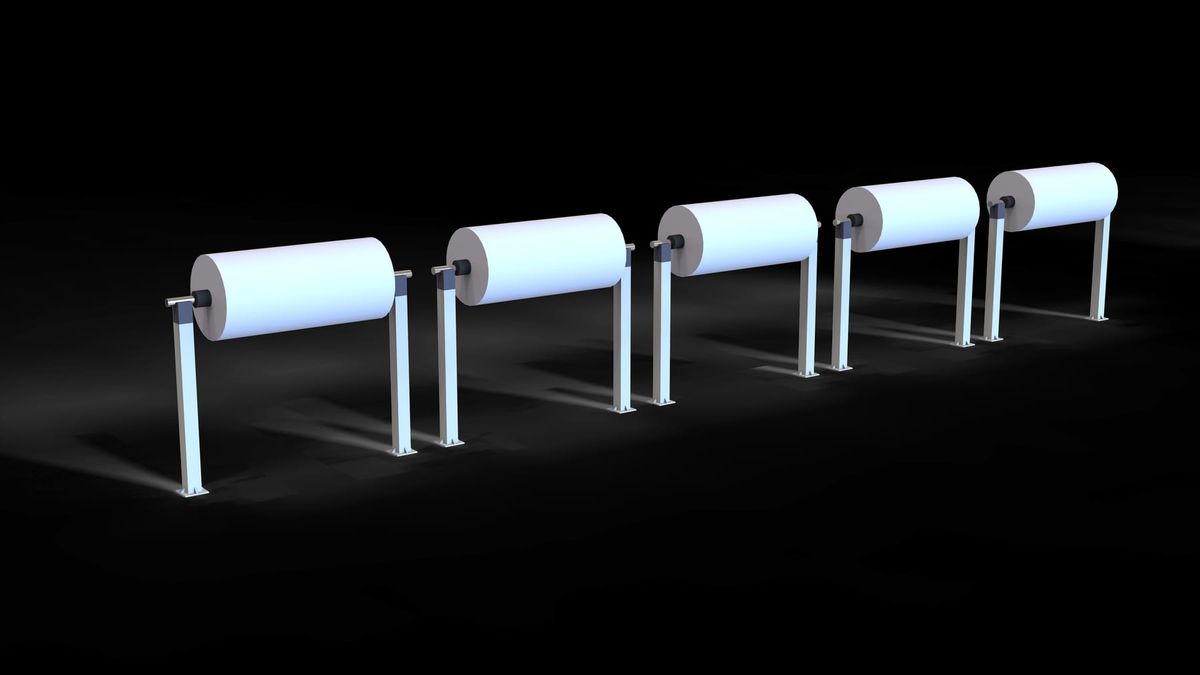
Each production line was approximately 3.3 m wide. The project handled large, heavy rolls, with raw-material dimensions of up to approximately Ø800 x 3,300 mm and a combined material-plus-air-shaft weight of no more than 2,500 kg. The processed rolls, including the shaft, were also limited to a total weight of 2,500 kg.
This meant the real challenge was not:
Can an AGV carry 2.5 tons?
It was:
How can rolls weighing up to 2.5 tons and extending more than 3 m move safely and reliably between the raw-material area, six coating lines, and downstream buffer areas without disrupting production through logistics delays or vehicle occupation?
For heavy-duty and non-standard loads like these, the vehicle usually needs to be configured around load dimensions, weight, support method, and site space. Coolyne's AGV solutions can be configured for different production-logistics applications and material-handling requirements.
Why We Could Not Treat Roll Logistics Like Ordinary Pallet Logistics
From a transport perspective, 2,500 kg is an important figure.
But for a roll, weight is not the only design factor.
A standard pallet usually provides a relatively stable:
- support surface;
- external dimensions;
- fork-entry position;
- center-of-gravity position.
This project, however, handled:
Roll Material + Air Shaft
The load itself was cylindrical, and the air shaft ran through the roll. The project required both raw and finished rolls, together with the shaft, to remain within a total weight of 2,500 kg, with a maximum roll diameter of approximately 800 mm.
From an engineering perspective, this meant the vehicle needed to meet not only:
Load Capacity
but also:
Load Support + Roll Stability + Interface Compatibility
So the real question was not simply:
Is the AGV rated for more than 2.5 tons?
It was:
How can this 2.5-ton roll be supported stably on the vehicle, and how can it be transferred safely from one equipment interface to another?
For heavy-roll applications, the load geometry itself becomes part of the vehicle design.
Why the Material and Air Shaft Had to Be Calculated as One Complete Load
If only the roll material is included in the weight calculation, the actual logistics load can easily be underestimated.
The design basis for this project was:
Material + Air Shaft <= 2,500 kg
The processed roll was designed on the same basis:
Finished Roll + Shaft <= 2,500 kg
The air shaft is not an accessory that can be ignored during transport.
It moves together with the roll and affects:
- total weight;
- overall load length;
- support positions;
- equipment handoff method;
- vehicle load structure.
So in a project like this, we do not ask only:
How heavy is the roll?
We ask:
What is the total transport unit?
The AGV is not actually transporting an isolated roll. It is transporting:
Roll + Shaft as One Load Unit
Only when the complete transport unit is treated as the design object do the vehicle-load and interface parameters become meaningful.
Why Raw-Material Delivery and Finished-Roll Transfer Had to Be Designed Separately
The project covered two main logistics directions.
The first was:
Raw-Material Preparation -> Coating-Machine Infeed
which moved unprocessed rolls from the material-preparation area to the infeed side of the required coating line.
The second was:
Coating-Machine Outfeed -> Downstream Buffer
which moved processed rolls from the machine outfeed to the downstream buffer area.
At first glance, both tasks are simply about moving rolls.
But their task-trigger logic is different.
Raw-material delivery is driven by:
When does the production line need the next roll?
Finished-roll transfer is driven by:
When will the current roll be completed, and is a downstream position available?
So not every AGV task should be defined simply as:
Pickup A -> Drop-off B
It is more appropriate to establish separate:
Inbound Material Task
and:
Outbound Material Task
and then allow the central dispatching system to assign vehicles.
That is why AGV tasks in this project needed to be generated from a combination of:
- production-line demand;
- roll storage status;
- downstream buffer availability.
Why We Could Not Plan a Separate Logistics System for Each of the Six Production Lines
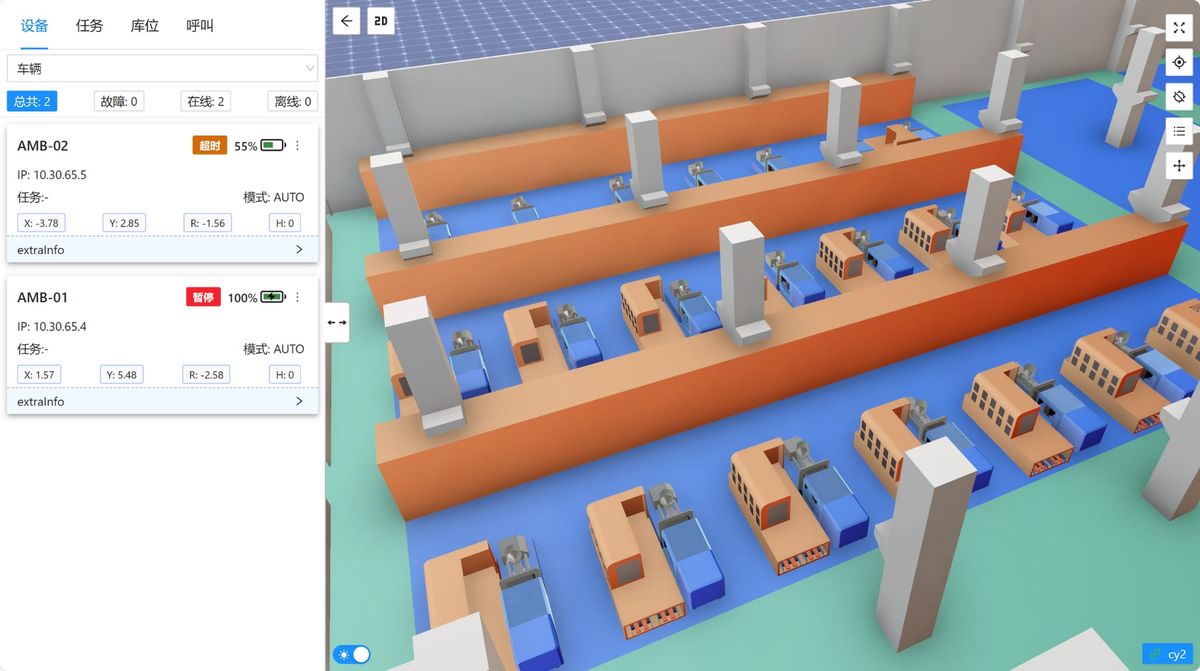
The workshop contained:
6 wide coating production lines
One simple design approach would be:
Give each production line its own logistics equipment.
That is easy to understand, but the logistics demand of all six lines will not peak at the same time.
At one moment:
- Line 1 may be waiting for raw material;
- Line 2 may still be processing;
- Line 3 may have just completed a roll;
- Line 4 may have no available downstream buffer position;
- Lines 5 and 6 may have no logistics task at all.
If every line had completely independent vehicles, some vehicles could remain idle while another line generated demand at the same time.
So the real logistics object to plan was:
Six Production Lines as One Logistics Network
rather than:
Six Independent AGV Systems
The central dispatching system needs to determine task priority across the workshop and allocate vehicles where logistics resources are actually needed.
Why AGV Quantity Could Not Be Determined Directly from the Six Production Lines
Six production lines do not automatically mean six AGVs are required.
At the same time, we also cannot simply assume:
One heavy-duty AGV can serve every line, so one vehicle is enough.
The real fleet-size drivers are:
Logistics Task Frequency + Complete Transport Cycle
At minimum, the calculation needs to consider:
- roll-change frequency for each line;
- number of raw-material deliveries;
- number of finished-roll transfers;
- distance from the raw-material area to each production line;
- distance from each production line to the downstream buffer;
- pickup and drop-off time;
- waiting time for an interface to become available;
- probability of simultaneous requests from multiple lines;
- charging and other non-transport time.
Fleet size should therefore be calculated as:
Production Demand -> Transport Tasks -> Cycle Time -> Vehicle Utilization -> Fleet Size
rather than:
Six Lines -> Six AGVs
The case does not disclose a specific vehicle quantity or transport-cycle time, so those values would need to be finalized from production takt and actual site distances during implementation rather than inferred directly from the number of coating lines.
Why the 3.3 m Roll Length Directly Affected Vehicle and Route Design
The design basis for raw-material width reached approximately:
3,300 mm
This is already far beyond a typical tote or standard pallet load.
Even if the AGV chassis itself is compact, the actual space occupied in the aisle is defined by:
Vehicle + Load
Route planning therefore cannot be based only on AGV body width.
The overall envelope with the maximum roll on board must be used instead.
This makes several route factors especially important:
- turning space;
- safety clearance from fixed equipment;
- whether two vehicles can pass each other;
- whether the load intrudes into adjacent production-line operating areas;
- clearance between the roll ends and obstacles;
- space required during pickup and drop-off.
This means:
AGV Footprint != Logistics Footprint
The space that matters is the overall envelope of the vehicle carrying the maximum roll, which is particularly important for long, heavy loads.
Why the Vehicle Could Not Block the Coating-Machine Operating Area
The system had to serve all six lines without interfering with normal access to the coating machines and production operations.
That means the AGV design needed to answer more than:
Can the vehicle reach the machine?
It also needed to answer:
Once it reaches the machine, will it interfere with normal machine operation or maintenance?
The area around the production line may simultaneously be needed for:
- roll loading and unloading;
- operator access;
- equipment maintenance;
- process inspection;
- exception handling;
- next-batch material preparation.
If an AGV reaches the line and then waits there for a long time, the automation can create a new production bottleneck.
One design objective is therefore:
Minimize AGV Occupancy at the Machine
The vehicle should complete the handoff and clear the equipment area as quickly as practical.
The machine-side position is a high-value production handoff point, not an AGV parking area.
Why the Pickup and Drop-Off Interface Mattered More Than Navigation Accuracy Alone
Many AGV projects first focus on:
Navigation Accuracy
But with a 2.5-ton roll, reaching the correct navigation coordinate is not enough if the roll and machine-side support positions are not aligned correctly.
The real control problem is the relationship between:
Vehicle Position + Load Position + Machine Interface
For a long roll with an air shaft, the interface design needs to ensure:
- support positions are matched;
- the roll center is correctly positioned;
- the shaft is compatible with machine-side structures;
- the load remains stable during transfer;
- the system can confirm the handoff before the AGV completes the task.
In a project like this:
AGV Arrived
and:
Material Handoff Completed
are two completely different states.
The logistics task is only finished when the second condition has been confirmed.
Why Storage-Location Status Directly Affected AGV Dispatching
The project included:
Storage-Location Management
for a straightforward reason.
When a raw-material roll is ready for delivery, the system needs to know:
- where the roll is located;
- which production line needs it;
- whether the current position allows pickup.
When a finished roll leaves the coating machine, the system also needs to know:
- which downstream position is available;
- which positions are already occupied;
- where this roll should be sent.
AGV dispatching therefore cannot operate only from:
Vehicle Availability
It also needs:
Material Location + Destination Availability
For example, if a finished roll is ready but no downstream buffer location is available, sending an AGV to the machine immediately may provide no benefit and could occupy the production area unnecessarily.
Storage status therefore becomes part of the AGV task-generation logic.
Why Buffer Availability Affected the Entire Production-Logistics Flow
The case explicitly required AGV tasks to take downstream buffer availability into account.
This is important because many logistics systems consider only:
Is there material upstream that needs to move?
without confirming:
Is the downstream location ready to receive it?
For a large roll weighing up to 2.5 tons, finding an improvised temporary drop location is not practical.
If the downstream position has not been released but the system still sends an AGV to collect the finished roll, the result can be:
AGV carrying a 2.5-ton roll with nowhere to go
That reduces vehicle utilization and can occupy a main aisle or production area.
A more suitable task trigger is:
Material Ready + Destination Available -> Create Transport Task
rather than:
Material Ready -> AGV Moves Immediately
In this case, software scheduling prevents a physical congestion problem from being created on the shop floor.
Why Heavy-Duty Logistics Safety Could Not Depend on Obstacle Sensors Alone
A normal AGV can slow down or stop when it detects a person or obstacle.
The same principle applies here, but the load makes the safety problem more complex because the vehicle is transporting:
up to 2,500 kg
of roll material and shaft.
From an engineering perspective, safety planning also needs to account for:
- the overall vehicle-and-load envelope;
- stopping distance under heavy load;
- pedestrian-vehicle crossing areas;
- the swing envelope of the roll ends during turns;
- personnel access conditions around machine handoff areas;
- load stability after an abnormal stop.
Heavy-duty AGV safety is therefore not simply:
Add More Sensors
It should be considered as a complete system of:
Vehicle + Load + Route + Interface + Human Traffic
The heavier the load, the less appropriate it is to leave safety planning until the vehicle arrives on site.
Why WMS/WCS Was More Than Warehouse Software
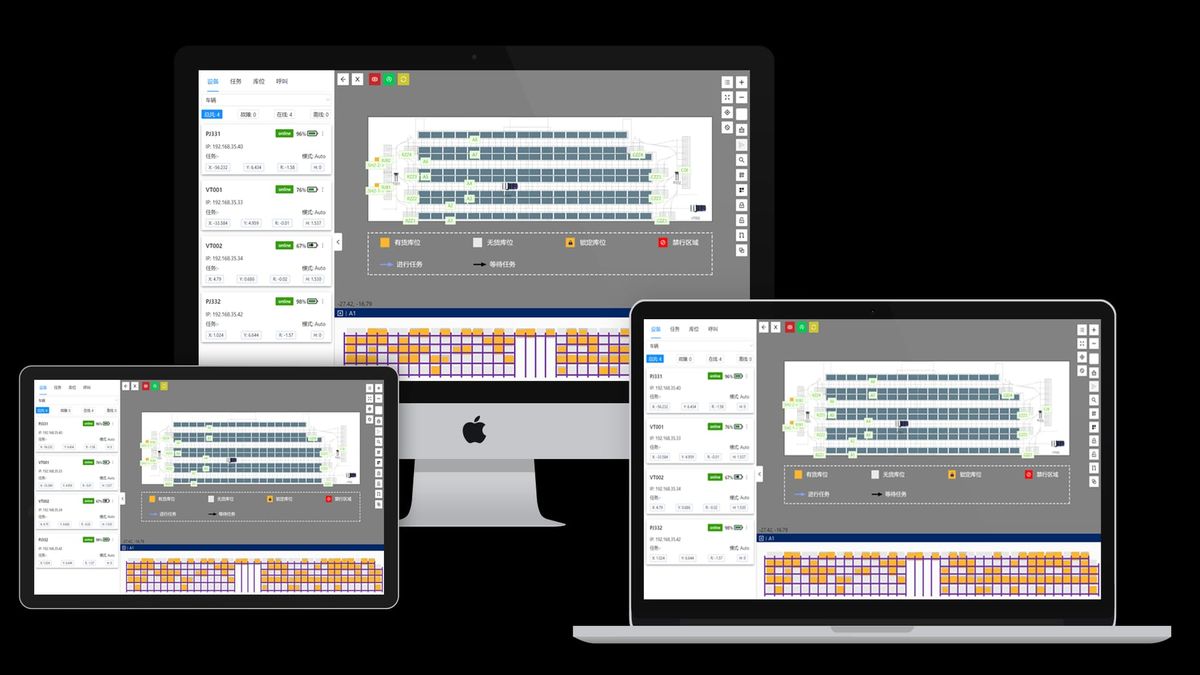
Although this project took place inside a production workshop, the system still needed:
- Storage Location Management;
- AGV Task Dispatch;
- Vehicle Monitoring;
- Production-Area Visualization.
A WMS/WCS-style coordination layer was used to manage task requests, storage or position status, and equipment-side material handoff.
This shows that in a production-logistics project, WMS/WCS should not be understood simply as:
Software for warehouse inventory.
It needs to connect:
Material State
with:
Production Demand
and:
Vehicle Task
and:
Equipment Status
For example, when a coating line needs the next raw-material roll, the system must know the material location and create a delivery task.
When processing is complete, the system must check whether a downstream buffer is available before generating the finished-roll transfer task.
The software is therefore converting production demand into executable logistics tasks.
Why Digital Visualization Was Especially Important Across Six Production Lines
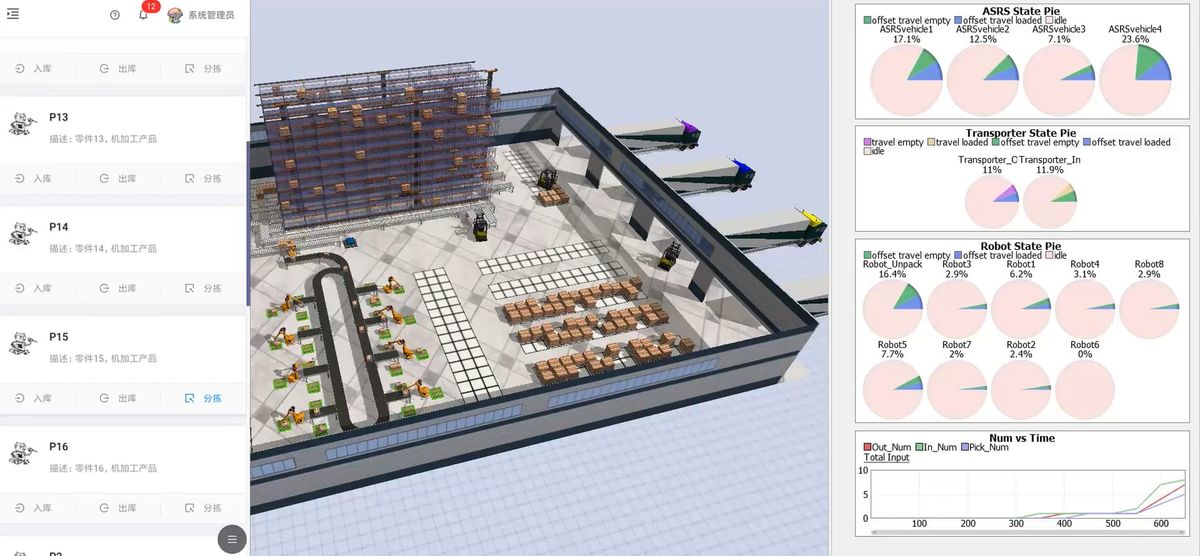
When a logistics system serves only one machine, operators can often see directly where the AGV is.
Once vehicles need to serve six production lines simultaneously, relying on visual observation becomes increasingly difficult.
The project therefore included production-area visualization, vehicle monitoring, and task-status visibility, with dispatching information designed to be accessible from desktop and mobile terminals.
The value is not in creating an attractive 3D screen.
It is in allowing production managers to answer:
- Which production line is waiting for raw material?
- Which roll already has a transport task?
- Which AGV is assigned to the task?
- Where is the vehicle now?
- Which downstream buffer position is occupied?
- Why has a finished roll not been moved yet?
Questions that once required someone to walk onto the shop floor can become visible as:
Task Status + Vehicle Status + Storage Status
That is the practical value of logistics visualization.
Why This Project Was Not Fundamentally About One Heavy-Duty AGV
At the equipment level, the most visible feature of the project is:
2.5-ton heavy-roll AGV transport
But purchasing a vehicle capable of carrying 2.5 tons would solve only one part of the problem.
The complete system still needed to connect:
Raw Material Preparation -> Storage Location -> AGV Dispatch -> Coating-Machine Infeed -> Production -> Coating-Machine Outfeed -> Downstream Buffer
That is why the real question in this project was not:
How do we automate a heavy vehicle?
It was:
How do we turn heavy-roll movement around six coating lines into a controlled production-logistics process?
The vehicle is the equipment that executes the transport task. What determines whether the system works is whether the rolls, production lines, buffer locations, and dispatching system remain coordinated.
Planning a heavy-load material handling project? Coolyne can evaluate your load, layout, production flow, and throughput requirements. Contact Coolyne to discuss your application.
Next Review
Move from article research to a scoped feasibility review.
Use the related products and solution paths below, then send your workflow and layout for a quick engineering review.
Related Solutions
Engineering Review