
Related Products
5 Signals Your Warehouse May Need Expansion
Learn five warning signs that warehouse capacity and operations are under pressure, and how automation can support growth before expansion.
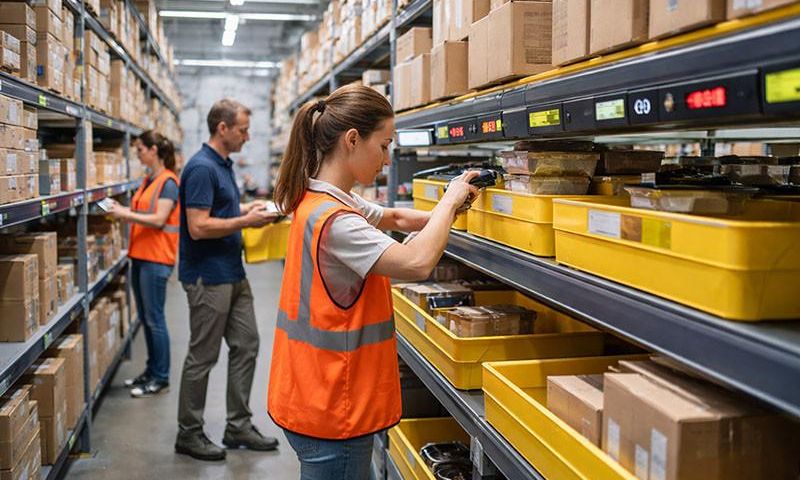
Learn five warning signs that warehouse capacity and operations are under pressure, and how automation can support gr...
Deciding whether a warehouse needs to expand usually cannot be based on a single metric.
Many companies only start considering additional warehouse space after orders increase, SKU counts grow, or inventory keeps rising. But before that point, daily operations often begin to show clear signs of pressure: more labor is being added, but orders are not being processed any faster; the warehouse is becoming more crowded, while errors and waiting time are increasing.
These changes often indicate that the warehouse's labor, space, or processing capacity is starting to approach the limits of the current business volume. They can be treated as early signals to watch when evaluating warehouse expansion.
Labor Costs Keep Rising While Productivity Stagnates
When order volume increases, the most direct response is often to add more people.
Adding more pickers, forklift drivers, and warehouse operators can temporarily reduce task backlogs. But if labor input keeps increasing while the number of orders, pallets, or picks completed per labor hour does not improve, the issue may no longer be simply a lack of workers.
As SKU counts increase and storage locations become more spread out, employees may spend more time walking, locating inventory, and waiting for materials. Adding more forklifts can also create additional waiting when traffic conflicts begin to occur in shared aisles.
These extra movements and delays eventually show up in labor productivity. If labor input continues to rise while metrics such as Orders per Labor Hour, Lines Picked per Hour, or Pallets Moved per Hour remain largely unchanged, it is worth checking whether the current warehouse layout, travel routes, and operating methods are beginning to limit productivity.
Picking and Handling Errors Are Increasing
As a warehouse comes under more pressure, errors often begin to increase as well.
Crowded storage locations, more temporary inventory, and increasingly disorganized SKU placement can make picking and replenishment more difficult. Employees are handling more tasks in less space, so wrong-SKU picks, quantity errors, pallets delivered to the wrong station, and replenishment delays become more likely.
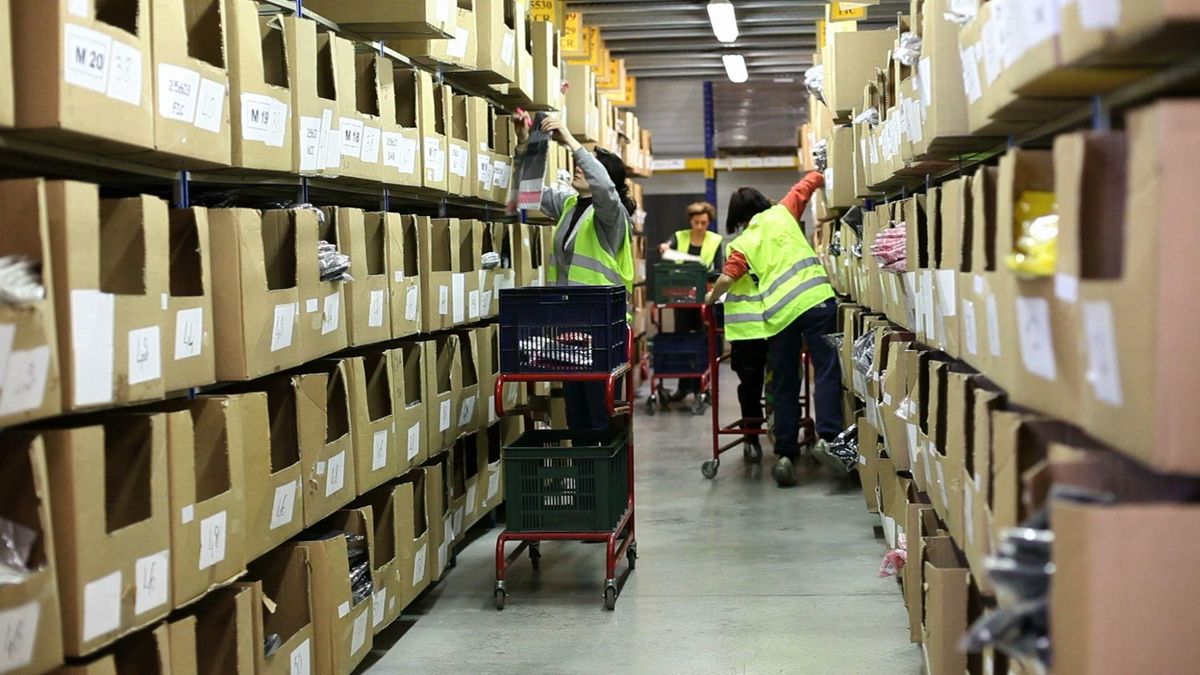
A single incorrect order may need to be picked again, repacked, and reshipped. If the error happens in material delivery to production, it may also cause the production line to wait.
As order volume grows, even a small increase in the error rate can create a noticeable amount of rework.
If rising error rates are happening at the same time as warehouse congestion and task backlogs, it is worth checking whether the available space and operating processes are starting to come under pressure.
Warehouse Space Is Gradually Reaching Capacity
A warehouse approaching its capacity limit does not always look completely full.
More often, pallets begin to appear in temporary storage areas, goods are staged along aisles, and replenishment and outbound areas start competing for the same space.
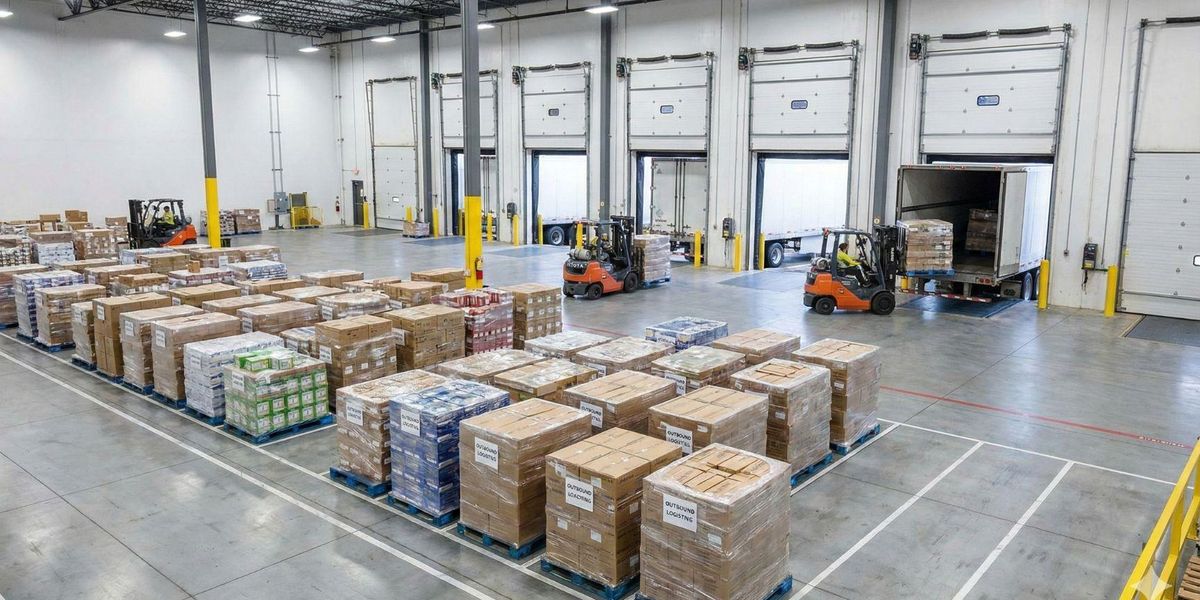
A forklift may need to move one pallet just to reach another. High-velocity SKUs may be pushed farther away from picking areas. Inbound goods that cannot immediately be assigned a storage location may have to remain in buffer zones.
As a result, a material movement that once required one handling step may now require two or more.
When this kind of extra handling becomes more common, warehouse capacity should not be judged only by the number of empty storage locations. It is also important to look at whether receiving, replenishment, picking, and outbound operations still have enough room to work efficiently.
If storing more inventory is already reducing normal operating space, further increases in storage volume will usually create more handling and waiting.
Order Processing and Fulfillment Are Starting to Fall Behind Demand
Warehouse processing usually slows down gradually rather than all at once.
At first, only a small number of orders may take longer to complete. Over time, replenishment delays, picking waits, and outbound queues become more frequent. As the business continues to grow, these delays begin to show up more often in normal daily operations.
A slowdown in one warehouse process can easily carry over into the next.
If replenishment falls behind, pickers have to wait. If picking is complete but packing or outbound capacity is limited, the goods still cannot leave the warehouse.
The bottleneck may be in replenishment, picking, packing, or outbound operations, so simply adding people to one role often only relieves the problem temporarily.
If the internal warehouse processing time from order release through picking, packing, and outbound continues to increase, and Same-Day or Next-Day orders are becoming harder to complete on schedule, one part of the warehouse operation may already be struggling to keep up with demand.
The Warehouse Struggles to Handle Peak-Period Order Fluctuations
Some warehouses operate normally most of the time. The real pressure only becomes visible during peak seasons, promotions, or sudden spikes in orders.
When order volume rises quickly, picking, replenishment, and outbound activity all increase at the same time. Once one part of the process begins to slow down, queues can quickly build in the steps that follow.
Many companies respond by adding temporary workers, scheduling overtime, or extending shifts.
Using these measures occasionally is not necessarily a problem. But if every peak period requires a large amount of temporary labor and extra shifts, and orders are still frequently delayed, the warehouse may no longer have enough peak processing capacity.
At that point, the key question is whether the warehouse genuinely lacks physical space, or whether the current layout, storage methods, and material flow can no longer support higher order volumes.
Implement Warehouse Automation
Before deciding to expand the building, it is worth identifying where the current warehouse is actually constrained: is there simply not enough storage space, or are walking, transport, picking, and outbound operations already slowing overall throughput?
If the bottleneck mainly comes from poor space utilization, long travel distances, or inefficient manual handling, warehouse automation such as AS/RS, automated picking, and AGV/AMR systems may increase storage or processing capacity within the existing building while reducing repetitive transport and manual travel.
Some warehouses can continue supporting business growth after the existing space is redesigned. Other projects genuinely require an expansion or a new facility.
If expansion is already necessary, including automation in the early planning stage—together with rack layout, station locations, and material flow—is usually easier than retrofitting automation after the warehouse has been built.
If you are evaluating a warehouse expansion or automation project, you can contact Coolyne to discuss your current warehouse layout, order volume, throughput requirements, and automation feasibility.
Next Review
Move from article research to a scoped feasibility review.
Use the related products and solution paths below, then send your workflow and layout for a quick engineering review.
Related Solutions
Engineering Review