
Related Products
Manufacturing Logistics: What Is Manufacturing Logistics?
Learn what manufacturing logistics is, why internal material flow matters, and how automated material handling improves factory efficiency.
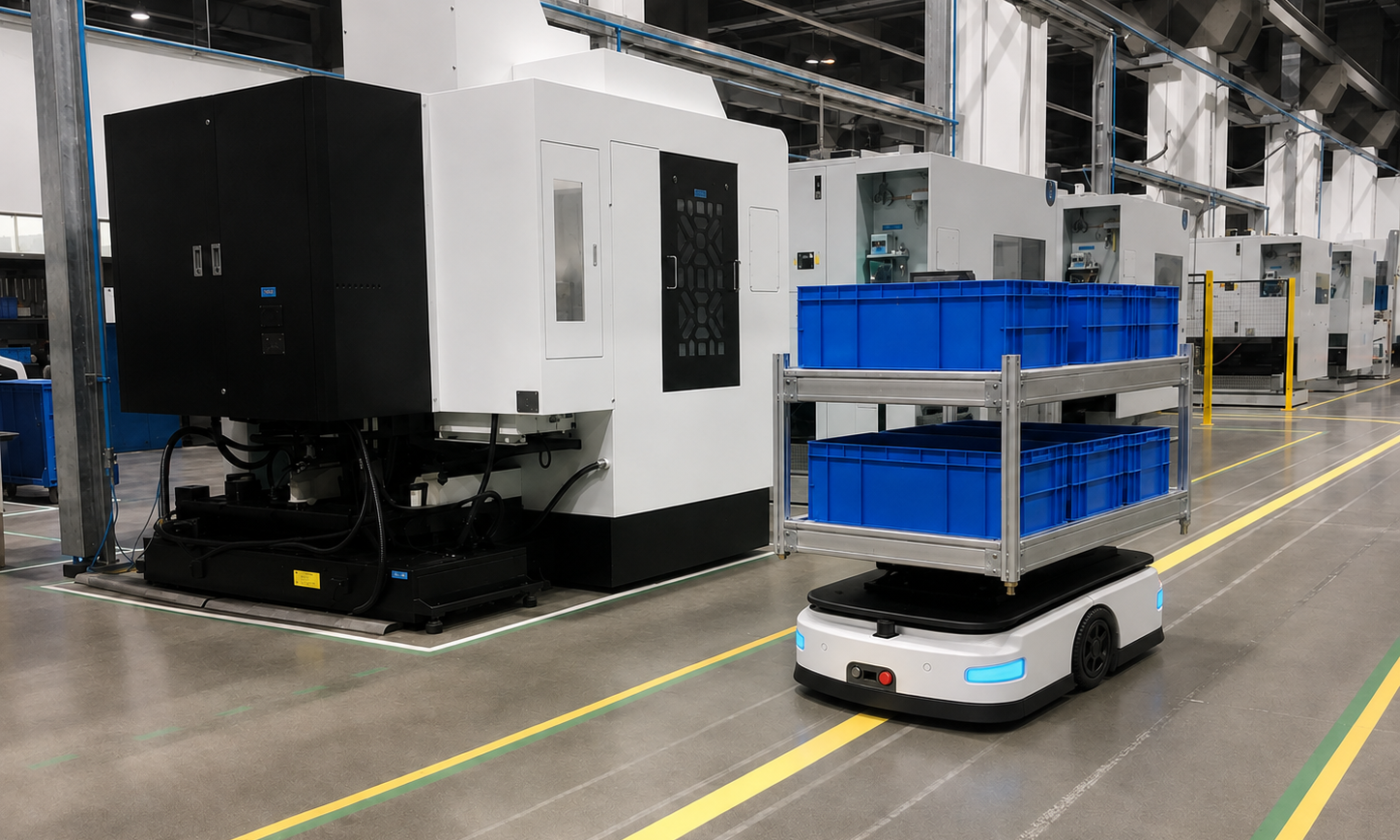
Learn what manufacturing logistics is, why internal material flow matters, and how automated material handling improv...
Manufacturing efficiency depends not only on equipment and people, but also on whether materials can reach the right place at the right time.
Raw materials need to move from receiving into storage, components need to be delivered to production lines according to the production plan, work-in-process needs to move between operations, and finished goods need to move promptly into inspection, packaging, storage, or outbound processes. These material flows and related logistics activities around production together make up manufacturing logistics.
For modern manufacturers, the core of manufacturing logistics is not simply “moving materials,” but keeping material supply aligned with actual production demand.
What Is Manufacturing Logistics?
Manufacturing logistics refers to the planning, storage, delivery, handling, and control of raw materials, components, work-in-process, finished goods, and related logistics information throughout the manufacturing process.
Its core objective can be summarized as:
Get the right material, in the right quantity, to the right production location, at the right time.
For example, in an automotive parts factory, manufacturing logistics may include:
- Unloading and putaway of raw materials after arrival;
- Delivering components from the warehouse to production lines;
- Transferring semi-finished products from one process to the next;
- Delivering parts to CNC machines, injection molding machines, or assembly equipment;
- Returning empty pallets, totes, and reusable carriers;
- Moving finished products to inspection, packaging, or finished-goods storage.
Manufacturing logistics is therefore not a separate support activity outside production. It is an important logistics system connecting warehousing, production processes, and finished-goods flow.
Key Components of Manufacturing Logistics
Manufacturing logistics covers the entire flow of materials from their arrival at the factory through finished production. Although specific processes vary by industry, several key components are common.
1. Inbound Logistics
Inbound logistics is responsible for bringing raw materials, components, and packaging materials from suppliers into the factory.
Typical flow:
Unloading → Receiving inspection → Temporary staging → Putaway → Inventory update
This stage needs to ensure that quantities, batches, and storage locations are accurate so that production can be supplied reliably.
2. Material Storage
After raw materials enter the factory, they need to be stored according to product type, usage frequency, and production requirements.
Common storage methods include:
- Pallet racking
- Tote shelving
- Cantilever racking
- Automated storage and retrieval systems
- Line-side buffer areas
A well-designed storage layout can shorten later delivery distances and make frequently used materials easier to feed into production.
3. Line-Side Delivery
Line-side delivery supplies materials from warehouses or buffer areas to the actual point of use according to production demand, such as:
- Assembly lines
- CNC machines
- Injection molding machines
- Welding stations
- Packaging stations
- Other production equipment
Delivering too early increases line-side inventory and consumes space; delivering too late can cause material shortages. Line-side delivery therefore needs to stay aligned with the actual production takt.
4. WIP Handling
Products usually pass through multiple processes before production is complete. After one process finishes, semi-finished products need to be moved promptly to the next operation, a buffer area, or quality inspection. This is WIP handling.
Machining → Cleaning → Inspection → Assembly → Packaging
If transport capacity between processes is insufficient, one area may accumulate WIP while the next process waits for material.
5. Empty Carrier Return
Manufacturing logistics includes not only forward material flow but also reverse flow. After components are delivered, empty handling units such as the following need to be returned to storage, replenishment areas, or designated return points:
- Empty pallets
- Empty totes
- Empty racks
- Material carts
Timely return supports the next logistics cycle.
6. Finished Goods Logistics
After production is complete, finished goods may still need to pass through:
Inspection → Packaging → Palletizing → Finished-goods storage → Outbound shipping
These processes are also part of manufacturing logistics. A complete manufacturing logistics system therefore covers material flow from raw-material arrival through the point where finished products leave the production system.
Why Manufacturing Logistics Matters — and the Challenges It Faces
Manufacturing logistics directly affects production continuity, WIP levels, line-side inventory, and the utilization of production resources.
Why Is Manufacturing Logistics Important?
Keep production running continuously
If a workstation lacks the required components, production may stop even when equipment and personnel are ready.
Reduce WIP accumulation
Stable inter-process logistics can reduce WIP buildup around individual operations and help avoid local congestion.
Control line-side inventory
Replenishing according to actual production demand reduces the need to keep large amounts of material beside the line.
Shorten internal logistics cycles
Reducing unnecessary handling, waiting, and intermediate transfers shortens the internal flow time from material arrival to finished goods.
Improve logistics control
Clear visibility into material locations, inventory status, and task information helps production and logistics teams coordinate resources.
What Challenges Does Manufacturing Logistics Face?
Production logistics is often highly dynamic. Common challenges include:
- Frequent changes in production plans;
- Large numbers of SKUs and components;
- Different production takt times across processes;
- Limited line-side space;
- Clear peaks and troughs in transport demand;
- Crossing routes between manual forklifts and personnel;
- Complex WIP buffer locations;
- Reverse return of empty pallets and totes;
- Legacy factory layouts that were not designed for automated logistics.
Manufacturing logistics optimization therefore should not focus only on a single transport point. It needs to examine the entire material flow and how materials enter, move through, and leave the production system.
Why Efficient Internal Material Flow Is Critical to Production Lines
Manufacturing equipment operates at a defined production takt, and internal logistics must complete material deliveries before the equipment needs them.
For example, if a machine consumes one batch of material every 10 minutes while internal logistics requires an average of 8 minutes to complete a replenishment task, any waiting, route congestion, or vehicle unavailability can push delivery beyond the acceptable replenishment window.
This can create two common situations:
Starvation — material shortageUpstream logistics does not deliver material in time, so the production equipment stops because there are no parts available for processing.
Blocking — material accumulationDownstream logistics does not remove completed WIP in time, filling buffer positions around the equipment and preventing further production.
Internal logistics therefore needs to consider:
- Production takt time
- Logistics task cycle time
- Replenishment response time
- Line-side safety stock
- WIP buffer capacity
- Vehicle availability
- Transport-route congestion
Simply increasing line-side inventory does not truly solve logistics-efficiency problems. Extra material may temporarily reduce the risk of shortages, but it also consumes space, makes inventory harder to manage, and increases the risk of picking the wrong material.
A better approach is to match logistics capacity with actual production consumption. Only when material delivery, WIP transfer, and finished-goods removal can keep pace with production can equipment capacity be used consistently.
How Automated Material Handling Improves Manufacturing Logistics Efficiency and Stability
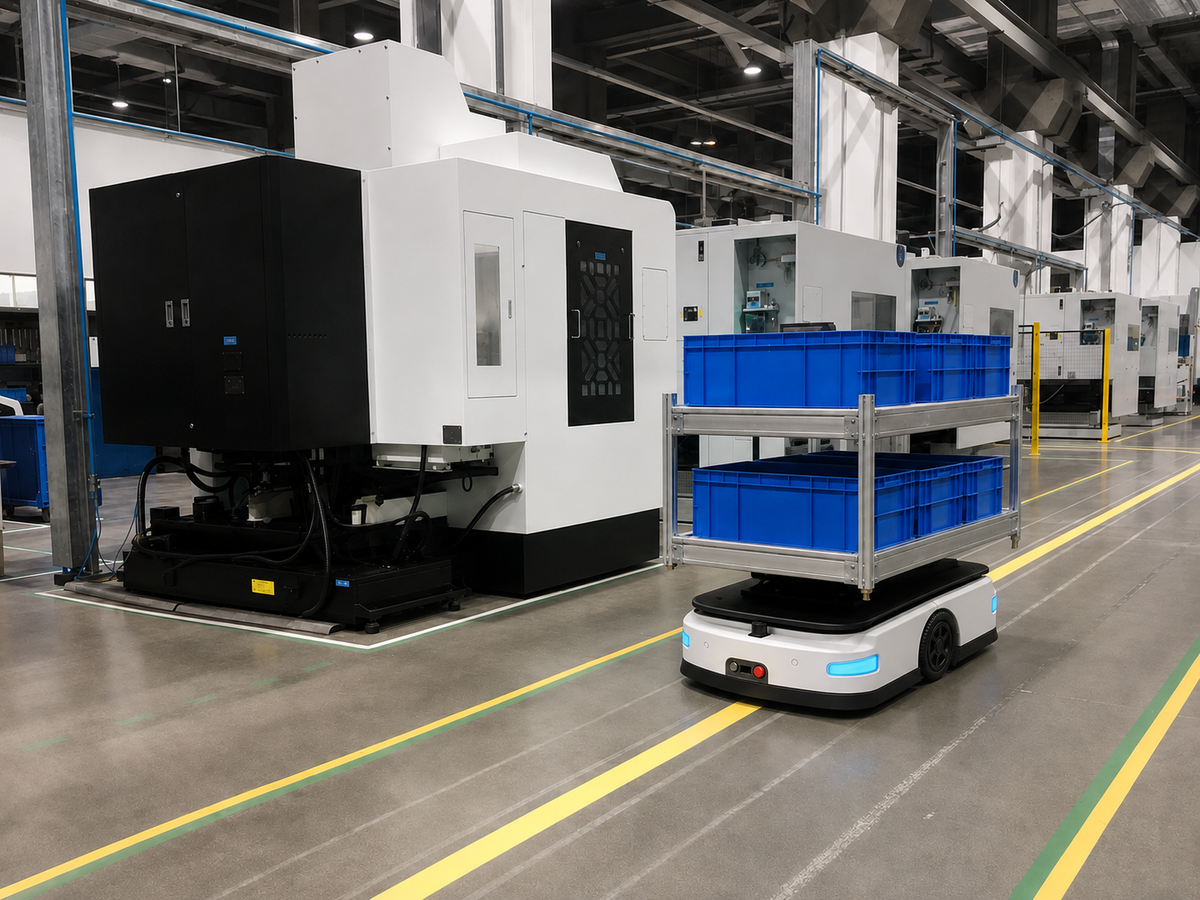
Manufacturing operations contain many repetitive point-to-point transport tasks, such as warehouse-to-line delivery, process-to-process transfers, and movement from production areas to finished-goods buffers.
These relatively standardized logistics tasks can be automated with AGVs, AMRs, and automated forklifts.
Reduce Repetitive Manual Transport
Automated equipment can continuously execute clearly defined transport tasks, reducing the need for manual forklifts to repeat the same routes. Personnel can instead focus more on exception handling, material preparation, and other work that requires judgment.
Trigger Logistics Tasks from Production Demand
Automated systems can connect with MES, WMS, WCS, or production equipment. For example, when line-side inventory reaches a replenishment threshold:
Production system generates demand → Logistics task is created → Dispatch system assigns equipment → AGV/AMR executes the move → Completion status is reported
Logistics tasks no longer depend entirely on someone noticing a shortage and arranging transport manually.
Improve Logistics Task Traceability
Automated systems can record information for each transport task, including:
- Pickup location
- Destination
- Assigned equipment
- Start time
- Completion time
- Waiting time
- Exception status
These data help manufacturers identify congested routes, workstations that frequently generate urgent requests, and whether actual logistics capacity can meet production demand.
Improve Consistency Across Multiple Shifts
Manual logistics performance can vary with shift, staffing levels, and operating practices. Automated equipment follows consistent task rules and dispatch logic, reducing execution differences between shifts and helping stabilize production supply.
The value of automated material handling is therefore not only in reducing manual transport, but also in making manufacturing logistics more predictable, traceable, and consistent.
How Coolyne Automates Manufacturing Logistics
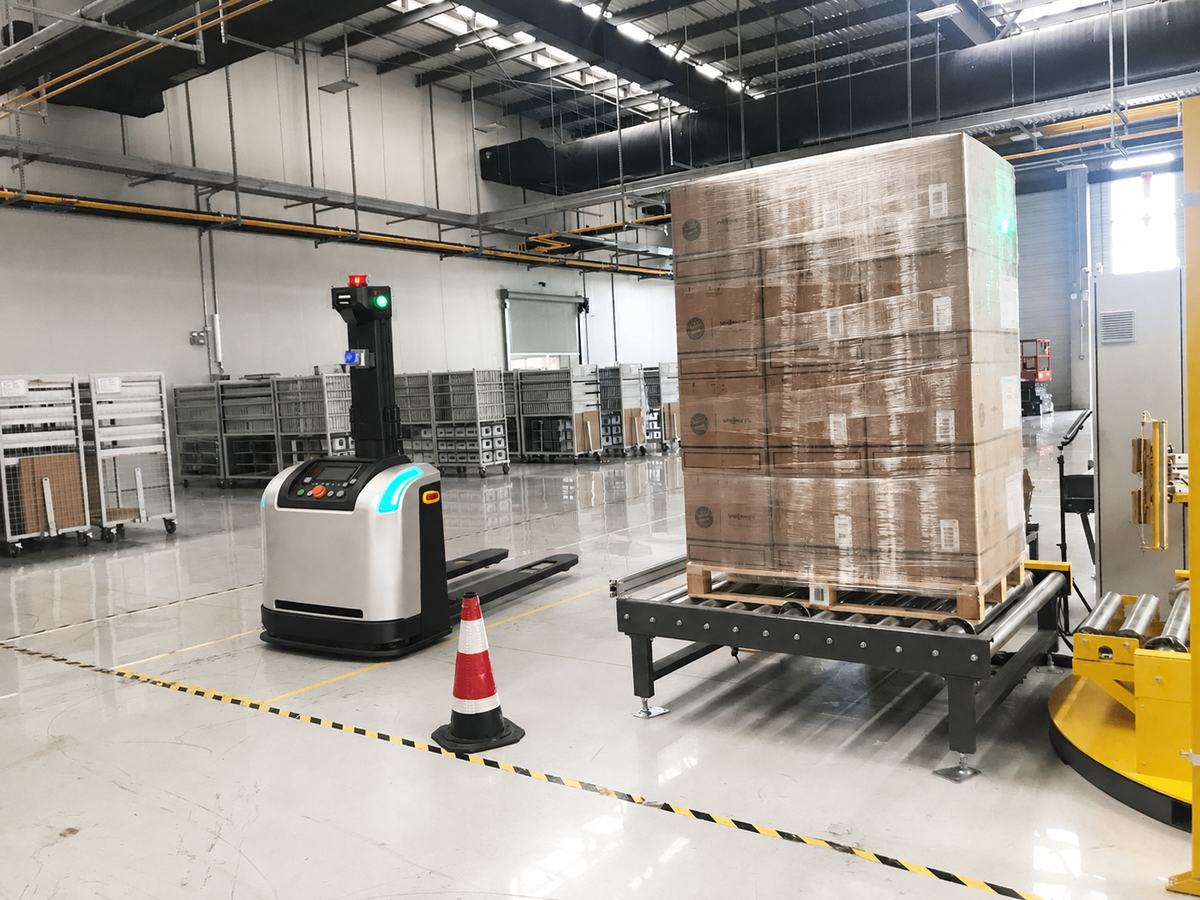
Manufacturing logistics automation is not simply a matter of adding a few AGVs. A practical automation solution first needs to analyze the real material flow in production and identify which logistics tasks are repetitive and standardized enough to automate.
Coolyne can design an automated material handling solution based on the actual factory process, with a focus on evaluating:
- Material types and load carriers
- Production takt
- Pickup and destination stations
- Average and peak daily task volume
- Travel distance per trip
- Aisle and traffic conditions
- Pickup/drop-off method and height
- WIP buffer capacity
- Existing MES, WMS, or WCS
- Future capacity and layout changes
A typical manufacturing logistics automation design process may include:
Material Flow analysis → Task-volume calculation → Automation equipment selection → Route and station planning → Fleet sizing → Dispatch-logic design → MES/WMS/WCS integration → Project testing and implementation
For fixed, high-frequency logistics tasks, suitable mobile robots or fixed conveyor equipment can be selected. In environments with multiple routes and dynamically changing tasks, vehicle dispatching, traffic management, and task priorities also need to be considered.
The ultimate goal is not simply to replace one manually operated forklift, but to allow production demand to be converted automatically into logistics tasks and to create a stable internal material flow through equipment dispatching, material transport, and status feedback.
If you are evaluating a Manufacturing Logistics Automation project, contact Coolyne for a project feasibility analysis and ROI assessment.
Next Review
Move from article research to a scoped feasibility review.
Use the related products and solution paths below, then send your workflow and layout for a quick engineering review.
Related Solutions
Engineering Review