
Related Products
What Is Palletization? How Palletization Improves Transportation and Warehouse Efficiency
Learn how palletization creates stable load units, improves transport and warehouse efficiency, and supports automated pallet handling with AGV forklifts.
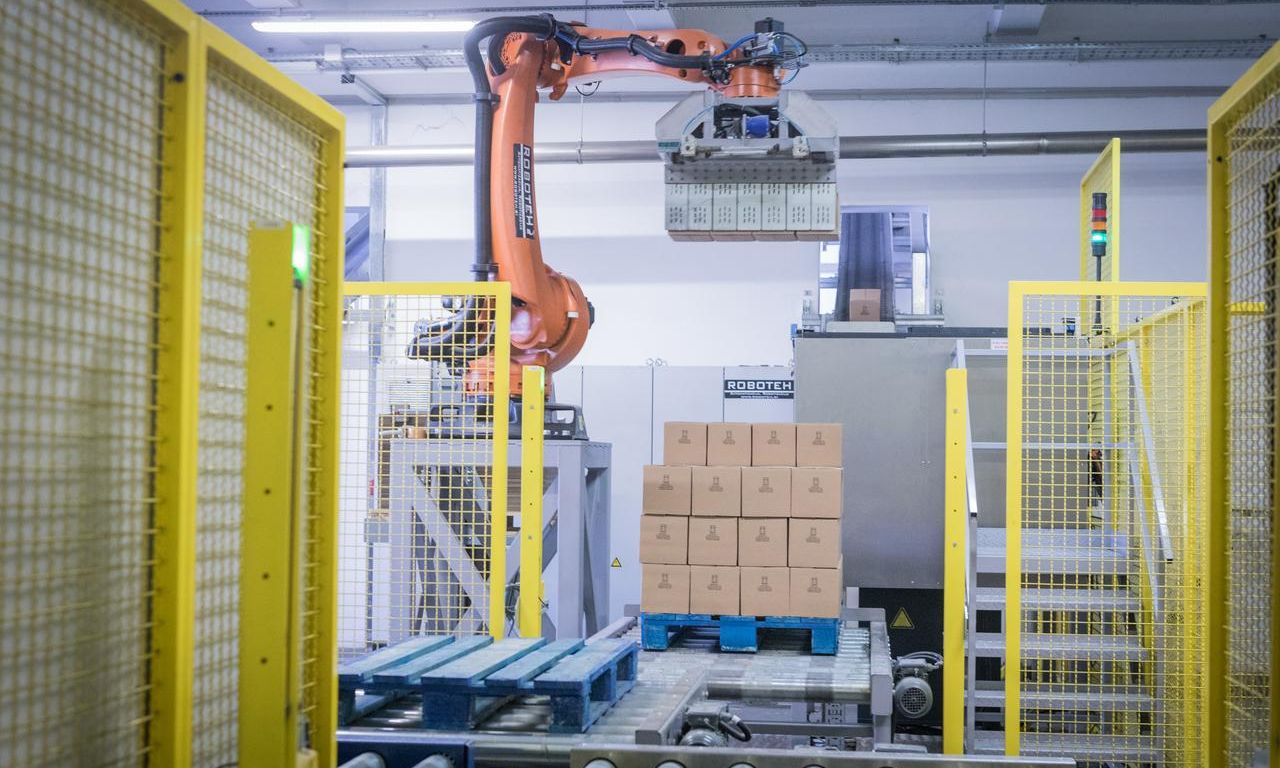
Learn how palletization creates stable load units, improves transport and warehouse efficiency, and supports automate...
In manufacturing, warehousing, and distribution environments, large quantities of cartons, containers, components, and finished goods need to move continuously between production lines, storage areas, loading docks, and transportation vehicles.
When goods are handled individually, the result is often slower operations, higher labor demand, more product damage, and poor coordination between production and logistics.
Palletization solves this problem by grouping individual items into a standardized load unit that can be stored, moved, and transported more efficiently.
For companies operating high-volume production or warehouse facilities, palletization is a foundation for organized material flow, safer handling, and logistics automation.
What Is Palletization?
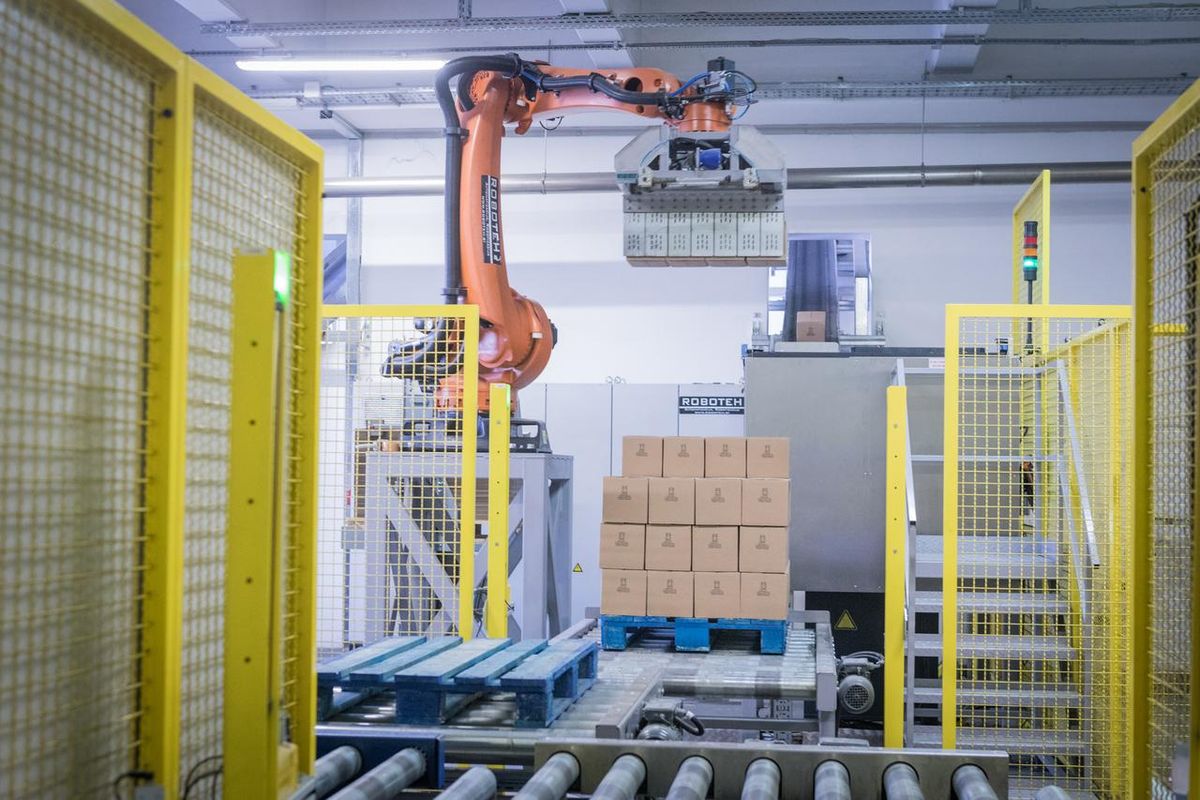
Palletization is the process of arranging products, cartons, containers, or materials onto a pallet in a stable and standardized pattern.
The pallet becomes a single load unit that can be handled by forklifts, conveyors, automated guided vehicles, pallet shuttles, storage systems, and loading equipment.
Instead of moving individual cartons or products, operators and automated systems move an entire pallet load at once.
This approach improves handling efficiency and makes it easier to control inventory movement throughout the warehouse and supply chain.
A typical palletization process includes:
- Product output
- Transfer to the palletizing area
- Arrangement according to a predefined pattern
- Placement onto the pallet
- Load securing
- Transfer to the next handling or storage process
Depending on the product type and production volume, palletization can be performed manually, semi-automatically, or fully automatically.
How Does Palletization Improve Transportation Efficiency?
Palletization improves transportation efficiency by making goods easier to handle, load, store, and move throughout the logistics process.
Faster Loading and Unloading
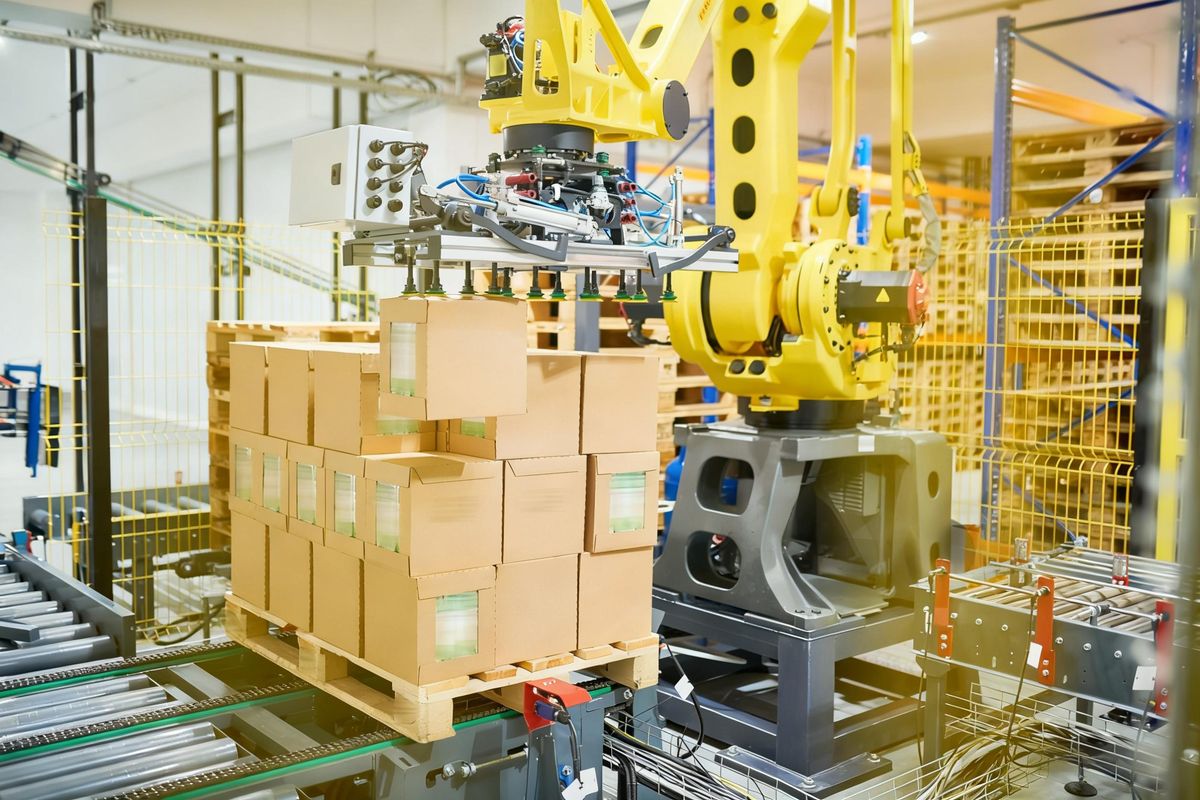
When products are stacked on pallets, forklifts or automated handling equipment can move large quantities of goods at once.
This reduces loading and unloading time compared with handling individual cartons or containers.
For example, instead of loading hundreds of cartons manually into a truck, a forklift can move several pallet loads quickly and safely.
Reduced Product Damage
Palletization helps stabilize products during transportation and storage.
Proper stacking patterns, stretch wrapping, straps, corner protectors, and pallet design reduce the risk of cartons shifting or collapsing.
Stable pallet loads are less likely to be damaged during forklift handling, truck transport, warehouse storage, or conveyor transfer.
Better Warehouse Space Utilization
Standardized pallet loads make warehouse storage more organized.
Pallets can be stored in pallet racking systems, automated storage systems, block stacking areas, or shuttle storage systems.
Because pallet sizes are standardized, warehouses can plan storage layouts more efficiently and maximize available space.
Simplified Internal Logistics
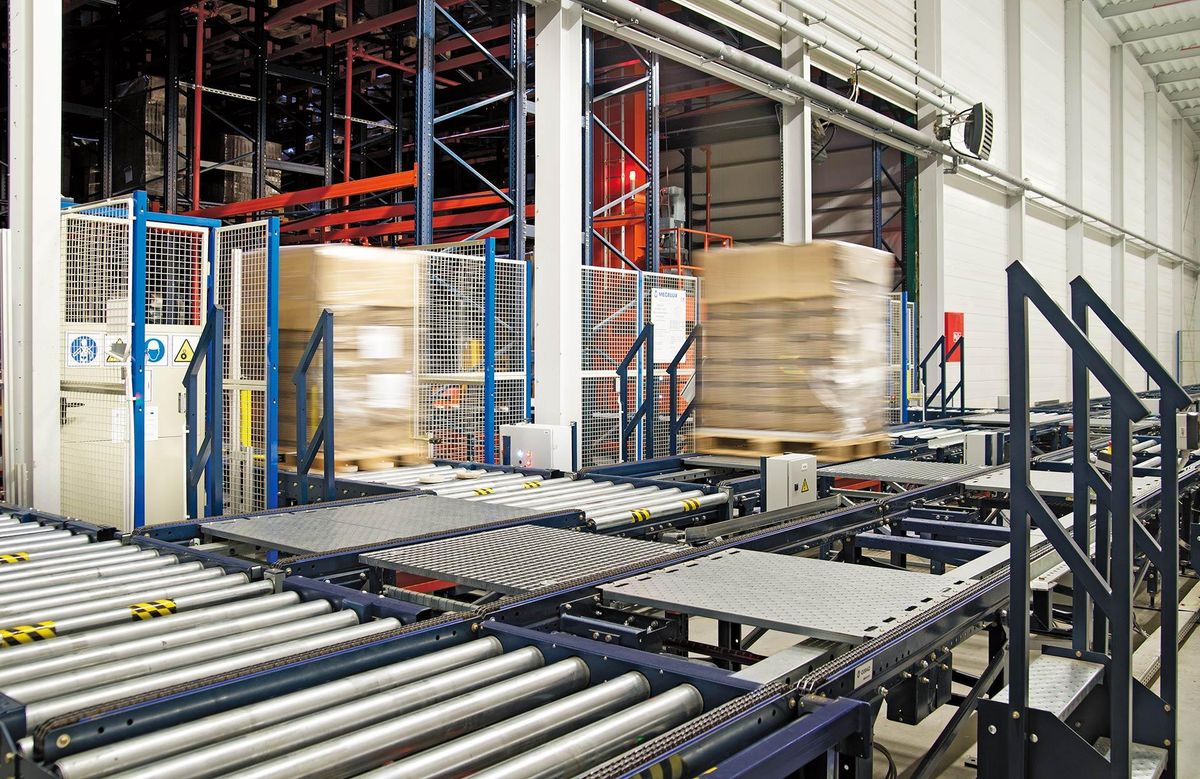
Palletization makes material flow easier to manage inside factories and warehouses.
Pallet loads can move between production lines, buffer areas, finished goods warehouses, loading docks, and shipping zones using forklifts, conveyor systems, automated guided vehicles, or autonomous mobile robots.
This reduces manual handling steps and improves coordination between production and logistics operations.
A Standardized Load for Logistics Automation
Palletized goods are easier to integrate into automation systems because the load size, weight, and handling method are more predictable.
Automated forklifts, pallet conveyors, pallet shuttles, ASRS systems, and robotic palletizing cells all rely on standardized pallet loads to operate efficiently.
Most Common Pallet Standards and Sizes
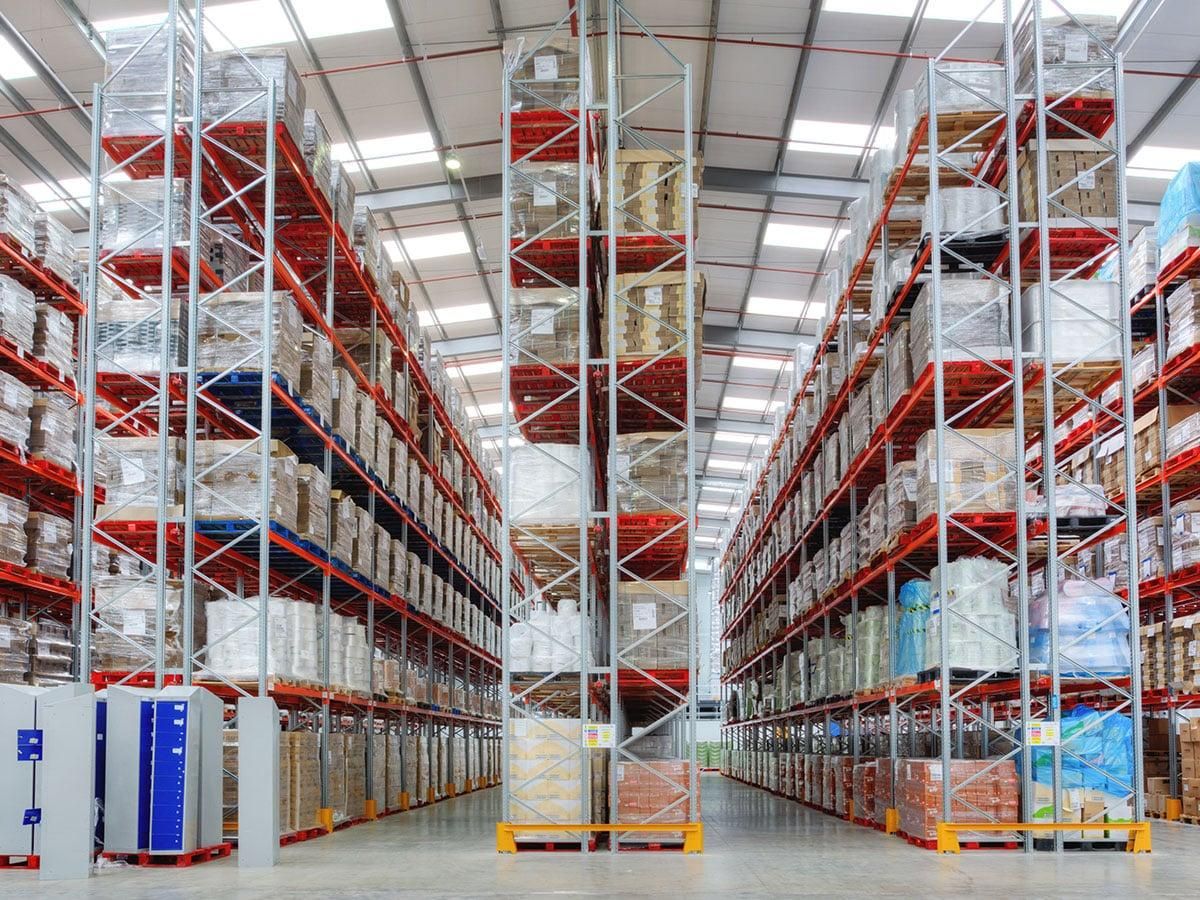
Pallet sizes vary by region, industry, and transportation requirements. Choosing the right pallet size is important because it affects warehouse storage, vehicle loading, automation compatibility, and product stability.
Euro Pallet
The Euro pallet is widely used in Europe and measures 1200 x 800 mm.
It is commonly used in retail distribution, manufacturing, and logistics operations across European markets.
GMA Pallet
The GMA pallet is commonly used in North America and measures 48 x 40 inches, approximately 1219 x 1016 mm.
It is widely used in grocery, consumer goods, and general distribution operations.
1200 x 1000 mm Industrial Pallet
The 1200 x 1000 mm pallet is commonly used in industrial manufacturing, logistics, and international trade.
It provides a larger load surface and is suitable for heavier or bulkier products.
Japan T11 Pallet
The Japan T11 pallet measures 1100 x 1100 mm and is widely used in Japan and parts of Asia.
It is commonly used in manufacturing and automotive supply chains.
When selecting pallet standards, companies should also consider:
- Pallet height
- Maximum load
- Fork entry direction
- Pallet bottom structure
- Pallet material
- Empty pallet weight
- Deformation under full load
- Whether load extends beyond pallet edges
These factors affect compatibility with forklifts, conveyors, palletizers, and automated storage systems.
How Coolyne Helps Automate Palletizing and Pallet Handling
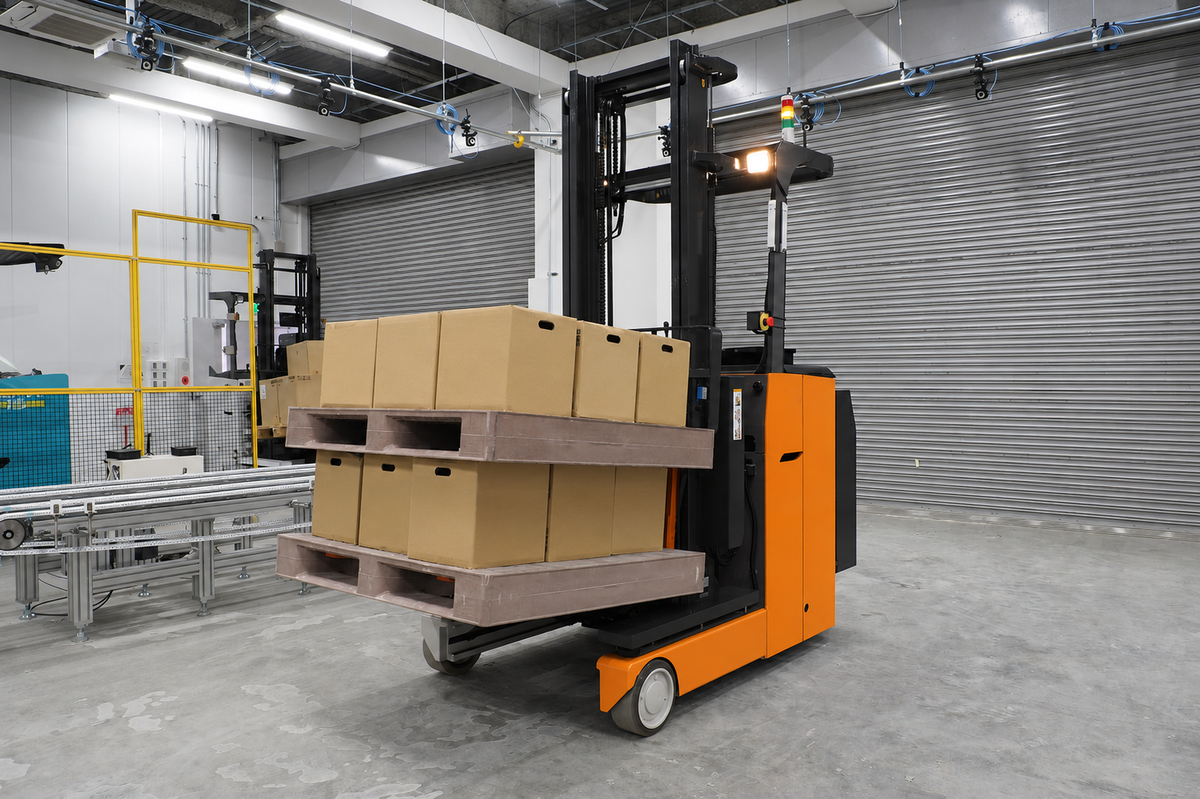
Coolyne provides automated palletizing and pallet handling solutions for manufacturing and warehouse operations.
Depending on the project requirements, the system may include robotic palletizers, pallet conveyors, AGV forklifts, pallet shuttle systems, ASRS storage systems, and warehouse control software.
A typical automated pallet handling workflow may include:
- Production Line
- Automated Palletizing
- Full-Pallet Buffer
- AGV Forklift Pickup
- Finished Goods Warehouse or Shipping Area
Robotic palletizing systems can stack cartons, bags, containers, or other products onto pallets according to predefined patterns.
Once the pallet is completed, AGV forklifts or autonomous forklifts can transport the pallet to storage areas, shipping zones, or downstream production processes.
This reduces manual forklift driving and improves the consistency of pallet movement inside the facility.
Conclusion
Palletization is a key part of modern logistics because it helps companies move products more efficiently, reduce product damage, improve warehouse organization, and prepare operations for automation.
For manufacturers and warehouses handling high volumes of cartons, containers, or finished goods, automated palletizing and pallet handling systems can improve material flow and reduce dependence on manual labor.
Coolyne can evaluate your existing production and warehouse processes and provide project feasibility and ROI analysis to help determine whether automated palletizing and AGV forklift handling are suitable for your current logistics requirements.
Contact Coolyne to discuss your pallet handling automation project.
Next Review
Move from article research to a scoped feasibility review.
Use the related products and solution paths below, then send your workflow and layout for a quick engineering review.
Related Solutions
Engineering Review