
Related Products
Material Handling: What Is Material Handling?
Learn what material handling means, why it matters in warehouses and manufacturing, common equipment types, and how automation improves material flow.
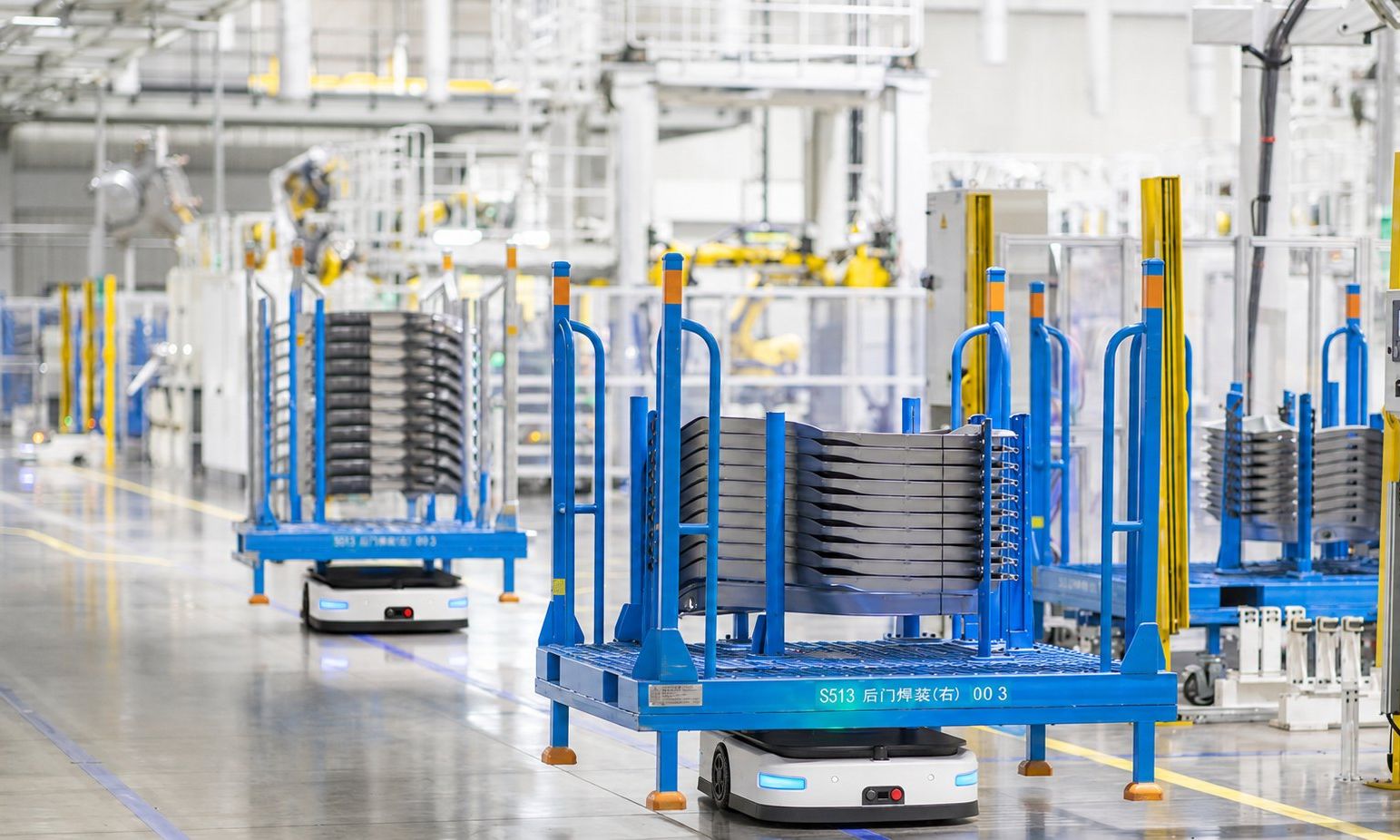
Learn what material handling means, why it matters in warehouses and manufacturing, common equipment types, and how a...
In warehouses and manufacturing facilities, raw materials, components, work-in-process, and finished goods need to move continuously between different locations. The movement, storage, positioning, and control of these materials are all part of material handling.
Material handling is involved in receiving, putaway, production supply, picking, packing, and shipping, making it a fundamental part of warehouse and manufacturing logistics.
What Is Material Handling?
Material handling refers to the movement, storage, positioning, and control of raw materials, components, work-in-process, finished goods, and unit loads throughout manufacturing, warehousing, distribution, and logistics operations.
Materials can include:
- Pallets
- Cartons
- Totes
- Components
- Work-in-process
- Finished goods
- Packaging materials
- Long loads
- Bulk materials
For example, in a manufacturing facility, moving a pallet of raw materials from the receiving area into storage is material handling. Delivering it from the warehouse to the production line is also material handling. Moving semi-finished products from one process to the next is another example.
In a warehouse, material handling typically runs through the entire logistics flow:
Receiving → Handling → Putaway → Replenishment → Picking → Staging → Packing → Shipping
Material handling is therefore not a single isolated step. It is a logistics activity that connects different warehouse and production processes.
A well-designed material handling system usually needs to answer several key questions:
- What is being handled? — Load dimensions, weight, and packaging format
- Where is it moving from and to? — Origin, destination, and material flow
- How much needs to be moved? — Load size and overall throughput
- When does it need to move? — Order demand, production takt, and task priority
- What equipment should be used? — Forklifts, conveyors, AGVs, AMRs, or other equipment
Types of Material Handling Equipment
Different materials and logistics environments require different types of material handling equipment. Common equipment can be grouped by function.
1. Industrial Trucks
Industrial trucks are mainly used to transport materials between different areas.
Common examples include:
- Manual pallet trucks
- Electric pallet trucks
- Counterbalance forklifts
- Reach trucks
- Stackers
- Side loader forklifts
- Tow tractors
These vehicles are commonly used to handle pallets, long loads, and other heavy materials.
2. Conveyor Systems
Conveyor systems are primarily used to move goods continuously along fixed routes.
Common types include:
- Belt conveyors
- Roller conveyors
- Chain conveyors
- Pallet conveyors
- Accumulation conveyors
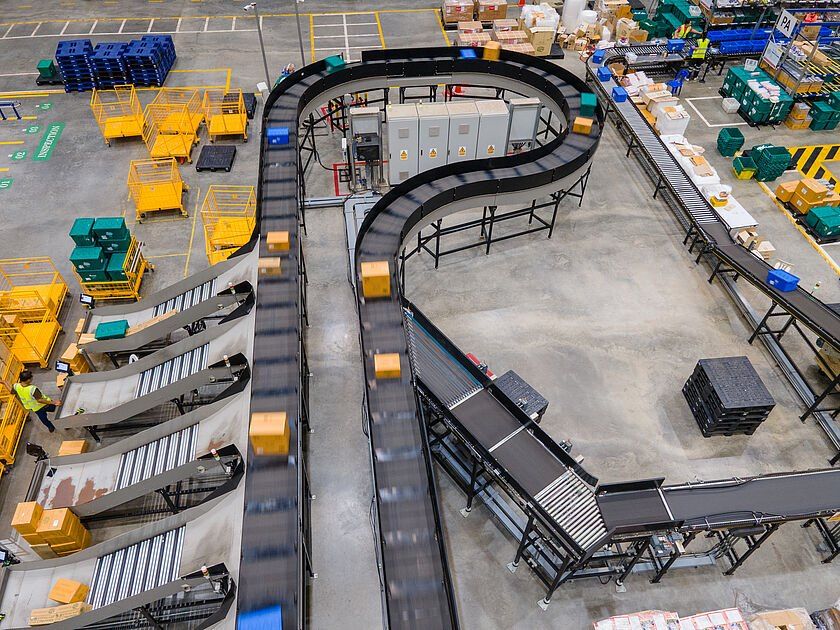
Conveyors are well suited to applications with stable material flows and relatively high throughput, such as movement between production lines, packaging areas, and distribution center processes.
3. Lifting and Hoisting Equipment
For vertical handling or the movement of large and heavy loads, equipment may include:
- Cranes
- Hoists
- Lifts
- Goods elevators
- Vacuum lifters
These systems are commonly used in heavy manufacturing, production workshops, and multi-level logistics environments.
4. Storage and Automated Retrieval Equipment
Material handling includes not only horizontal transport, but also the storage and retrieval of goods.
Relevant equipment includes:
- Pallet racking
- Cantilever racking
- Vertical lift modules
- AS/RS
- Stacker cranes
Racking systems mainly provide storage, while AS/RS, stacker cranes, and vertical lift modules can further automate storage and retrieval operations.
5. AGVs and AMRs
AGVs (Automated Guided Vehicles) and AMRs (Autonomous Mobile Robots) can automatically transport pallets, totes, racks, and other materials based on system-generated tasks.
Depending on the load and handling method, options may include:
- Under-riding AGVs
- Lifting AGVs
- Pallet-handling AGVs
- Automated forklifts
- Tugger AGVs
- AMRs
These systems are mainly used in warehouses and factories that require automated point-to-point material transport.
Benefits of Efficient Material Handling
The value of material handling goes beyond moving goods from one location to another. A well-planned material flow can directly improve logistics performance.
1. Shorter Travel Distances and Less Waiting
If material flows are poorly designed, goods may need to travel unnecessary distances, wait between processes, or move back through the same areas.
By optimizing storage locations, routes, and equipment, unnecessary travel and waiting can be reduced, allowing materials to reach the next operation more quickly.
2. Less Rehandling
If goods are repeatedly broken down, restacked, moved again, or transferred through multiple intermediate points, additional time and cost are introduced.
An efficient material handling process should minimize unnecessary handling steps and allow goods to move through the operation more directly.
3. Better Space Utilization
Material handling equipment has a direct impact on warehouse aisle widths, rack layouts, and buffer areas.
Choosing equipment that matches the load and facility layout can reduce unnecessary operating space and create a more efficient balance between storage and movement areas.
4. Lower Risk of Product Damage
If handling equipment does not match the dimensions, weight, or packaging of the load, the risk of collisions, tilting, packaging damage, or product damage increases.
Using the appropriate handling method helps reduce these risks.
5. Fewer Production Delays and Logistics Interruptions
In manufacturing, delays can occur when raw materials do not reach the line on time or when work-in-process is not transferred promptly to the next operation.
A stable material handling process helps keep materials moving according to actual demand and reduces the impact of logistics delays on production takt.
Material Handling Applications in Warehouses and Factories
Material handling is involved in almost every stage of warehouse and manufacturing logistics, although the priorities differ between the two environments.
Material Handling in Warehouses
In warehouses, material handling mainly supports receiving, storage, order fulfillment, and shipping.
Typical applications include:
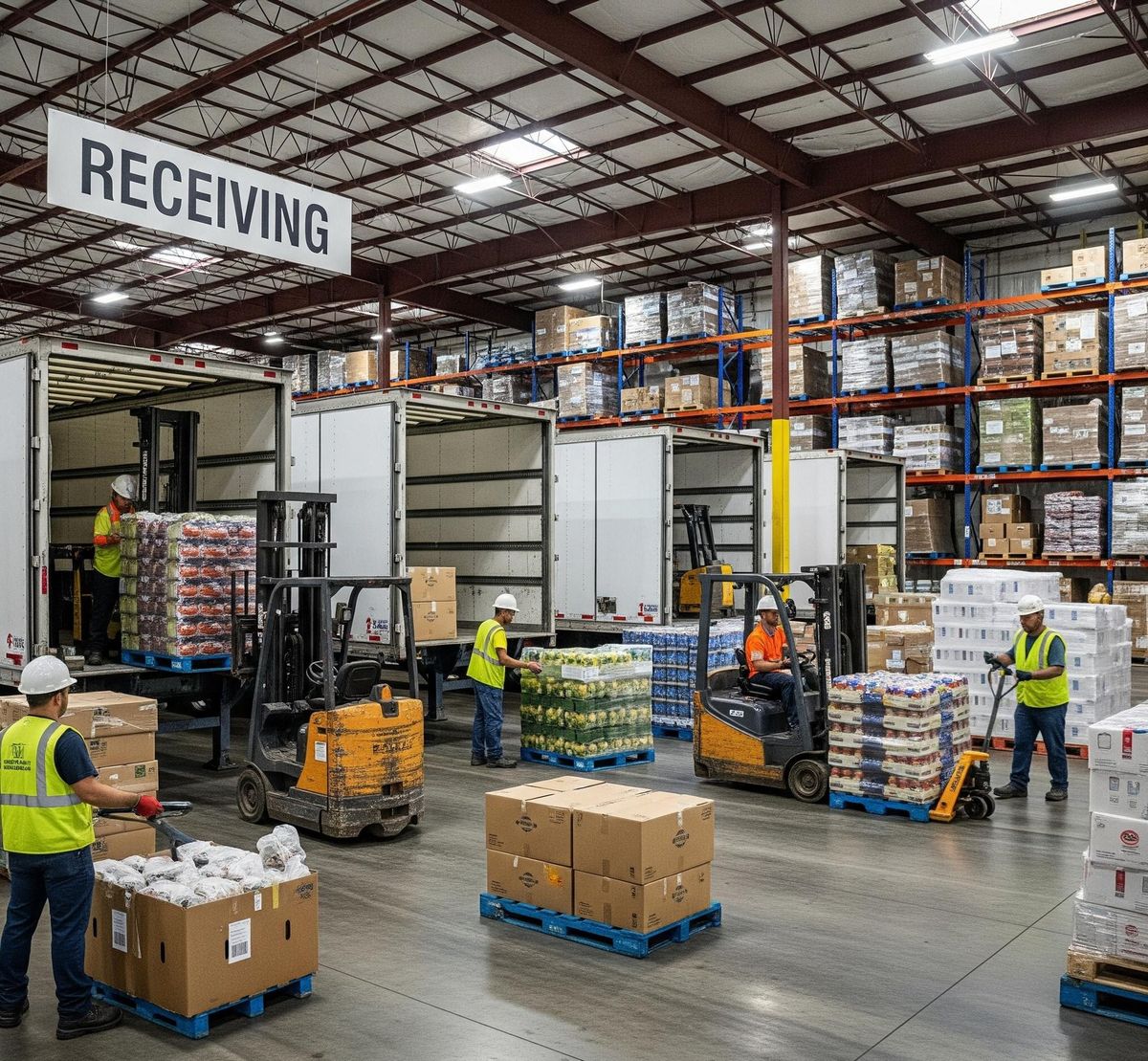
Unloading and Receiving
Pallets or cartons are unloaded from trucks and moved to receiving inspection or staging areas.
Putaway
After receiving, forklifts or other handling equipment move goods to their assigned storage locations.
Replenishment
When inventory in the picking area runs low, full pallets or cases are moved from reserve storage to the picking location.
Post-Picking Transport
After an order has been picked, cartons, totes, or pallets need to be moved to staging, packing, or sortation areas.
Shipping
Completed orders are transported to shipping docks and staged for loading according to outbound schedules.
Material Handling in Manufacturing Facilities
Internal factory logistics focus more heavily on whether materials can reach the correct workstation in line with production demand.
Typical applications include:
Raw Material Delivery
Pallets, totes, or components are moved from storage to production areas.
Line-Side Delivery
Materials required for production are delivered to assembly lines, machines, or workstations according to demand.
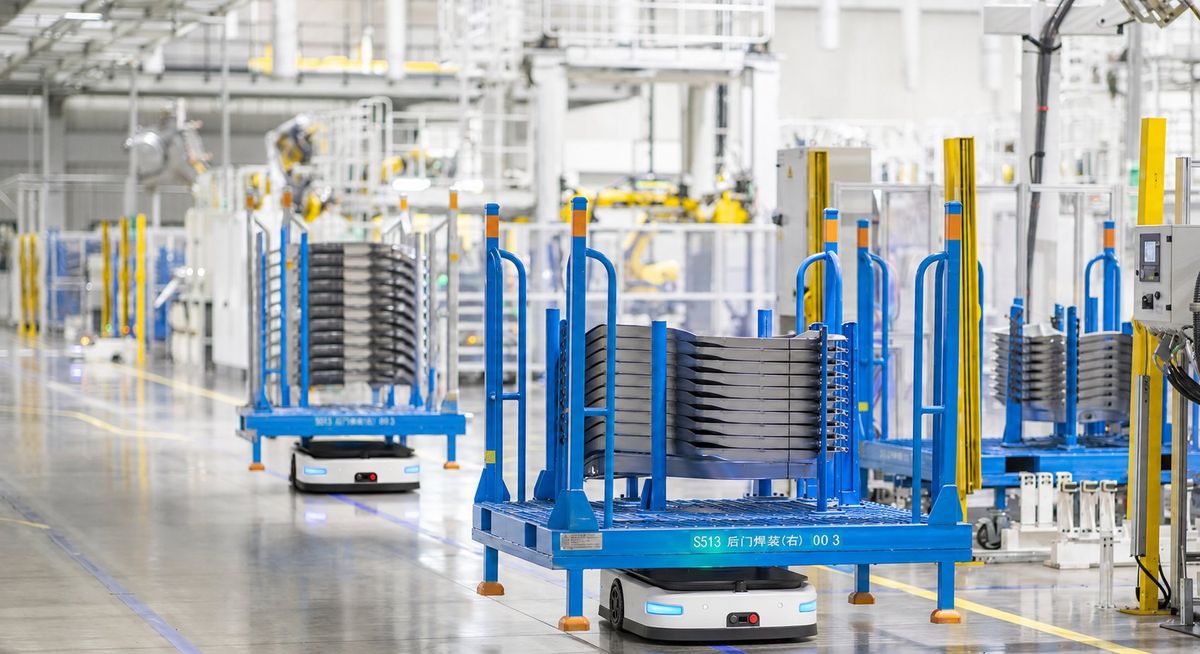
WIP Handling
After one process is completed, semi-finished products are transferred to the next operation.
Machine Tending Logistics
Parts awaiting processing are delivered to CNC machines, injection molding machines, or other equipment, while completed parts are removed from the machine area.
Finished Goods Transport
After production, finished products are moved to inspection, packing, palletizing, or finished-goods storage.
Empty Pallet and Tote Return
Empty pallets and totes generated after material delivery need to be returned to storage or replenishment areas.
Benefits of Automated Material Handling
Traditional material handling often relies on forklift drivers, manual operators, or fixed mechanical equipment. Automation changes how these tasks are executed and controlled.
1. Less Repetitive Manual Transport
Transport between warehouses and production lines, between production processes, or from receiving to storage is often highly repetitive.
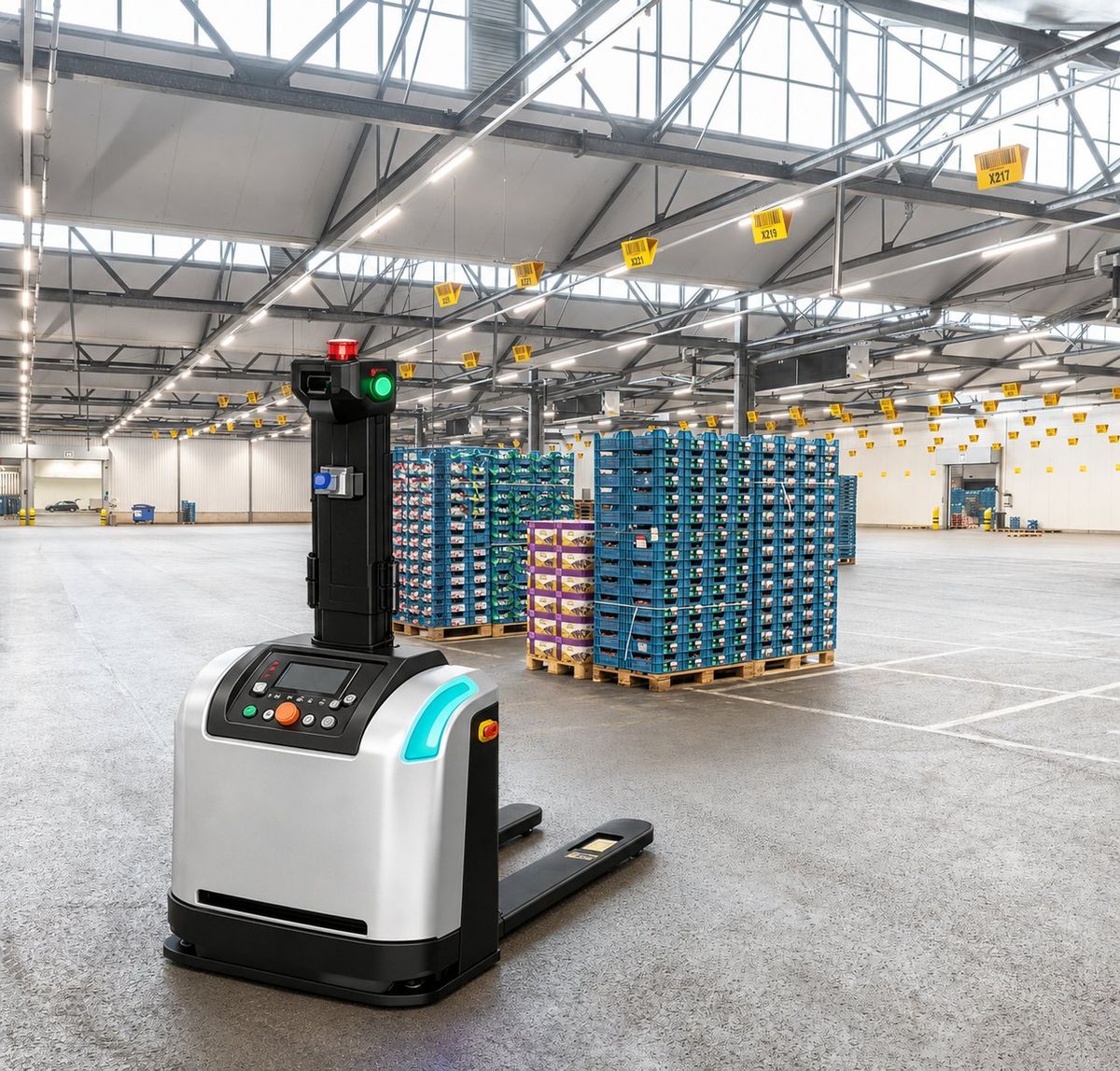
AGVs, AMRs, and automated forklifts can perform these well-defined tasks automatically, reducing the need for manual driving and repetitive transport work.
2. Support for Continuous and Multi-Shift Operations
Automated equipment can continue executing transport tasks according to system demand, making it suitable for two-shift, three-shift, or even 24/7 logistics operations.
When task volumes change, the fleet management system can reassign vehicles to improve equipment utilization.
3. Better Task Traceability
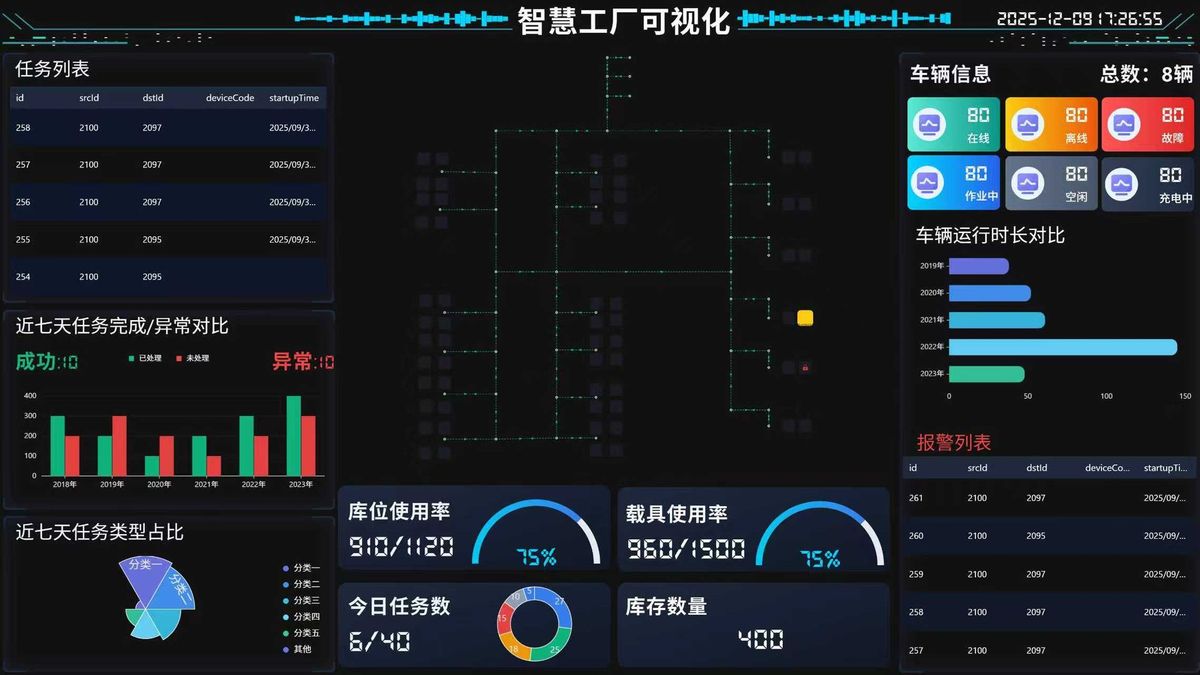
Automated systems can record:
- Task start time
- Pickup location
- Destination
- Assigned vehicle
- Task completion time
- Exception status
This gives operators better visibility into where materials are and how transport tasks are progressing.
4. Less Variation in Manual Operations
Manual handling efficiency can vary with operator experience, shift, and working habits.
Automated equipment follows standardized task logic, helping make repetitive logistics processes more consistent while reducing problems such as incorrect pickups, wrong deliveries, or incorrect storage locations.
5. System-Driven Task Generation
Automated material handling systems can be integrated with WMS, WCS, MES, or production equipment.
For example, when a production line requests replenishment, the system can automatically generate a transport task and assign it to the appropriate AGV or AMR.
This changes material handling from a process in which people first identify a need and then arrange transport into one where tasks are automatically triggered by real-time operational demand.
How Coolyne Automates Material Handling
The first step in implementing Material Handling Automation is not simply choosing a particular type of AGV. It is analyzing the actual material flow.
Coolyne can evaluate key project factors such as:
- Material dimensions and weight
- Pickup and destination points
- Load per trip
- Average and peak daily task volume
- Travel distance
- Pickup and drop-off height
- Aisle width
- Production takt
- Existing WMS, WCS, or MES
- Future capacity and layout changes
Based on this data, the next step is to determine whether AGVs, AMRs, automated forklifts, conveyor equipment, or a combination of systems is most suitable, and then calculate the required fleet size, task cycle times, and overall system capacity.
A typical automation design process may include:
Material flow analysis → Task volume calculation → Equipment selection → Route and station planning → Fleet sizing → Fleet management design → WMS/MES/WCS integration → Implementation and testing
For areas with fixed routes and high throughput, conveyor systems may be suitable. For areas with multiple routes or dynamic dispatching requirements, AGVs, AMRs, or automated forklifts can be used.
In larger projects, mobile robots, conveyors, and AS/RS can also be coordinated so that different systems work together to complete material storage, retrieval, transfer, and task handoffs.
The goal of material handling automation is therefore not simply to replace manual transport. It is to create a continuous and controllable logistics flow in which task generation, equipment dispatching, material transport, and status feedback work together.
If you are evaluating a material handling automation project, contact Coolyne for a project feasibility analysis and ROI assessment.
Next Review
Move from article research to a scoped feasibility review.
Use the related products and solution paths below, then send your workflow and layout for a quick engineering review.
Related Solutions
Engineering Review