
Related Products
Airfreight AGVs: Applications, ULD Handling, and System Integration
An airfreight AGV is an automated guided vehicle used in air cargo terminals and related logistics facilities.
Where Are AGVs Used in Air Cargo Terminals? · Types of Airfreight AGVs · How Do Airfreight AGVs Work with Other Systems?
Air cargo terminals move large volumes of freight between different work areas every day. Once export cargo has been built into a unit load device (ULD), it needs to travel from the build-up station to a holding area or an airside handover point. Inbound ULDs follow the reverse route: they arrive at the terminal, move to the breakdown area, and are then sorted into the appropriate storage locations.
Forklifts, tractors, and other handling equipment usually carry out these moves. When several flights arrive or depart around the same time, vehicles make frequent trips between stations, and cargo handovers and vehicle allocation can become bottlenecks.
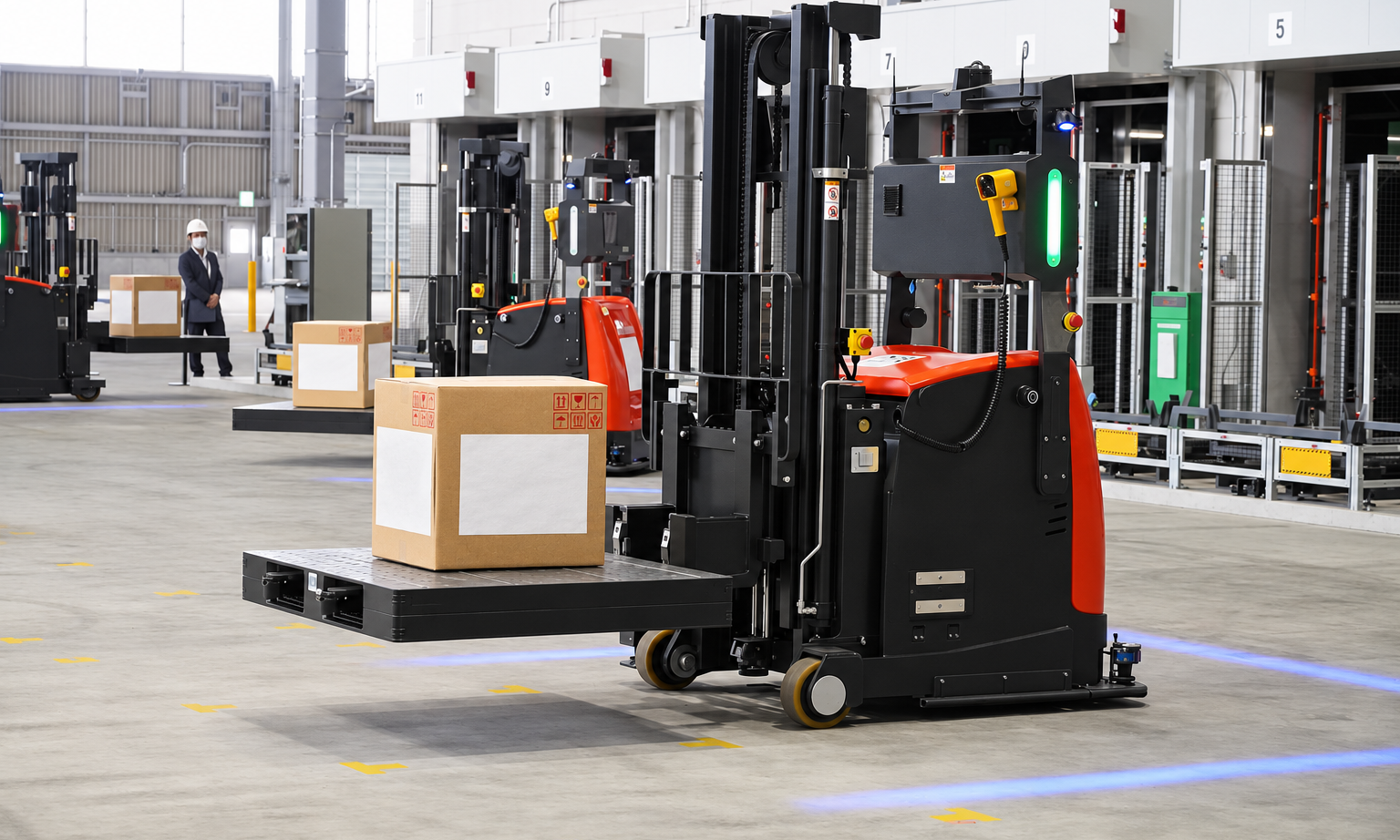
Some air cargo terminals now use automated guided vehicles (AGVs) for these movements. Depending on the loads and the equipment already on site, an airfreight AGV may transport standard pallets or ULDs and work alongside the terminal’s existing handling systems.
What Is an Airfreight AGV?
An airfreight AGV is an automated guided vehicle used in air cargo terminals and related logistics facilities. It moves freight between handling areas, storage zones, and transfer stations.
A common load in air cargo operations is the ULD (Unit Load Device). According to IATA, ULDs include air cargo containers and aircraft pallets secured with nets.
ULDs differ from standard warehouse pallets in size, base construction, and handling requirements, so terminals typically use dedicated equipment to move and transfer them.
The main AGV options in air cargo are purpose-built ULD carriers and forklift AGVs for standard pallets. Autonomous towing vehicles are also beginning to appear in outdoor airport cargo operations.
Where Are AGVs Used in Air Cargo Terminals?
AGVs can handle movements at several points in a terminal. The type of vehicle depends on where the cargo is in the handling process.
1. Moving Standard Cargo Within the Warehouse
Export freight is generally received, screened, and stored before it moves to ULD build-up according to flight schedules.
At this stage, many shipments are still on standard warehouse pallets. Forklift AGVs can move them between receiving areas, storage racks, and processing stations. They can also take pallets to storage after an inbound ULD has been broken down.
For terminals with frequent pallet putaway and retrieval tasks, the operation is much like automated forklift work in a conventional warehouse.
2. ULD Build-Up and Breakdown
After processing, export cargo is loaded into an air cargo container or secured to an aircraft pallet for a particular flight. Once build-up is complete, the ULD must be taken to a holding area or a designated handover point.
At terminals equipped with dedicated ULD AGVs, these vehicles can carry the load between build-up stations and the next handling area.
Inbound cargo follows the opposite process. A ULD arriving from an aircraft is delivered to a breakdown station, where the freight is unloaded for sorting, storage, or collection.
3. ULD Storage and Retrieval
Larger cargo terminals may have dedicated ULD storage systems. Completed export ULDs can be held there until they are needed for onward handling.
AGVs move ULDs between workstations and storage areas, then return to collect them when a retrieval task is issued.
Some automated terminals also use elevating transfer vehicles (ETVs) and fixed transfer decks. AGVs handle ground-level transport between these systems.
4. Transfers to the Airside Handover Area
Once an export ULD has completed its terminal handling, it must be handed over to ground-handling equipment for transport to the aircraft.
A dedicated ULD AGV can carry it from the terminal to an airside handover point, where the load is transferred to the next vehicle or handling system.
Autonomous towing vehicles are also being used in airport ground-transport projects to move cargo trailers. These vehicles operate under different conditions from indoor AGVs, including outdoor roads, other airport traffic, and apron operating requirements.
Types of Airfreight AGVs
The load determines the vehicle design. Built-up ULDs, standard warehouse pallets, and airport cargo trailers call for different handling methods.
1. ULD Transport AGVs
A dedicated ULD AGV typically has a low-profile load platform. Some models use powered roller decks that allow a ULD to transfer directly to or from cargo-handling equipment.
Because ULDs can have large base dimensions, the platform must suit the loads handled at the terminal. Some vehicles also use omnidirectional drive systems to maneuver near workstations with limited space.
For example, Lödige Industries offers ULD AGVs designed to handle loads up to 15 feet long and weighing up to 6,800 kg, for automated transport inside air cargo terminals.
2. Forklift AGVs
Before freight is built into a ULD, or after an inbound ULD has been broken down, a terminal still needs to handle ordinary warehouse pallets.
A forklift AGV can pick up a pallet and move it between processing areas, storage racks, and delivery points. Depending on the model, it can also put away and retrieve pallets from racks.
The operating principle is much the same as that of an automated forklift in a conventional warehouse.
3. Autonomous Tugs and Tractors
Airports can also use autonomous towing vehicles when cargo is moved on trailers.
These vehicles pull cargo trailers along ground-transport routes, often over longer distances than indoor terminal transfers.
Unlike indoor ULD AGVs, they may operate on outdoor roads, and some projects extend onto the apron. Their navigation, traffic management, and safety requirements differ accordingly.
How Do Airfreight AGVs Work with Other Systems?
In an air cargo terminal, transport tasks follow the progress of cargo handling.
For example, when an export ULD is ready at a build-up station, staff do not necessarily need to call a driver to collect it. The cargo management system can generate a transport request, and the AGV fleet controller can assign a vehicle to the job.
1. Connecting to Cargo Management Systems
The terminal’s cargo management system tracks freight locations, processing status, and related operational information.
Once the AGV fleet controller receives a transport task, it assigns an available vehicle based on its location and status. The relevant transport record is updated when the job is complete.
In 2023, Worldwide Flight Services (WFS) trialed automated forklifts at its Barcelona Airport cargo terminal. The project used Linde forklift AGVs for standard pallets and connected CHAMP Cargosystems’ Cargospot Mobile system with the AGV control system, allowing the vehicles to take part in existing warehouse operations.
For terminals running several vehicles, an AGV fleet management system also coordinates routes, task assignments, and charging.
2. Transferring ULDs Between Handling Systems
At terminals equipped with automated roller decks, ULDs can move directly between a workstation and an AGV.
After export build-up, an AGV arrives at the designated transfer point and aligns with the workstation’s roller deck. Once both systems confirm that the transfer can proceed, the rollers move the ULD onto the vehicle.
The AGV then travels to the storage area or handover station and unloads the ULD through the corresponding equipment.
This requires accurate vehicle positioning and coordination of roller direction, transfer height, and control signals. Terminals using ETVs or automated ULD storage systems also need suitable interfaces between the equipment.
3. Fleet Scheduling and Transport Tasks
Transport demand changes with flight schedules.
As several freighters approach departure, multiple ULDs may be waiting for the handover area while other vehicles are moving inbound cargo.
The fleet controller has to assign tasks according to priority and vehicle location while taking account of occupied routes and workstation availability.
If a transfer station cannot accept another ULD, a vehicle may have to wait. In busy terminals, both workstation capacity and coordination between AGVs affect the actual transport rate.
Benefits of Using AGVs in Air Cargo Terminals
Many cargo-terminal movements take place between fixed work areas. AGVs can take over some of these repetitive trips, reducing the time employees spend driving forklifts or dedicated transport vehicles.
When connected to the terminal’s cargo management system, transport tasks can be assigned as freight progresses through handling. Once a ULD is built up or ready for retrieval, the system can dispatch a vehicle without a separate manual request or ad hoc vehicle assignment.
For safety, AGVs typically use features such as safety laser scanners, obstacle detection, speed control, and emergency stops. Where employees, forklifts, and AGVs share routes, traffic controls and site-specific safety measures are still required.
Map-based navigation also makes it easier to change transport routes. If a terminal expands or workstations move, vehicle paths can be updated without installing fixed tracks along every route.
What Should Operators Consider Before Deploying Airfreight AGVs?
The existing cargo-handling equipment, transport workload, and terminal layout all affect AGV selection and configuration.
1. ULD and Equipment Compatibility
Start with the ULDs the terminal handles, including their dimensions, maximum weights, and loading orientation.
For workstations with roller decks, the AGV’s load platform, transfer height, and control interface must be compatible with the installed equipment.
A terminal that handles both ULDs and ordinary warehouse pallets may need different AGV types for different transport tasks.
2. Peak Throughput and Fleet Size
Fleet sizing depends on the number of moves required per hour, average travel distance, and the time spent loading, traveling, unloading, and returning.
Air cargo terminals also need to account for peaks when several flights are being handled around the same time.
If a ULD transfer station can process only a certain number of handovers per hour, adding AGVs will not necessarily raise throughput in that area. Fleet size needs to match the handling capacity of the workstations.
3. Traffic Conditions Inside the Terminal
Forklifts, tugs, and people are often already moving throughout a cargo terminal. AGV routes need sufficient aisle width, turning space, and safe arrangements at intersections and pedestrian areas.
Projects that extend to outdoor roads or the apron also have to account for weather, airport vehicle traffic, and the rules governing the operating area.
Some terminals can begin by automating standard-pallet transfers within the warehouse, then extend automation to ULD handling and other areas as the equipment interfaces and transport needs allow.
Coolyne provides AGV material-handling and system-integration solutions. We can help assess suitable AGV configurations based on your cargo types, transport tasks, and facility layout. Contact us to discuss your automated material-handling needs.
Next Review
Move from article research to a scoped feasibility review.
Use the related products and solution paths below, then send your workflow and layout for a quick engineering review.
Related Solutions
Engineering Review