
Related Products
Warehouse Automation: Systems, Types, and How an Automated Warehouse Works
Learn how warehouse automation works, including AS/RS, AGVs, AMRs, goods-to-person systems, automated sorting, and warehouse process automation.
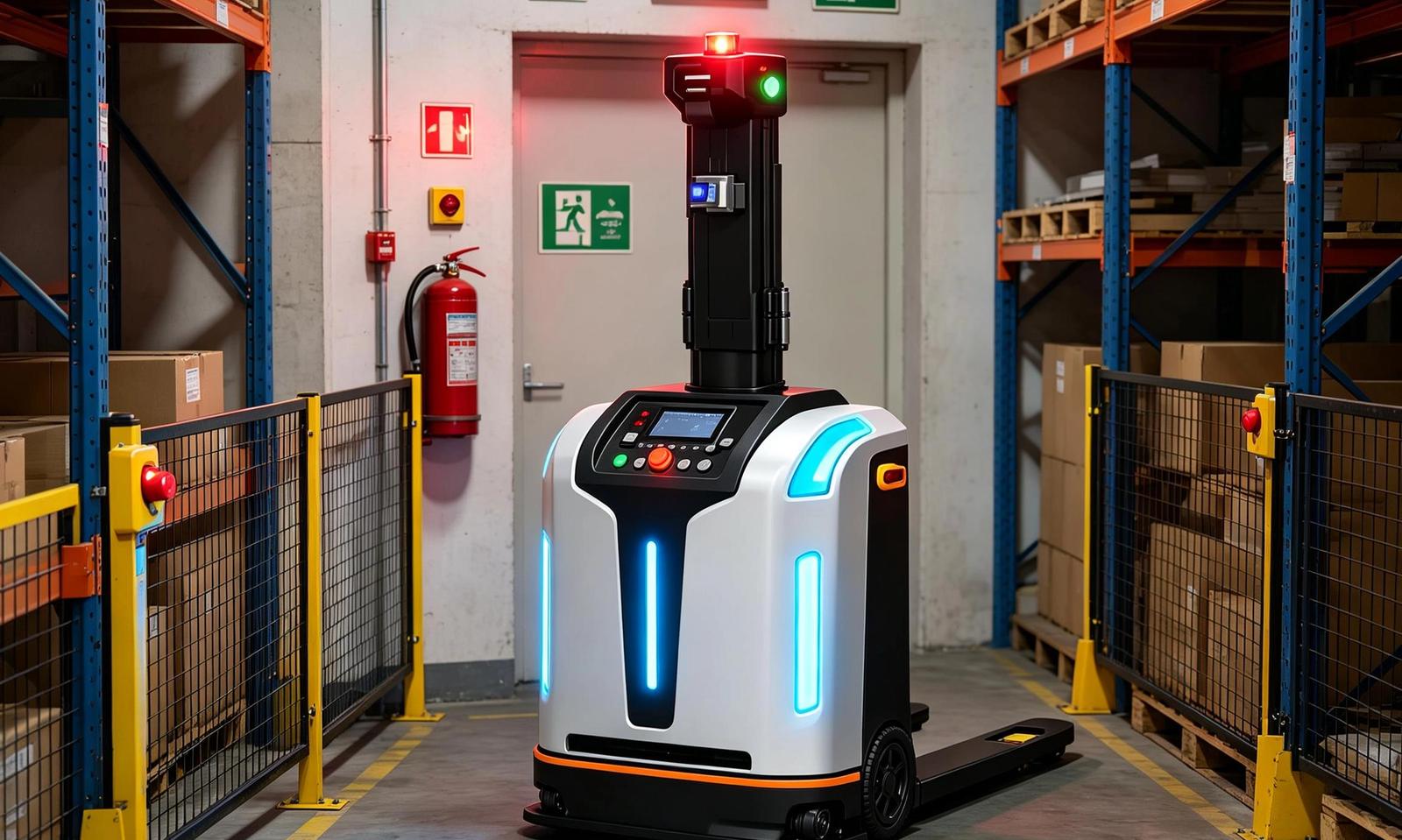
Robot workflows. Efficiency gains. Safety value. ROI checks. Deployment fit.
As order volumes increase, SKU ranges expand, and labor costs continue to rise, warehouses that rely heavily on manual handling, picking, and inventory recording may struggle to meet growing requirements for speed, accuracy, and operational efficiency.
Warehouse automation is becoming an important way for manufacturers, distribution centers, e-commerce warehouses, and third-party logistics providers to improve their internal logistics operations.
Warehouse automation is not simply about replacing workers with machines. It involves connecting automated equipment, control software, and warehouse management systems so that storage, transportation, picking, sorting, and outbound processes can operate as one coordinated workflow.
Depending on the order profile, product type, warehouse layout, and investment budget, a company may automate a single process or develop a fully automated warehouse system.
What Is Warehouse Automation?
Warehouse automation refers to the use of mechanical equipment, mobile robots, storage systems, conveyors, sensors, and software to automate part or all of a warehouse operation.
In a traditional warehouse, employees may need to walk between storage locations, search for products, move pallets, and manually record inventory movements. An automated warehouse transfers many of these repetitive activities to machines and software.
For example:
- Automated guided vehicles can transport pallets between work areas.
- Automated storage and retrieval systems can store and retrieve products.
- Goods-to-person systems can deliver required items directly to picking stations.
- Automated sortation systems can route orders to the correct shipping lane.
A complete warehouse automation system may include several operational layers:
- A warehouse management system, or WMS, manages inventory, orders, and storage locations.
- A warehouse control system, or WCS, coordinates automated equipment.
- AGVs, AMRs, stacker cranes, conveyors, and sorters execute physical tasks.
- Barcodes, RFID, sensors, or vision systems identify and track products.
- Monitoring and analytics software records equipment status and operational performance.
The purpose of warehouse automation is not necessarily to remove all manual labor. It is to reduce unnecessary walking, handling, searching, and repetitive work, allowing employees to focus on exception handling, quality control, system supervision, and other higher-value activities.
Types of Automated Warehouse Systems
Different warehouses have different space limitations, product characteristics, order profiles, and operating models. As a result, there is no single warehouse automation solution that is suitable for every facility.
Common types of automated warehouse systems include automated storage and retrieval systems, automated guided vehicles, autonomous mobile robots, goods-to-person systems, and automated sortation systems.
Automated Storage and Retrieval Systems
An automated storage and retrieval system, commonly referred to as an AS/RS, uses equipment such as stacker cranes, shuttles, lifts, storage racks, and control software to automatically store and retrieve goods.
Based on instructions from the WMS, the system places pallets, totes, or cartons into assigned storage locations and retrieves them when required.
Because AS/RS equipment can operate in narrow aisles and reach high storage levels, it can improve vertical space utilization and reduce the amount of floor area required for conventional forklift aisles.
Depending on the load type and storage method, AS/RS solutions may include:
- Unit-load pallet AS/RS
- Mini-load AS/RS
- Multi-level shuttle systems
- Automated high-bay warehouses
- Tote and carton storage systems
AS/RS solutions are often suitable for:
- Warehouses with large numbers of SKUs
- Facilities with limited available floor space
- Manufacturing operations with predictable material flows
- Distribution centers requiring high-density storage
- Cold storage and other environments unsuitable for extended manual work
The main advantages of AS/RS include high storage density, accurate inventory positioning, and consistent operation. However, these systems generally require detailed planning for racking, equipment, software, and throughput before installation.
Automated Guided Vehicles
An automated guided vehicle, or AGV, is a mobile transport device that moves goods through a warehouse or manufacturing facility according to defined navigation and control rules.
AGVs may use magnetic tape, QR codes, reflectors, laser navigation, SLAM, or other guidance technologies. Depending on the vehicle structure and load-handling mechanism, they can transport pallets, racks, totes, production materials, and other unit loads.
Forklift-style AGVs also belong to this category. They combine automated navigation with forks or lifting mechanisms to pick up, transport, place, or stack pallets without requiring a driver for each movement.
AGVs are particularly suitable for repetitive transport tasks with relatively stable starting points, destinations, and operating cycles.
Typical AGV applications include:
- Transporting raw materials from storage to production lines
- Moving finished products from production to finished-goods storage
- Transferring pallets between receiving and storage areas
- Delivering materials to line-side storage locations
- Returning empty pallets, racks, or containers
- Picking up and placing pallets at racks, conveyors, or workstations
AGVs can reduce reliance on manual forklifts and provide a more consistent transport cycle. In warehouses where routes and processes remain relatively stable, AGVs can offer a practical and cost-effective automation option.
Autonomous Mobile Robots
Autonomous mobile robots, or AMRs, also transport goods, but they generally provide greater environmental awareness and route flexibility than traditional fixed-route AGV systems.
AMRs commonly use LiDAR, cameras, sensors, and mapping software to understand their surroundings and calculate travel routes.
When a person, pallet, or other obstacle blocks the original route, an AMR may slow down, stop, or calculate an alternative path, depending on the operating environment and safety configuration.
AMRs are well suited to warehouses where layouts change frequently, transport tasks vary, or robots need to operate alongside employees.
Common AMR applications include:
- Order picking in e-commerce warehouses
- Material delivery between multiple production stations
- Tote transportation between warehouse zones
- Line-side logistics for flexible production
- Material movement in facilities with seasonal order fluctuations
Compared with systems that depend on more rigid route structures, AMRs can be easier to redeploy and expand. A company may begin with a small robot fleet and add more units as order volumes increase.
However, actual AMR performance still depends on aisle width, traffic levels, task density, dispatching software, charging strategy, and interaction with workers and other equipment.
Goods-to-Person Systems
A goods-to-person system changes the traditional picking model in which employees walk through the warehouse to find products.
Instead, shuttles, mobile robots, conveyors, or automated storage equipment bring the required goods directly to a fixed picking station.
The operator remains at the workstation and follows instructions provided through a screen, pick-to-light system, or voice-picking system. After the required quantity has been picked, the inventory container is returned to storage or transferred to the next process.
Goods-to-person systems are particularly suitable for:
- E-commerce warehouses with many SKUs
- Operations with a high proportion of each-pick orders
- Cosmetics, apparel, electronics, and pharmaceutical warehouses
- Distribution centers requiring higher picking accuracy
- Facilities where employees currently walk long distances
- Warehouses with significant order peaks
In many manual warehouses, a substantial portion of picking time is spent walking and searching rather than physically picking products. Goods-to-person automation reduces this non-value-added movement and can increase the number of orders processed at each workstation.
Automated Sortation Systems
Automated sortation systems route cartons, parcels, totes, or individual products to different destinations according to order information, delivery routes, product type, carrier, or customer requirements.
Common sortation equipment includes:
- Cross-belt sorters
- Sliding-shoe sorters
- Swivel-wheel sorters
- Narrow-belt sorters
- Roller sorters
- Robotic sortation systems
These systems are usually combined with barcode scanners, RFID readers, or vision systems. Once the product information has been identified, the control system directs the item to the correct sortation destination.
Automated sortation is commonly used in:
- Parcel and logistics distribution centers
- E-commerce fulfillment operations
- Retail store replenishment
- Route-based order consolidation
- High-throughput carton, parcel, and tote handling
A sortation system should be selected based on product dimensions, weight, packaging format, required throughput, and number of destinations.
The highest-speed sorter is not always the best choice. The system capacity should match the performance of upstream picking processes and downstream packing, staging, and loading operations.
How Does a Fully Automated Warehouse System Work?
A fully automated warehouse does not depend on one machine performing every task. It combines warehouse software, storage equipment, mobile robots, conveyors, workstations, and sortation systems into one coordinated operation.
Receiving and Identification
When goods arrive, barcode scanners, RFID readers, dimensioning equipment, or vision systems identify the products and collect relevant data.
The system may record:
- SKU information
- Quantity
- Batch or lot number
- Product dimensions
- Weight
- Storage requirements
- Inbound order information
The warehouse management system then determines where the goods should be stored.
Automated Transportation
Conveyors, AGVs, or AMRs transport the goods from receiving to the appropriate storage area.
The selected transport method depends on whether the load is a pallet, tote, carton, rack, or individual item.
Automated Storage
An AS/RS, stacker crane, shuttle system, or other storage solution places the goods into the assigned location.
The storage decision may be based on product dimensions, turnover frequency, available capacity, inventory status, and outbound demand.
Every inventory movement is recorded by the warehouse software, reducing the need for employees to manually update storage locations.
Order Processing and Retrieval
When a customer order enters the system, the WMS reviews inventory availability and generates the required tasks.
The WCS then assigns those tasks to the appropriate equipment, such as:
- Stacker cranes
- Shuttle systems
- Mobile robots
- Conveyors
- Picking stations
- Sortation equipment
Goods may be delivered to a goods-to-person workstation for individual picking or moved directly into a full-case or full-pallet outbound process.
Packing and Sortation
After picking, the order may pass through verification, packing, weighing, labeling, and sortation.
The sortation system directs each completed order to the correct outbound lane according to its destination, carrier, delivery route, or customer.
Throughout the operation, the software continuously monitors:
- Inventory location and quantity
- Order execution status
- Equipment availability
- Transport task priority
- Workstation capacity
- System faults and exceptions
- Overall warehouse throughput
For this reason, a fully automated warehouse depends on more than the speed of individual machines. The system must coordinate all upstream and downstream processes.
Even high-speed equipment can create congestion, waiting time, or idle capacity when the software, buffer areas, and material flows are not properly designed.
Which Warehouse Processes Can Be Automated?
Most warehouse processes can be automated to some extent. However, a company does not necessarily need to automate the entire warehouse at once.
A practical approach is to begin with processes that involve high labor costs, frequent repetition, excessive walking, safety risks, or recurring errors.
Receiving and Putaway
Barcode scanning, weighing, dimensioning, and conveyor systems can automatically capture inbound product data.
AGVs, AMRs, or conveyors can then transport goods to the correct storage area.
Storage and Inventory Management
AS/RS equipment can automate product putaway and retrieval. When combined with a WMS, barcode system, or RFID technology, it also provides more accurate information about inventory quantity, location, and movement.
Internal Material Transportation
AGVs and AMRs can replace some manual forklift or cart movements between receiving, storage, production, picking, packing, and outbound areas.
Internal transportation is often one of the most practical starting points for warehouse automation because the tasks are repetitive and relatively easy to measure.
Replenishment
When inventory at a picking station or forward picking area falls below a predefined level, the WMS can generate a replenishment task automatically.
AS/RS equipment, mobile robots, or conveyors can then deliver the required products to the designated location.
Order Picking
Goods-to-person systems, pick-to-light systems, voice picking, and robotic picking solutions can reduce walking and searching time while improving order accuracy.
Packing and Labeling
Automated case erectors, carton sealers, weighing systems, dimensioning equipment, and labeling machines can automate standardized packing processes.
Sortation and Shipping
Automated sorters can separate orders according to customer, carrier, shipping route, destination, or delivery schedule and transfer them to the appropriate staging or loading area.
When deciding which process to automate first, companies should identify the current operational bottleneck.
For example:
- If storage capacity is the main issue, an AS/RS may be the priority.
- If internal transportation requires too much labor, AGVs or AMRs may be more suitable.
- If pickers spend too much time walking, a goods-to-person system may provide greater value.
- If outbound orders accumulate before shipping, automated sortation may be required.
Why Choose Coolyne for Warehouse Automation?
Warehouse automation requires more than selecting equipment. The system must match the warehouse layout, load type, order profile, throughput requirements, and existing operating processes.
Coolyne designs solutions based on actual material flows and operational bottlenecks. Depending on the project, the system may combine AGVs, AMRs, AS/RS, goods-to-person systems, conveyors, sortation equipment, and picking workstations.
Coolyne also supports equipment integration with WMS, WCS, ERP, and other business systems. Learn more about the role of warehouse automation software in coordinating inventory, orders, and automated equipment.
Projects can be implemented in phases, allowing companies to automate key processes first and expand the system as demand grows. Coolyne also provides project feasibility and ROI analysis to help determine whether the proposed solution can deliver practical operational and financial value.
To discuss your warehouse layout and automation requirements, contact Coolyne.
Page 1
Next Review
Move from article research to a scoped feasibility review.
Use the related products and solution paths below, then send your workflow and layout for a quick engineering review.
Related Solutions
Engineering Review