
Related Products
What Is the Maximum Stock Level? Definition, Formula, and Calculation Example
Learn how to calculate maximum stock levels, prevent excess inventory, and balance supply continuity with warehouse capacity and cash flow.
Learn how to calculate maximum stock levels, prevent excess inventory, and balance supply continuity with warehouse c...
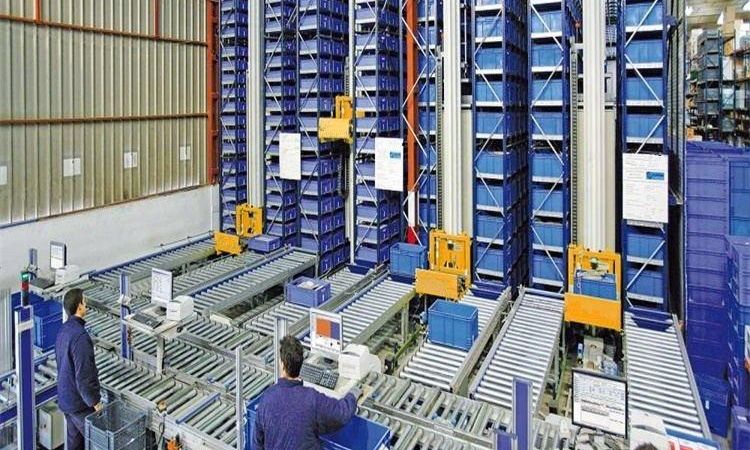
Holding more inventory does not always make a business more secure. Too little inventory can cause stockouts, production interruptions, and delayed orders, while too much inventory ties up working capital, occupies warehouse space, and increases the risk of damage, expiration, or obsolescence.
The maximum stock level helps a business determine the highest quantity of a product or material it should normally keep in inventory. Setting this limit allows the company to maintain supply continuity without creating unnecessary excess stock.
Maximum Stock Level Definition
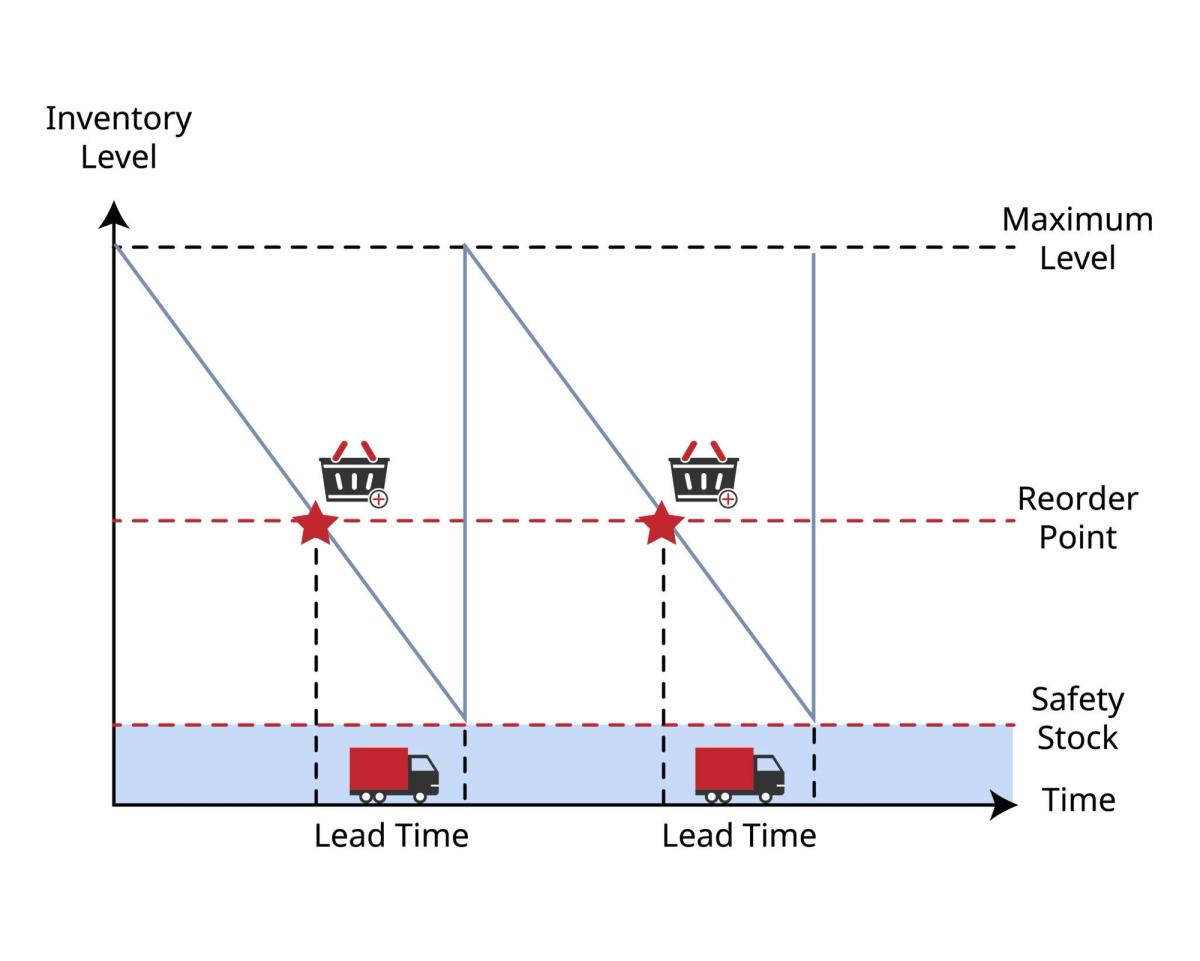
The maximum stock level is the planned upper limit for the quantity of a particular item held in inventory under normal operating conditions.
It is not the same as the warehouse’s maximum physical storage capacity, nor does it mean inventory must never exceed this amount. Instead, it acts as an inventory control threshold.
When projected inventory exceeds the maximum stock level, the business may need to reduce the next order quantity, delay replenishment, or adjust its production and purchasing plans.
For example, a manufacturer may need to keep enough components available to prevent production interruptions. However, ordering too many components at once can occupy valuable warehouse space and tie up cash that could be used elsewhere.
The maximum stock level helps balance supply availability with inventory cost.
Maximum Stock Level Calculation
A commonly used formula is:
Maximum Stock Level = Reorder Level + Reorder Quantity − (Minimum Usage Rate × Minimum Lead Time)
The variables are defined as follows:
- Reorder level: The inventory level at which a new replenishment order should be placed.
- Reorder quantity: The quantity purchased or produced in each replenishment cycle.
- Minimum usage rate: The lowest expected consumption rate during a given period.
- Minimum lead time: The shortest expected time between placing and receiving an order.
The reorder level can be calculated as:
Reorder Level = Maximum Usage Rate × Maximum Lead Time
This formula estimates the inventory peak that may occur when an order is placed at the reorder level, the supplier delivers within the shortest lead time, and actual usage remains relatively low while the business waits for delivery.
Some companies use a simpler min-max inventory model:
Maximum Stock Level = Safety Stock + Replenishment Quantity
Others set the maximum level according to warehouse capacity, purchasing cycles, historical demand, product shelf life, and working capital limitations.
Whichever method is used, the company should apply consistent formulas and data definitions throughout its warehouse automation software.
Maximum Stock Level Calculation Example
Suppose a manufacturing company uses a component with the following inventory data:
- Minimum daily usage: 80 units
- Maximum daily usage: 120 units
- Minimum purchasing lead time: 5 days
- Maximum purchasing lead time: 8 days
- Reorder quantity: 1,000 units
First, calculate the reorder level:
Reorder Level = 120 × 8 = 960 units
The business should therefore initiate replenishment when inventory falls to approximately 960 units.
Next, calculate the maximum stock level:
Maximum Stock Level = 960 + 1,000 − (80 × 5)
Maximum Stock Level = 1,560 units
Under these demand and supply conditions, the planned maximum stock level for the component is approximately 1,560 units.
This figure should be reviewed when consumption rates, lead times, or replenishment quantities change.
Factors Affecting the Maximum Stock Level
The appropriate maximum stock level varies by product, supplier, and business environment. The following factors determine how high or low the inventory limit should be.
Demand and Usage Rate
Products with high or rapidly changing demand generally require higher inventory levels.
Businesses should consider not only average historical usage but also seasonal peaks, promotional campaigns, production schedules, and customer order fluctuations.
When demand declines, the maximum stock level should also be reviewed to prevent unnecessary purchasing.
Purchasing or Production Lead Time
Longer lead times usually require the business to hold more inventory.
International sourcing, long production cycles, and uncertain transportation conditions can increase the amount of stock needed between replenishment orders.
Short and reliable lead times allow the company to operate with a lower inventory ceiling.
Replenishment Quantity
Larger purchasing or production batches create higher inventory peaks after replenishment.
Although large orders may reduce the unit purchase price, the company must compare these savings with the additional storage, handling, and financing costs.
Product Shelf Life and Obsolescence
Perishable goods, pharmaceuticals, chemicals, and other products with limited shelf lives usually require lower maximum stock levels.
Electronic components, fashion products, and model-specific spare parts may also become obsolete before they are used or sold.
Warehouse Capacity
The maximum stock level must remain within the warehouse’s practical operating capacity. A warehouse automation system can help keep inventory, movement, and storage decisions aligned as volume changes.
The company must account for more than rack space. Receiving areas, picking zones, aisles, staging areas, and fire-safety clearances must also remain available.
Working Capital
Inventory represents money that has been spent but has not yet been recovered through production or sales.
A company with limited working capital may need to maintain a lower maximum stock level, even when purchasing larger quantities would reduce the unit price.
Supplier Reliability
Reliable suppliers with consistent quality and delivery performance allow businesses to carry less inventory.
When lead times fluctuate or suppliers frequently delay deliveries, the company may need a higher inventory buffer while also improving supplier management or developing alternative sources.
Maximum Stock, Minimum Stock, and Safety Stock
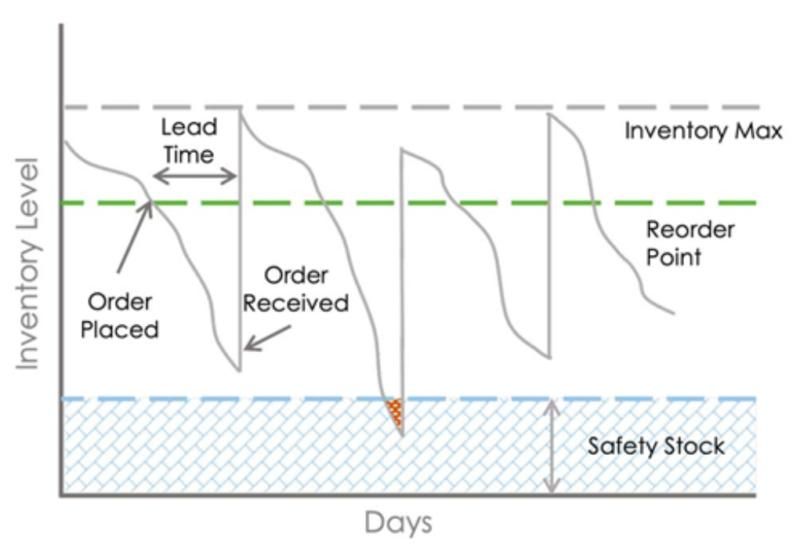
Maximum stock, minimum stock, and safety stock are related inventory control metrics, but they serve different purposes.
| Inventory Metric | Meaning | Primary Purpose |
|---|---|---|
| Maximum stock | The planned upper inventory limit | Prevent excess inventory and unnecessary capital use |
| Minimum stock | The lowest level inventory should normally reach | Indicate that replenishment is becoming urgent |
| Safety stock | Extra inventory held for unexpected demand or supply delays | Reduce the risk of stockouts |
The maximum stock level controls how much inventory the business should hold after replenishment.
The minimum stock level indicates the point below which normal operations may become vulnerable to supply shortages.
Safety stock is a buffer reserved for unexpected demand increases, supplier delays, forecasting errors, or production disruptions.
These three metrics should be managed together with the reorder point. The reorder point determines when to place an order, while the maximum stock level controls how much inventory should be available after replenishment.
Risks of Poor Inventory Management
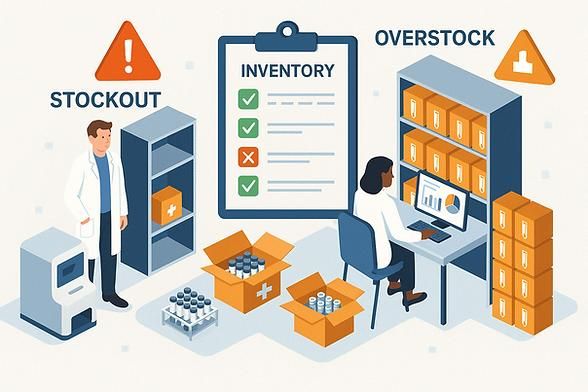
Poor inventory management can result from either holding too much stock or failing to keep enough available.
Excess Inventory and Cash Flow Pressure
Excess inventory ties up working capital in products and materials that have not yet been sold or used.
This reduces the amount of cash available for marketing, equipment investment, payroll, product development, and other operating needs.
Expiration, Damage, and Obsolescence
The longer products remain in storage, the greater the risk of moisture damage, contamination, deterioration, expiration, or physical breakage.
Products may also lose commercial value because of technological changes, new models, or shifts in customer demand.
Warehouse Congestion
Too much inventory can occupy receiving areas, staging zones, and operating aisles.
This increases travel distances, slows picking and replenishment, complicates stock counting, and may create workplace safety risks.
Stockouts and Production Interruptions
Insufficient inventory can prevent the business from fulfilling customer orders or completing production schedules.
In manufacturing, the shortage of a single critical component may stop an entire production line.
Higher Emergency Replenishment Costs
When stock runs out unexpectedly, the company may need to use expedited production, premium freight, air shipping, or higher-priced emergency suppliers.
These costs can be significantly higher than the cost of normal planned replenishment.
Inaccurate Inventory Decisions
If physical inventory does not match the quantities recorded in the inventory system, purchasing and replenishment decisions will be based on incorrect data.
Errors such as duplicate receiving records, unrecorded outbound movements, incorrect storage locations, and inaccurate counts may lead to unnecessary purchasing or unexpected shortages.
Conclusion
The maximum stock level is an important inventory control metric that helps a business balance product availability, warehouse capacity, and working capital.
It should not be treated as a permanently fixed number. Changes in demand, lead times, replenishment quantities, supplier performance, product shelf life, and storage costs can all affect the appropriate inventory limit.
Businesses should regularly review the maximum stock level together with the minimum stock level, safety stock, and reorder point.
A coordinated inventory control system can reduce both excess inventory and stockout risks while improving warehouse efficiency, cash flow, and supply chain performance. Where storage density is a constraint, an automated storage and retrieval system may also support more controlled inventory access and replenishment.
Next Review
Move from article research to a scoped feasibility review.
Use the related products and solution paths below, then send your workflow and layout for a quick engineering review.
Related Solutions
Engineering Review